Investigating literacy teachers' linguistic knowledge
- Talk date: Not established
- SlideShare upload: 2014-03-28 (upload date, not the delivery date)
- Event: Not established
- Place: Not established
- Topics: Language & meaning
- Language: en
- Slides in the original listing: 29
- Coverage: Full text of all 29 slides, each paired with its original slide image (slide N is section N).
- Original listing: https://www.slideshare.net/slideshow/investigating-literacy-teachers-linguistic-knowledge-32841157/32841157
- Cover image: https://slides.dominiklukes.net/readers/investigating-literacy-teachers-linguistic-knowledge-32841157/pages/page-01.png
- Reader data (JSON): https://slides.dominiklukes.net/readers/investigating-literacy-teachers-linguistic-knowledge-32841157/presentation.json
- TalkWeaver package (outline and images, ZIP): https://slides.dominiklukes.net/investigating-literacy-teachers-linguistic-knowledge-32841157/investigating-literacy-teachers-linguistic-knowledge-32841157-talkweaver.zip
- TalkWeaver outline: https://slides.dominiklukes.net/investigating-literacy-teachers-linguistic-knowledge-32841157/talkweaver/investigating-literacy-teachers-linguistic-knowledge-32841157-outline.md
- Markdown copy: https://slides.dominiklukes.net/investigating-literacy-teachers-linguistic-knowledge-32841157/index.md
Slide 1: Investigating literacy teachers' linguistic knowledge
Investigating literacy teachers' linguistic knowledge
Dominik Lukes, Dyslexia Action
Daniel Gooch, IoE

Slide 2: Outline
Outline
Slide 3: Slide 3
- Linguistic underpinnings of literacy
- Teacher knowledge
- Phonics vs phonology
- ILearnRW needs
Slide 4: Slide 4
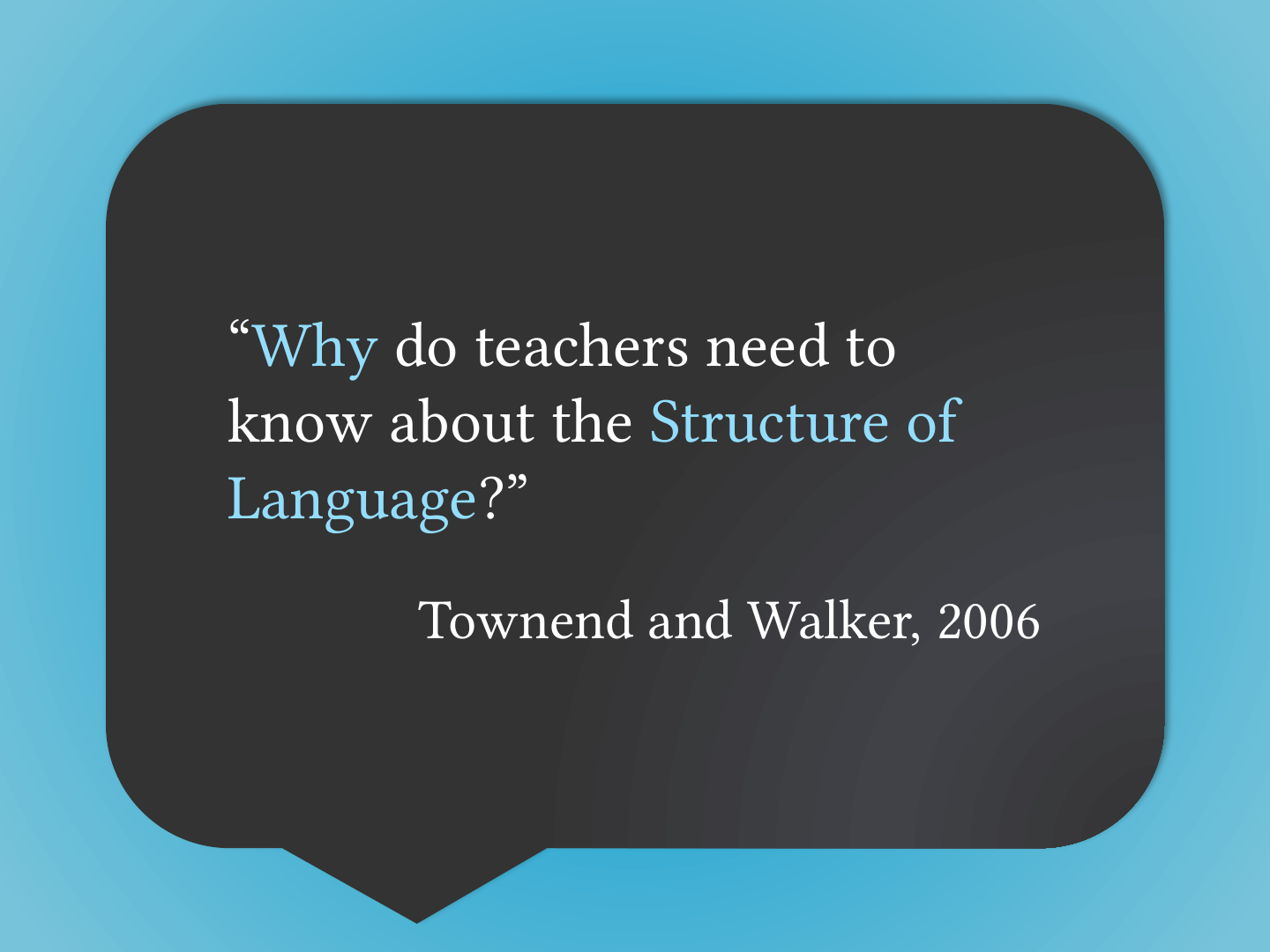
“Why do teachers need to know about the Structure of Language?”
— Townend and Walker, 2006
Slide 5: Slide 5
“those who were most comfortable with the course content were those who already had some knowledge of language structure.”

Slide 6: Slide 6
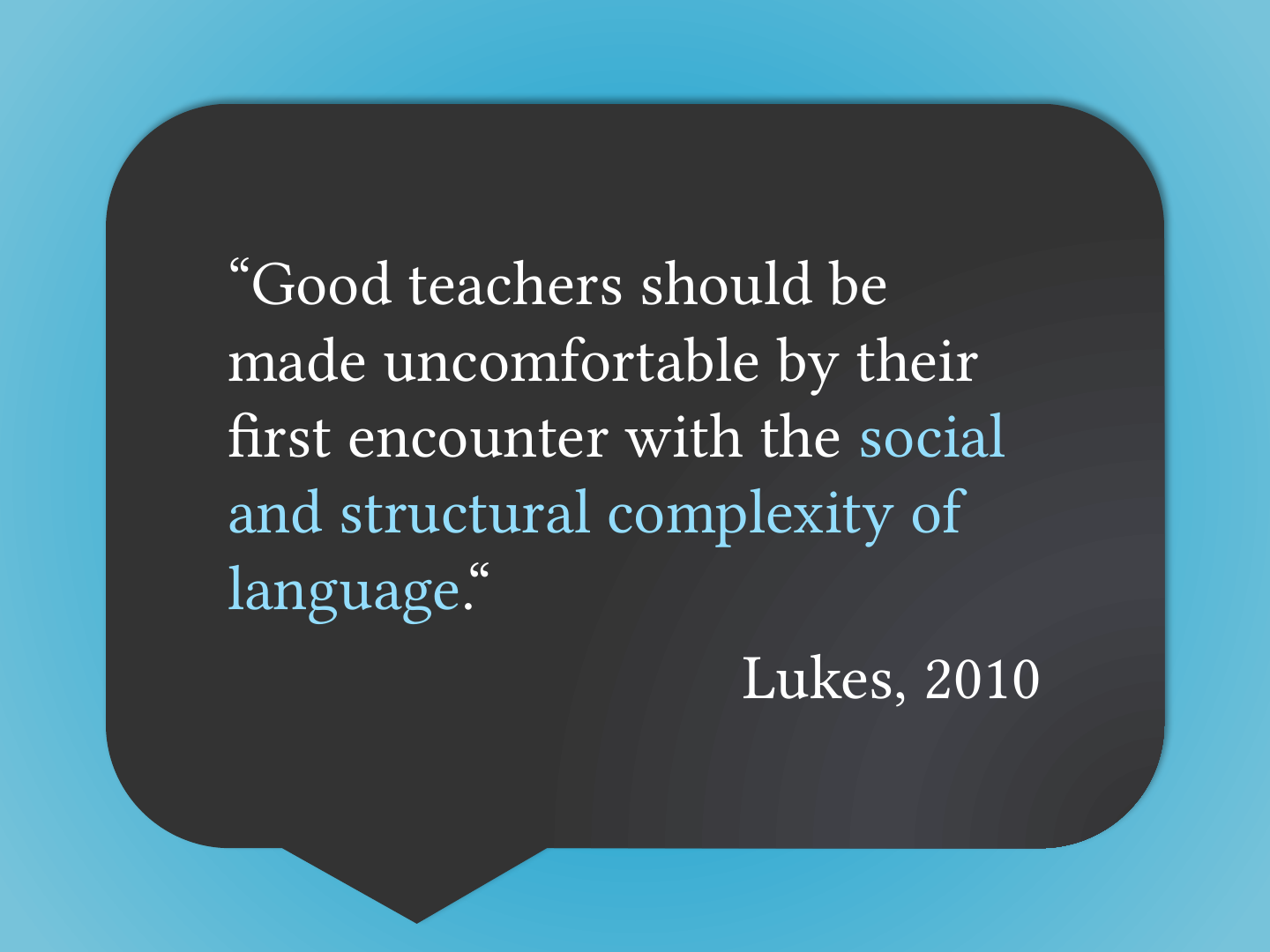
“Good teachers should be made uncomfortable by their first encounter with the social and structural complexity of language.“
— Lukes, 2010
Slide 7: Which reading skills do you teach most often?
Which reading skills do you teach most often?
Slide 8: Slide 8
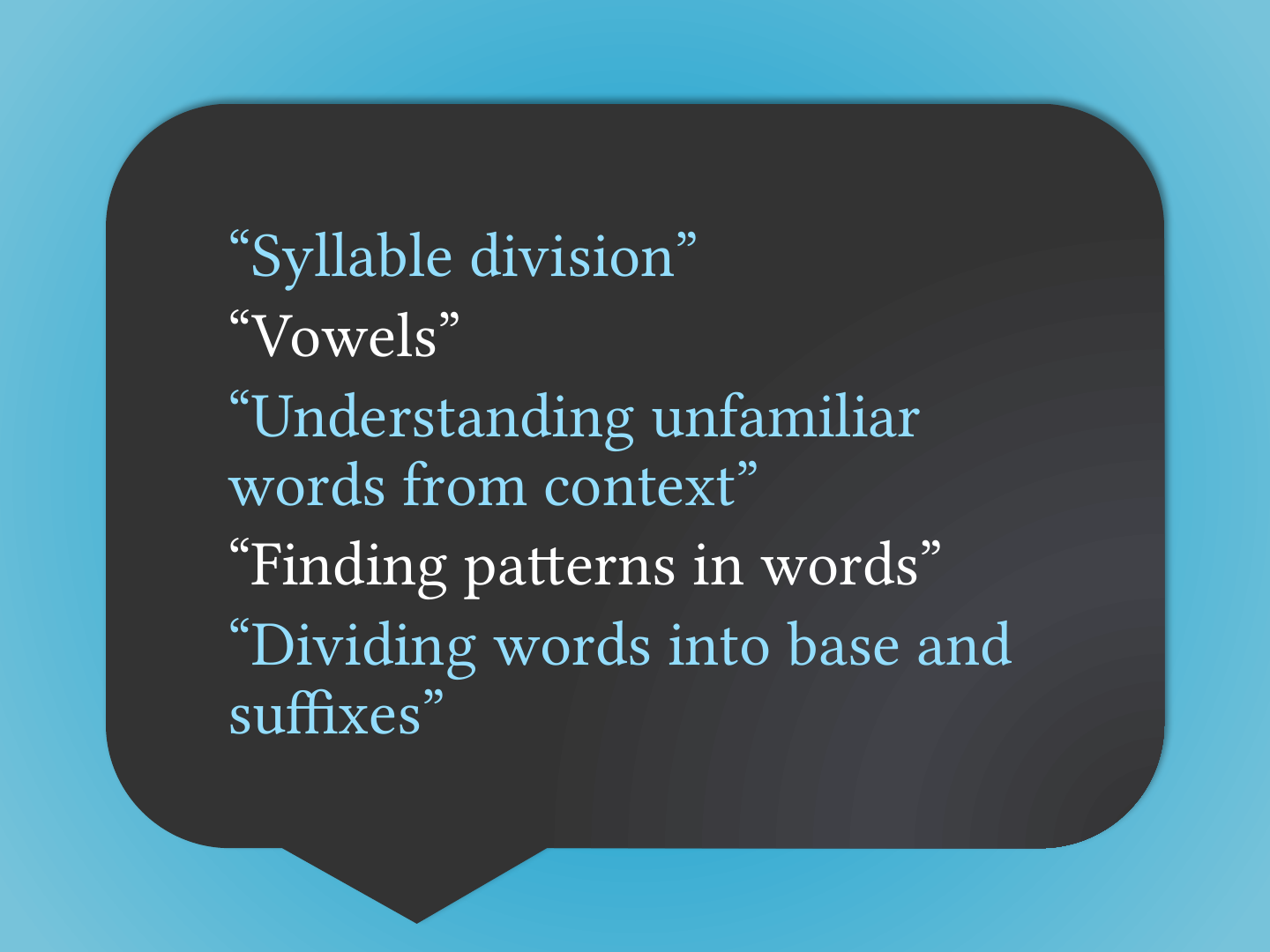
- “Syllable division”
- “Vowels”
- “Understanding unfamiliar words from context”
- “Finding patterns in words”
- “Dividing words into base and suffixes”
Slide 9: How do you teach syllables?
How do you teach syllables?
Slide 10: Slide 10
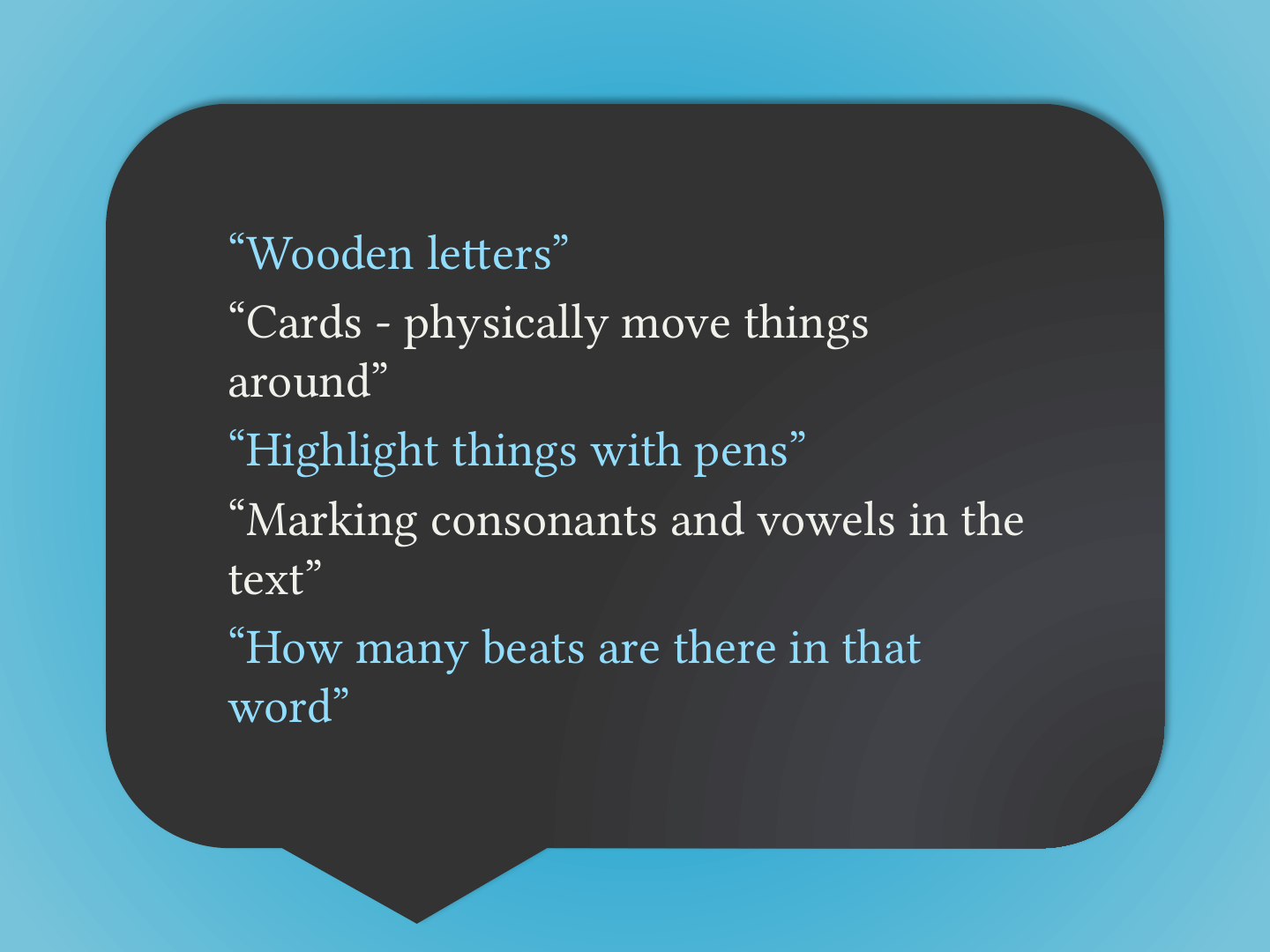
- “Wooden letters”
- “Cards - physically move things around”
- “Highlight things with pens”
- “Marking consonants and vowels in the text”
- “How many beats are there in that word”
Slide 11: Slide 11
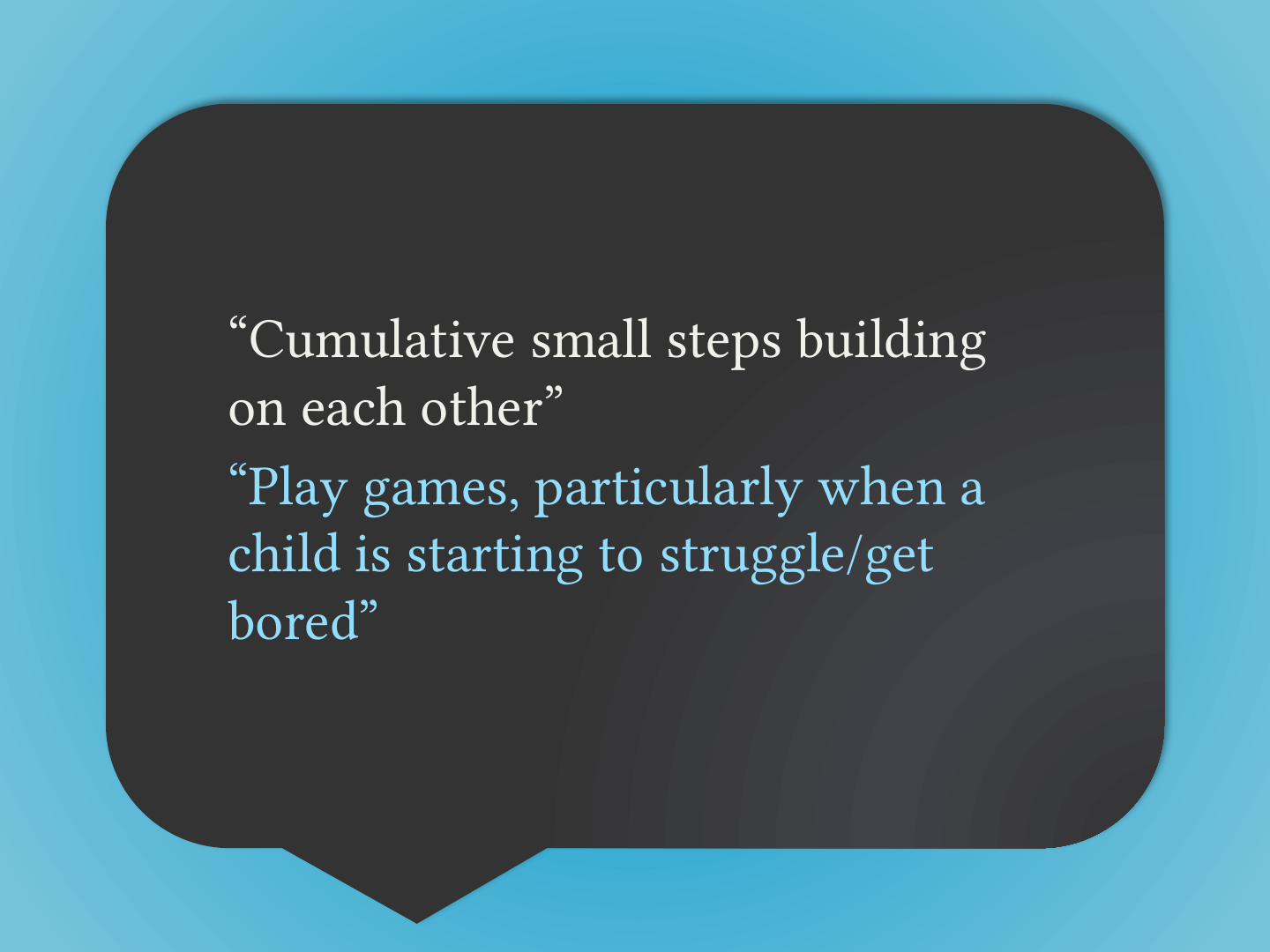
- “Cumulative small steps building on each other”
- “Play games, particularly when a child is starting to struggle/get bored”
Slide 12: What’s missing?
What’s missing?

Slide 13: Slide 13
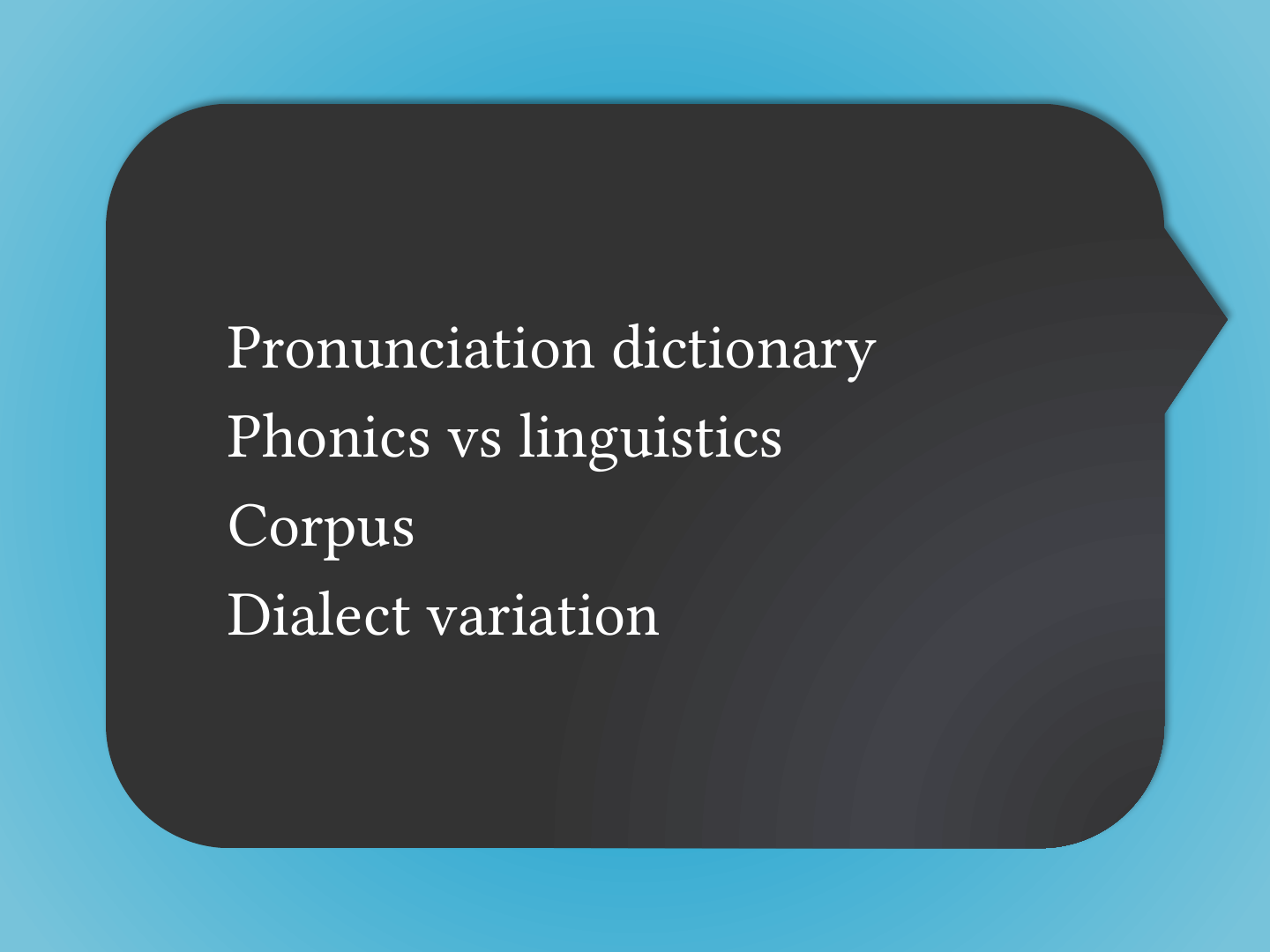
- Pronunciation dictionary
- Phonics vs linguistics
- Corpus
- Dialect variation
Slide 14: Syllable division knowledge
Syllable division knowledge
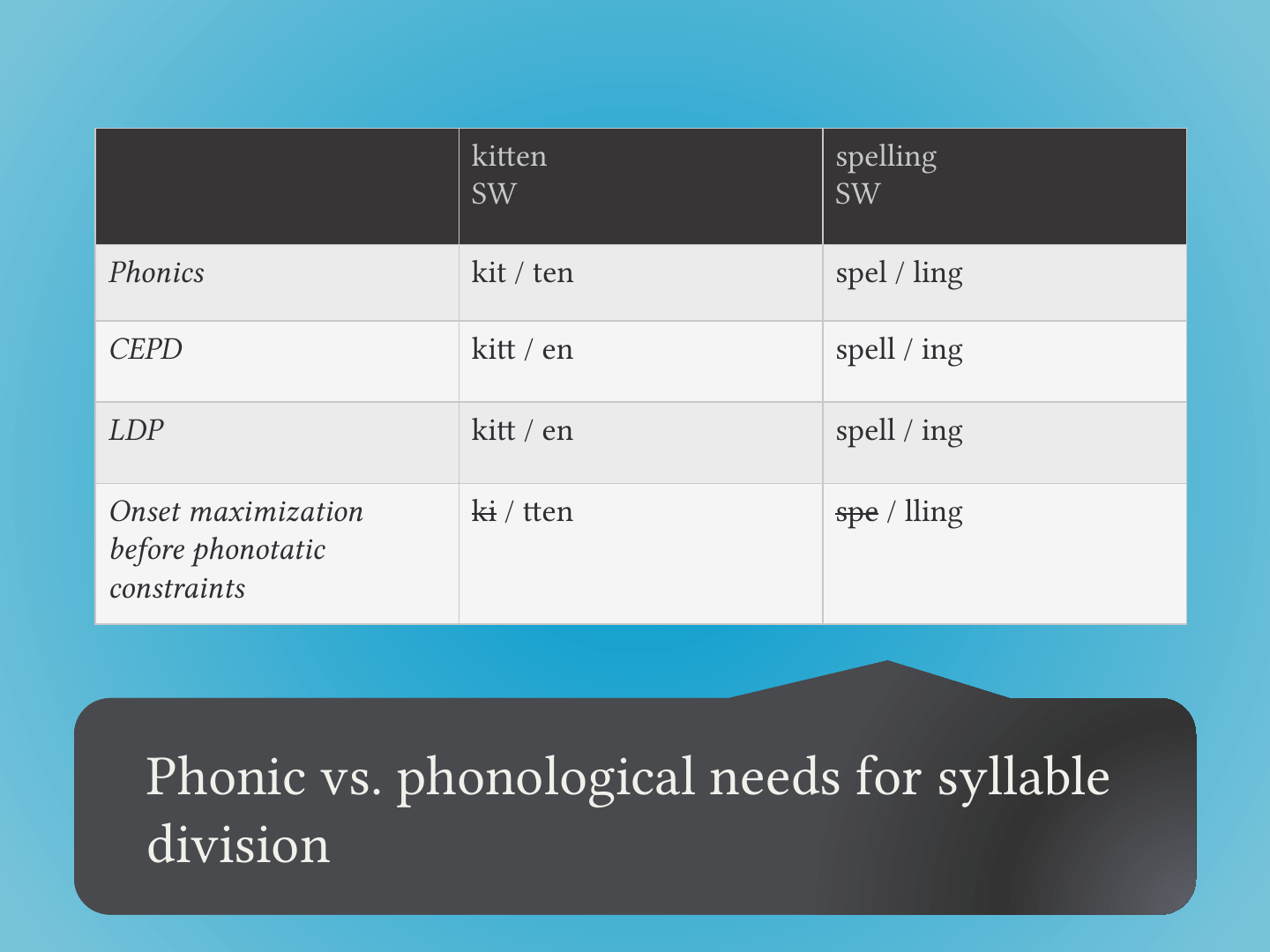
Slide 15: Phonic vs. phonological needs for syllable division
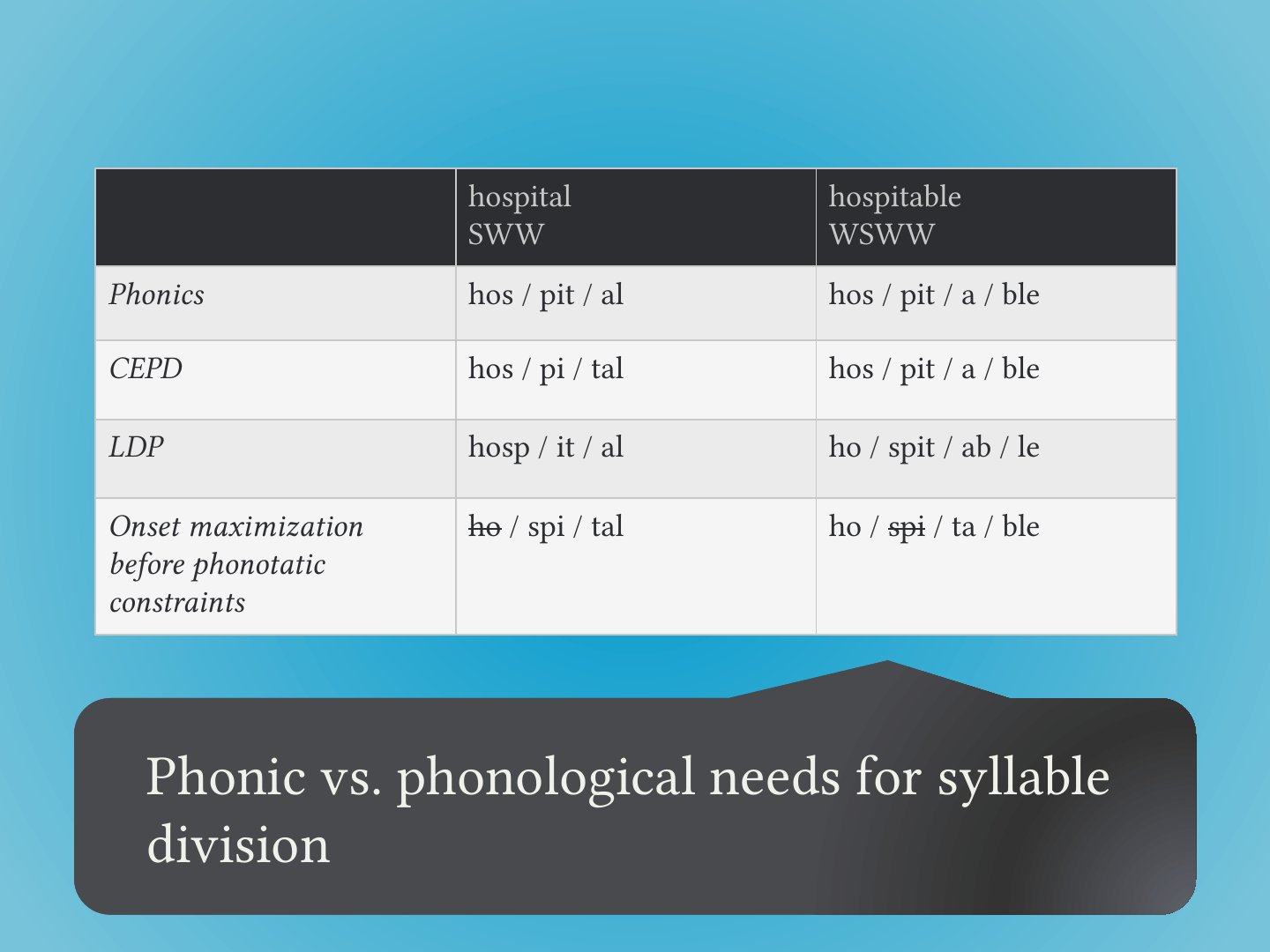
Phonic vs. phonological needs for syllable division
| hospital / SWW | hospitable / WSWW | |
|---|---|---|
| Phonics | hos / pit / al | hos / pit / a / ble |
| CEPD | hos / pi / tal | hos / pit / a / ble |
| LDP | hosp / it / al | ho / spit / ab / le |
| Onset maximization before phonotatic constraints | ho / |
Slide 16: Phonic vs. phonological needs for syllable division
Phonic vs. phonological needs for syllable division
| kitten / SW | spelling / SW | |
|---|---|---|
| Phonics | kit / ten | spel / ling |
| CEPD | kitt / en | spell / ing |
| LDP | kitt / en | spell / ing |
| Onset maximization before phonotatic constraints |
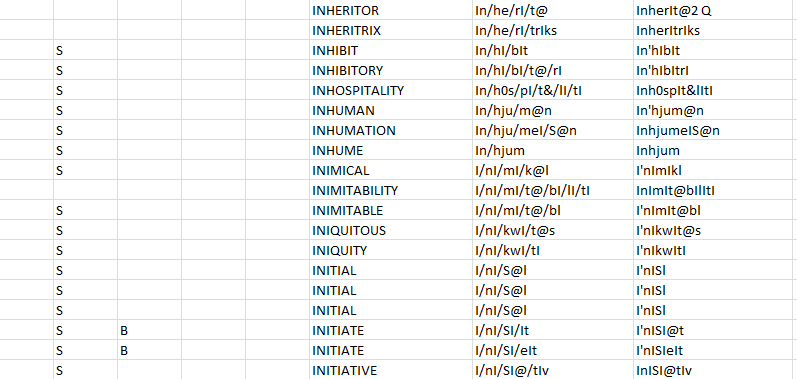
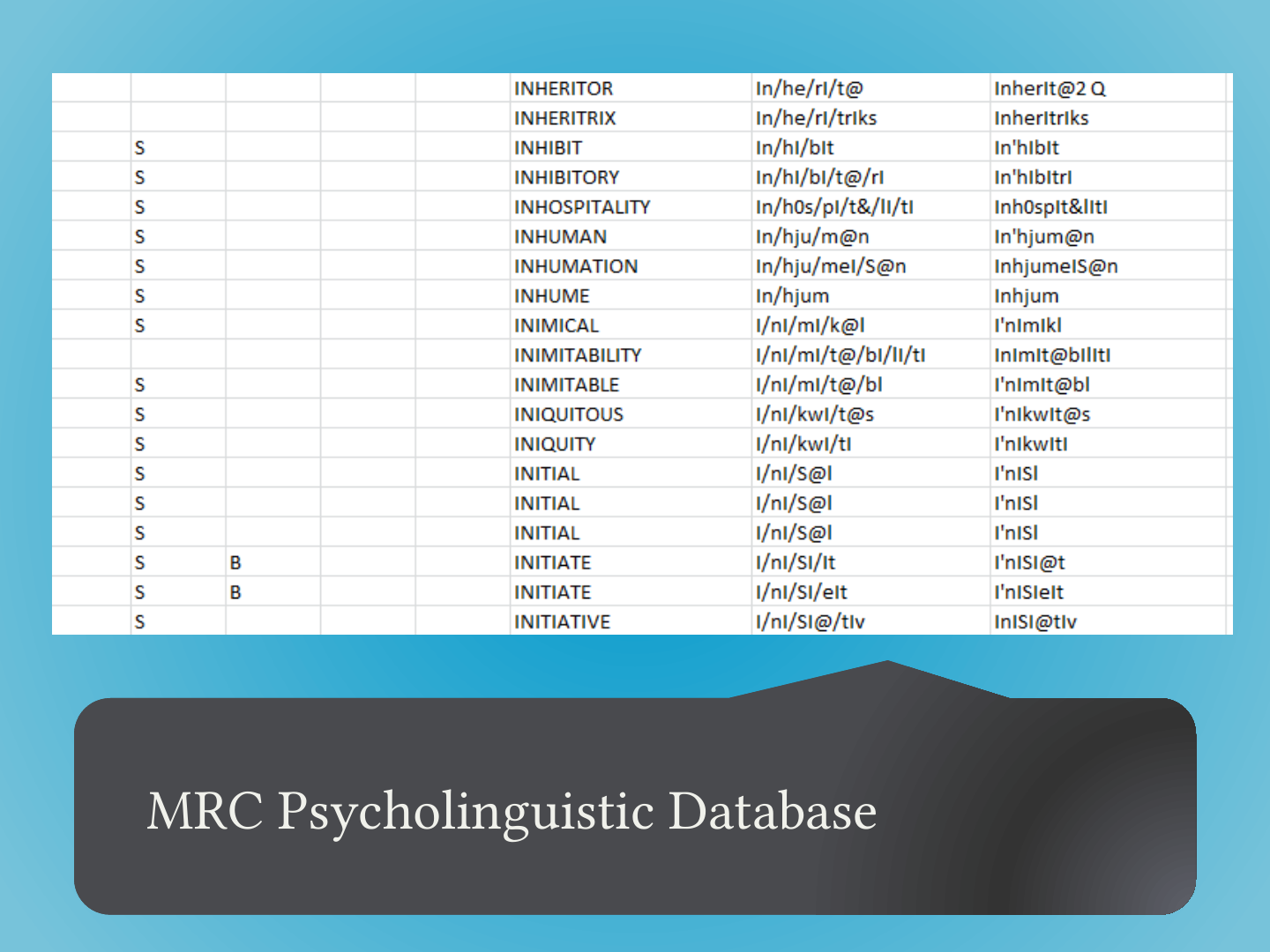
Slide 17: MRC Psycholinguistic Database
MRC Psycholinguistic Database
Slide 18: Teacher knowledge of syllable division does not match linguistic analysis or needs of machine readable representation
Teacher knowledge of syllable division does not match linguistic analysis or needs of machine readable representation
Slide 19: Slide 19


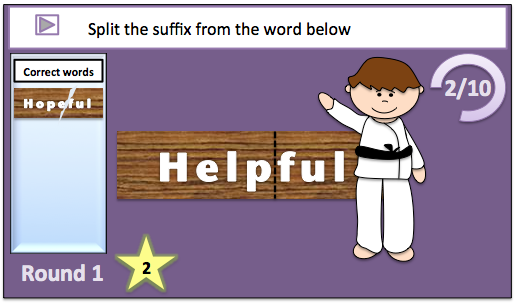
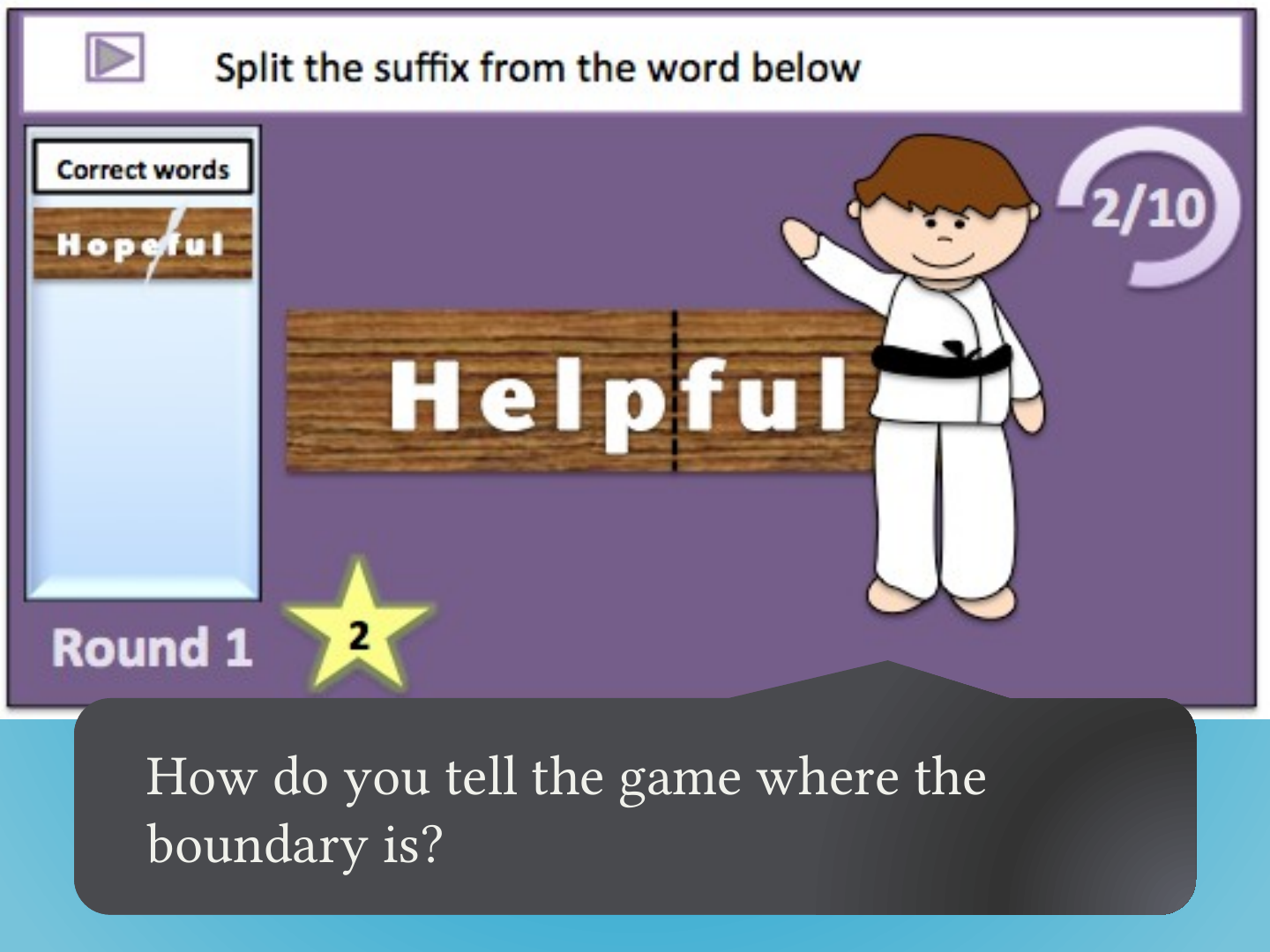
Slide 20: How do you tell the game where the boundary is?
How do you tell the game where the boundary is?
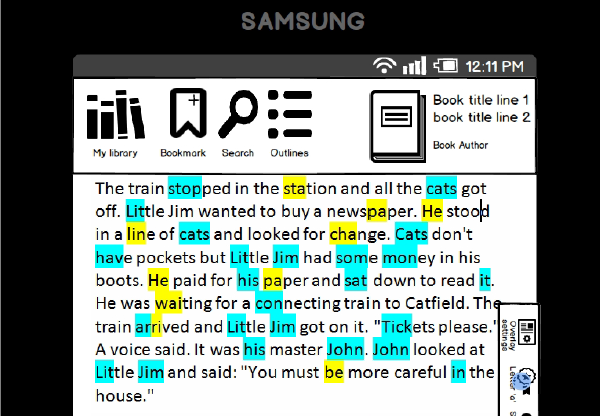
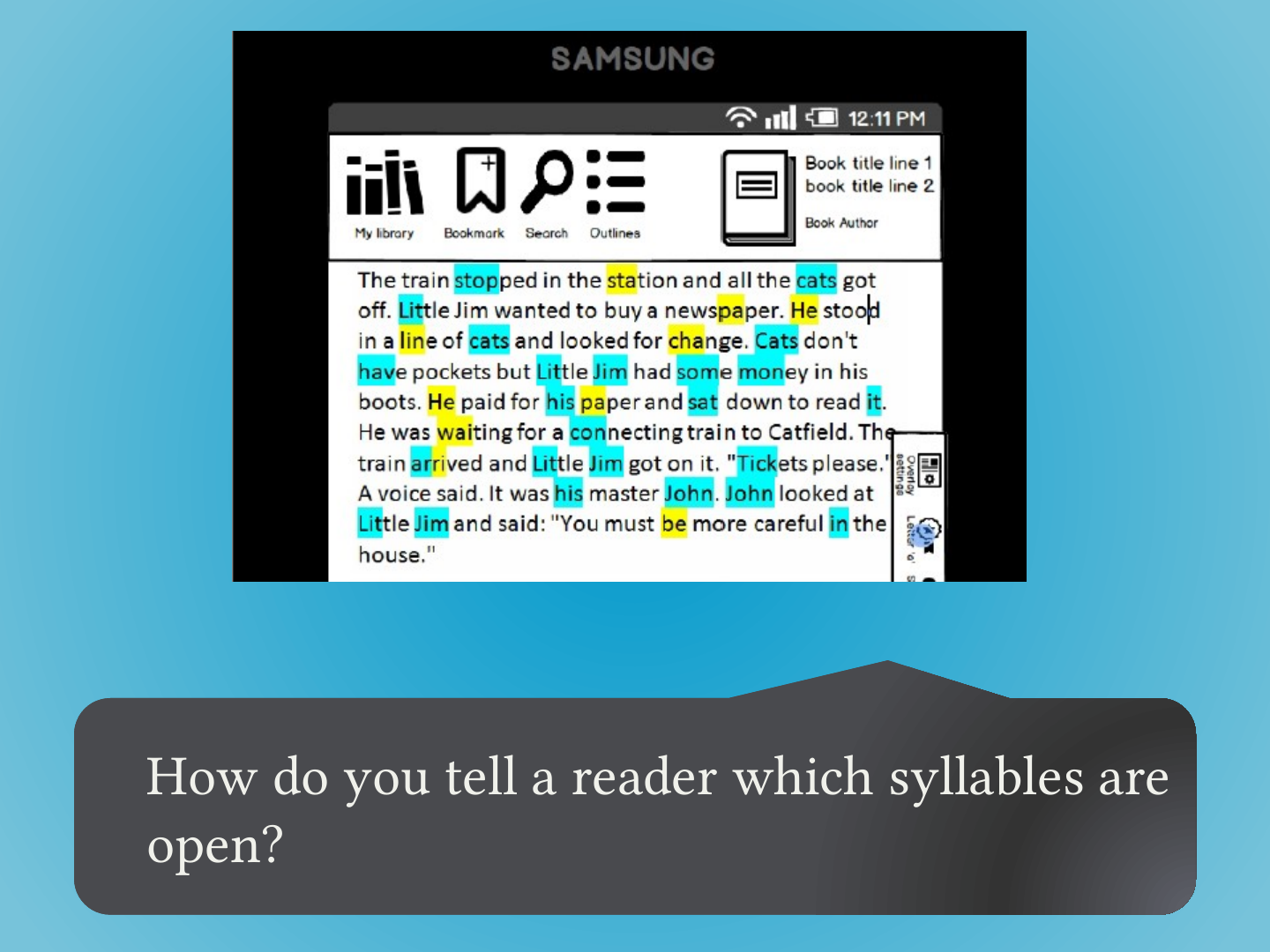
Slide 21: How do you tell a reader which syllables are open?
How do you tell a reader which syllables are open?
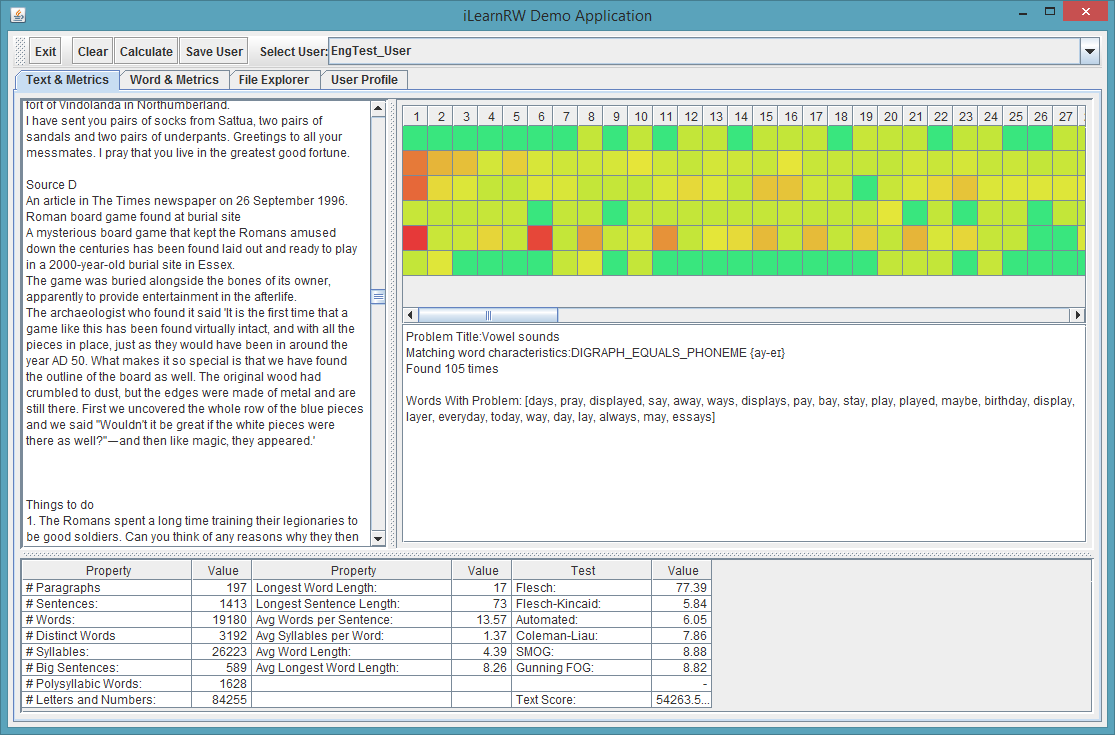
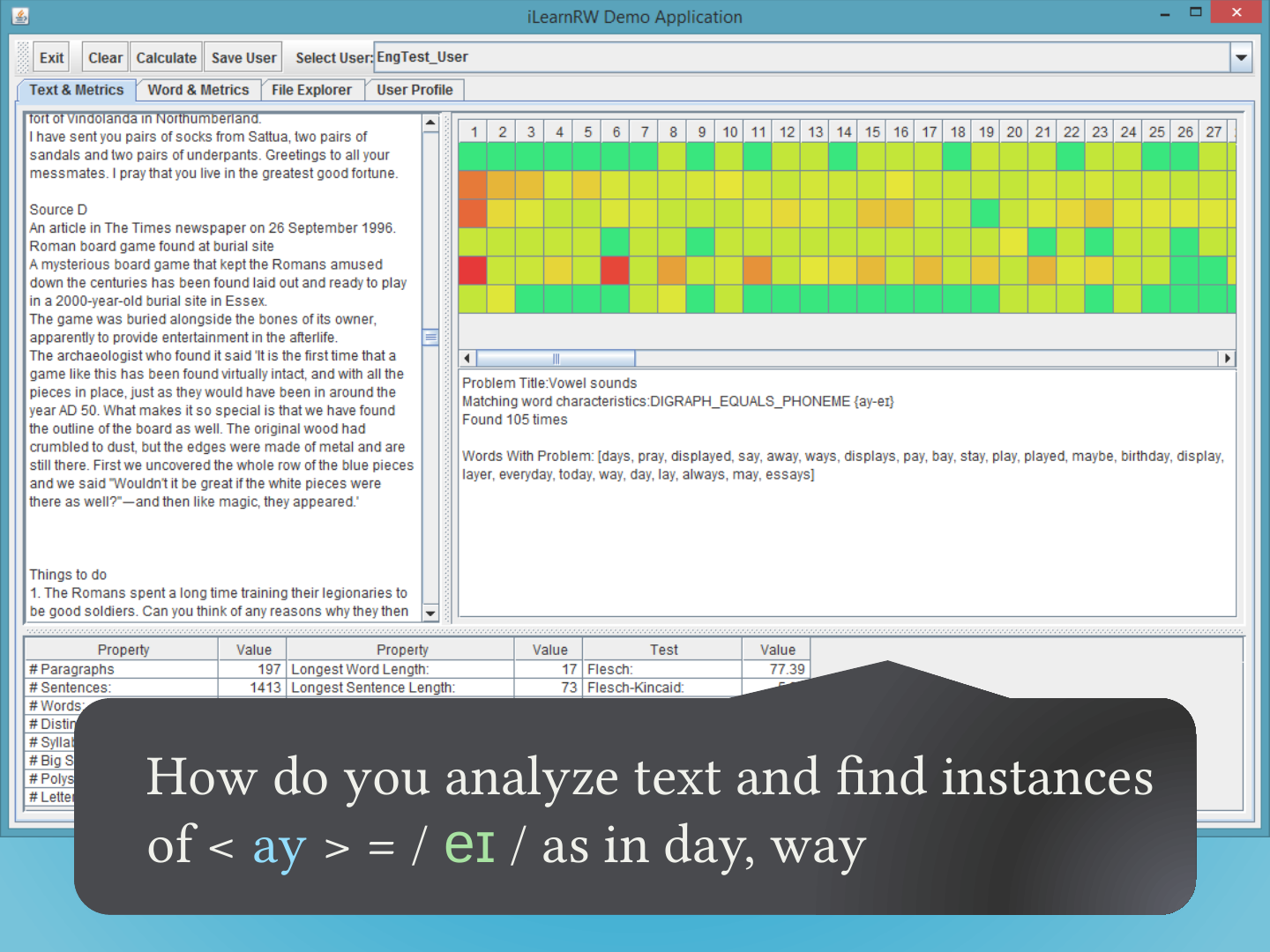
Slide 22: How do you analyze text and find instances of < ay > = / eɪ / as in day, way
How do you analyze text and find instances of < ay > = / eɪ / as in day, way
Slide 23: Slide 23
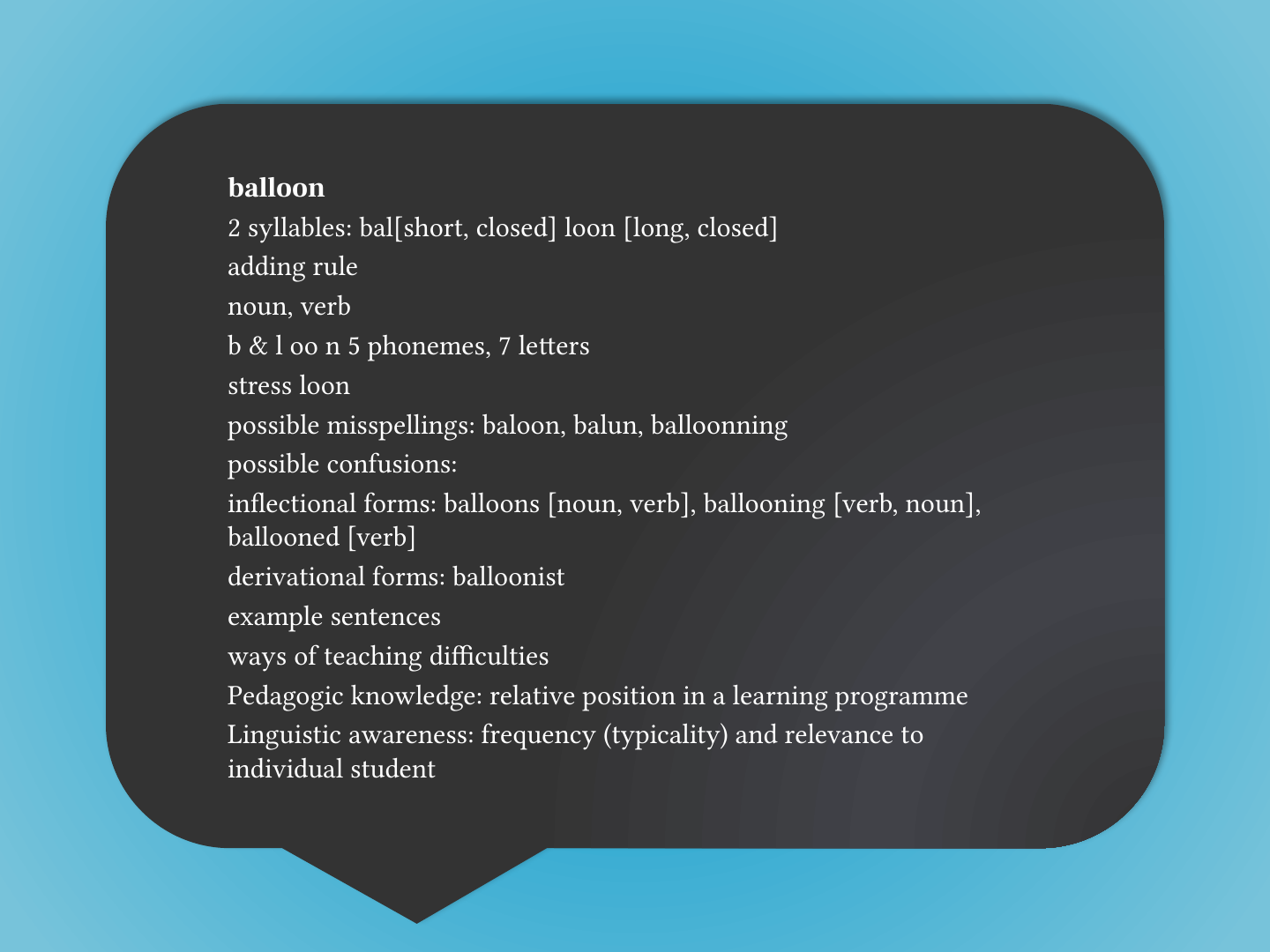
- balloon
- 2 syllables: bal[short, closed] loon [long, closed]
- adding rule
- noun, verb
- b & l oo n 5 phonemes, 7 letters
- stress loon
- possible misspellings: baloon, balun, balloonning
- possible confusions:
- inflectional forms: balloons [noun, verb], ballooning [verb, noun], ballooned [verb]
- derivational forms: balloonist
- example sentences
- ways of teaching difficulties
- Pedagogic knowledge: relative position in a learning programme
- Linguistic awareness: frequency (typicality) and relevance to individual student
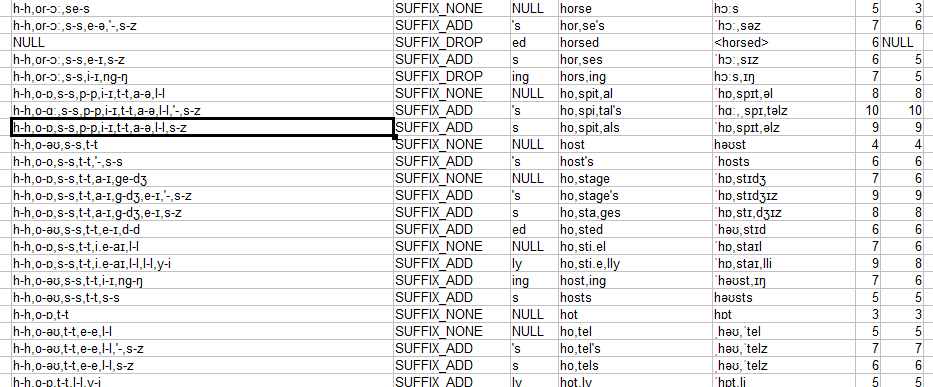
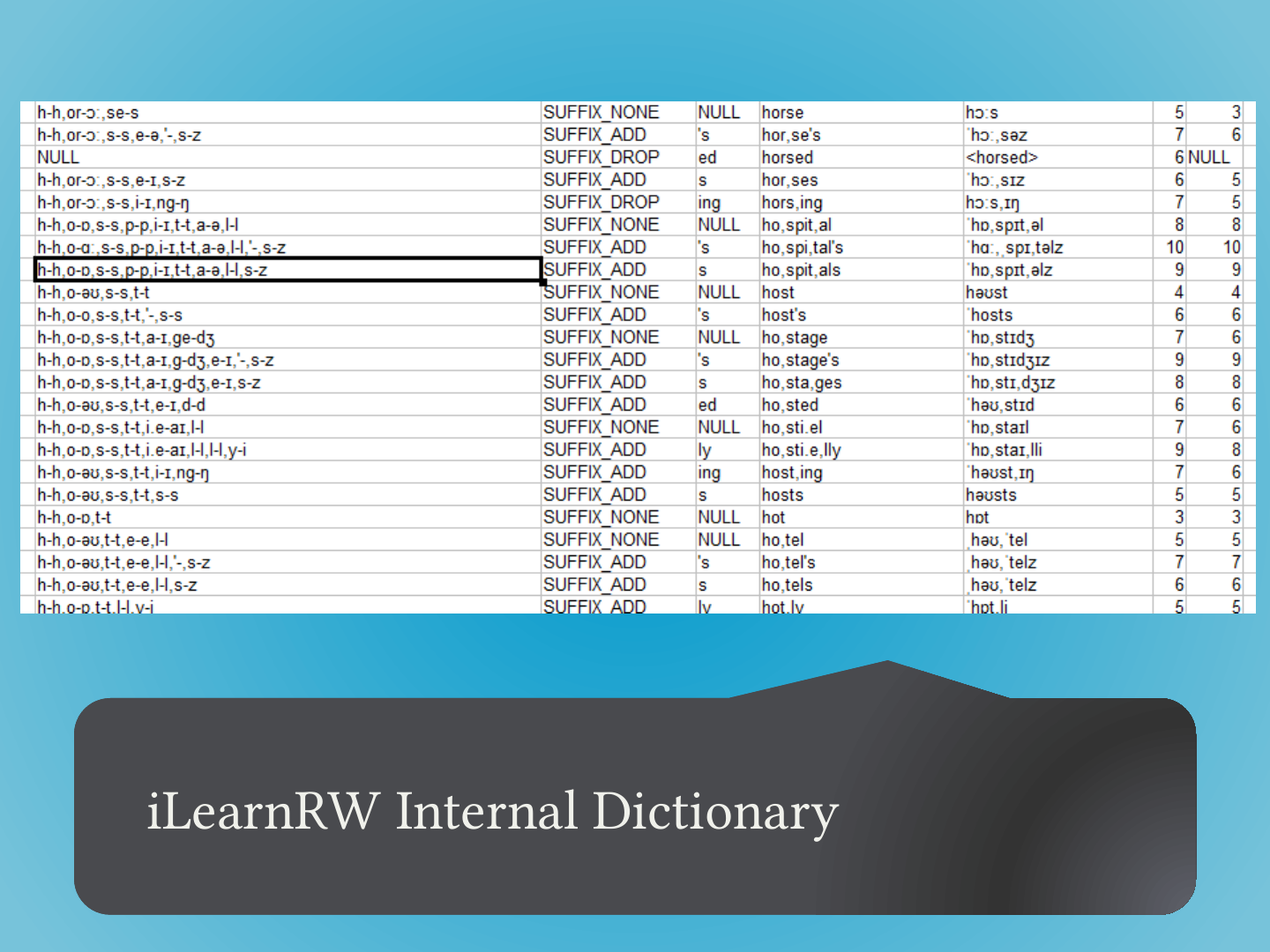
Slide 24: iLearnRW Internal Dictionary
iLearnRW Internal Dictionary
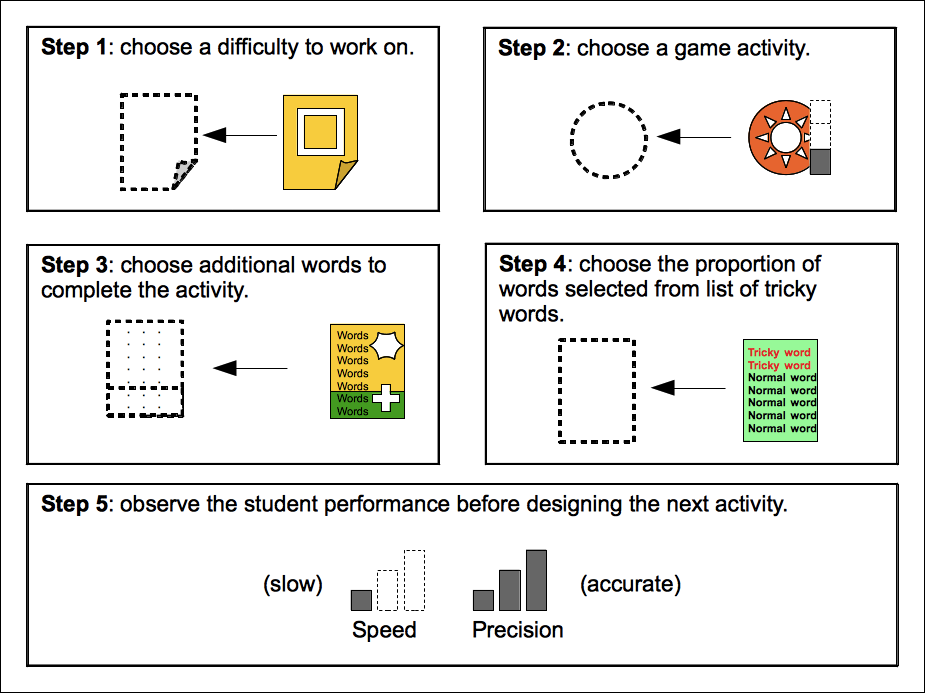
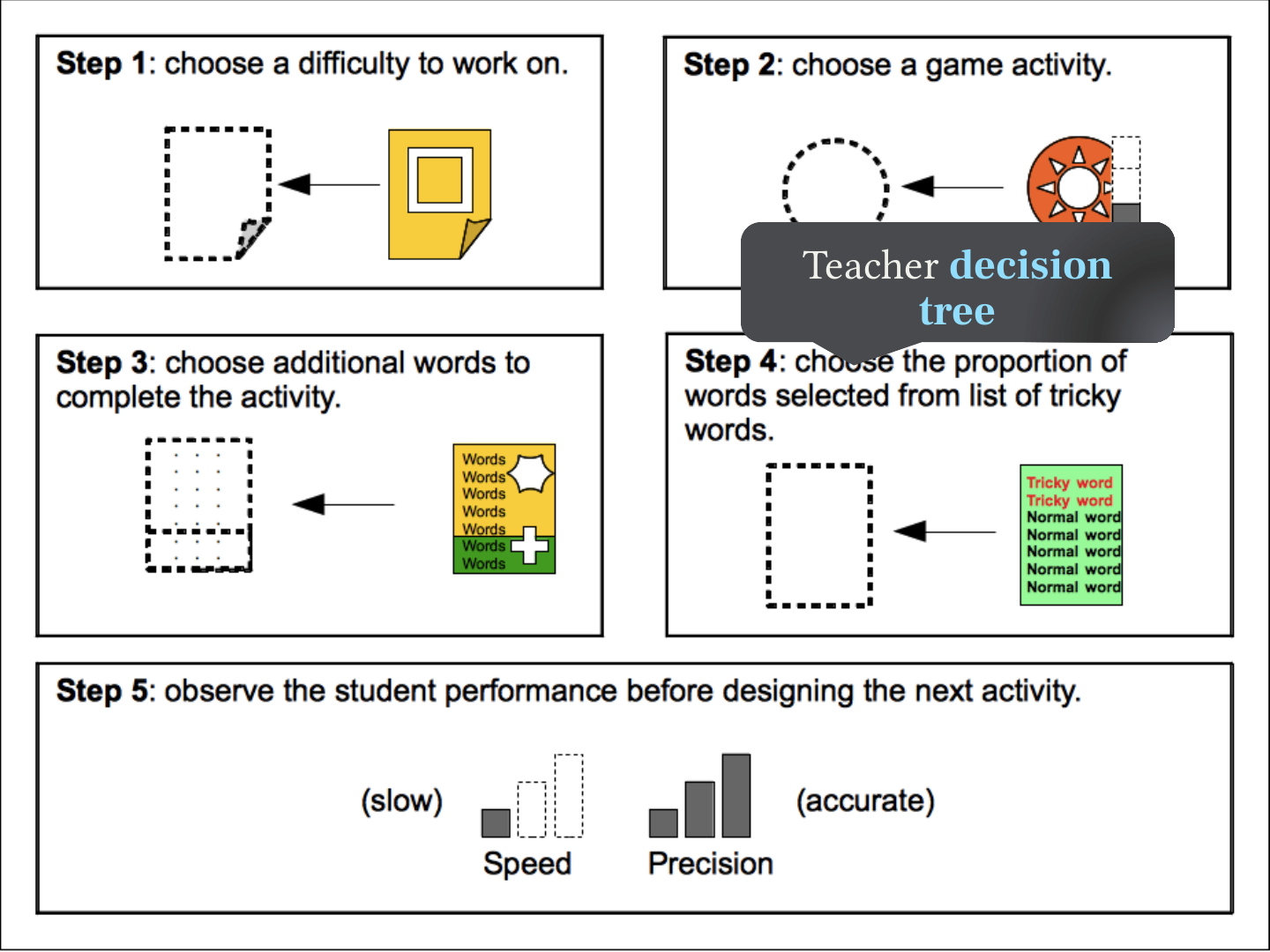
Slide 25: Teacher decision tree
Teacher decision tree