Learning Czech Prepositions through Pictures: Cognitive Schemas and Language Learning
- SlideShare title: Prepositions in Czech
- Talk date: Not established
- SlideShare upload: 2007-08-18 (upload date, not the delivery date)
- Event: Not established
- Place: Not established
- Topics: Language & meaning
- Language: en
- Slides in the original listing: 14
- Coverage: Full text of all 14 slides, each paired with its original slide image (slide N is section N).
- Original listing: https://www.slideshare.net/slideshow/prepositions-in-czech/93767
- Cover image: https://slides.dominiklukes.net/readers/prepositions-in-czech/pages/page-01.png
- Reader data (JSON): https://slides.dominiklukes.net/readers/prepositions-in-czech/presentation.json
- TalkWeaver package (outline and images, ZIP): https://slides.dominiklukes.net/prepositions-in-czech/prepositions-in-czech-talkweaver.zip
- TalkWeaver outline: https://slides.dominiklukes.net/prepositions-in-czech/talkweaver/prepositions-in-czech-outline.md
- Markdown copy: https://slides.dominiklukes.net/prepositions-in-czech/index.md
Slide 1: Learning Czech Prepositions through Pictures: Cognitive Schemas and Language Learning
Learning Czech Prepositions through Pictures: Cognitive Schemas and Language Learning
Dominik Lukeš, 2004 http://www.bohemica.com

Slide 2: Presentation outline
Presentation outline
- Theory 5 min
- Czech Prepositions in Pictures 15 min
- The case of na 15 min
- Learners’ lab 15 min
- Tips for learners / Q&A 10 min
Slide 3: Theory
Theory
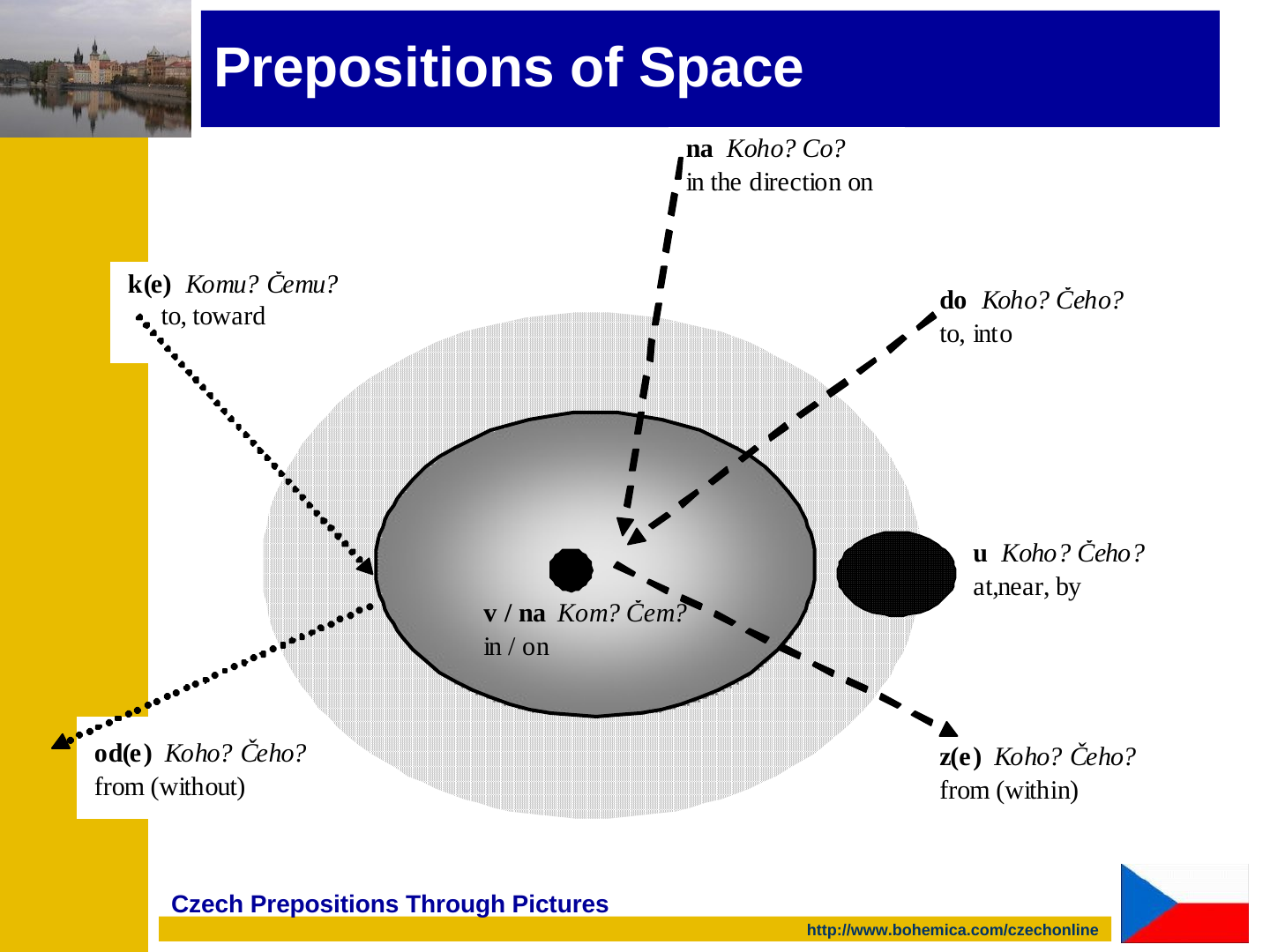
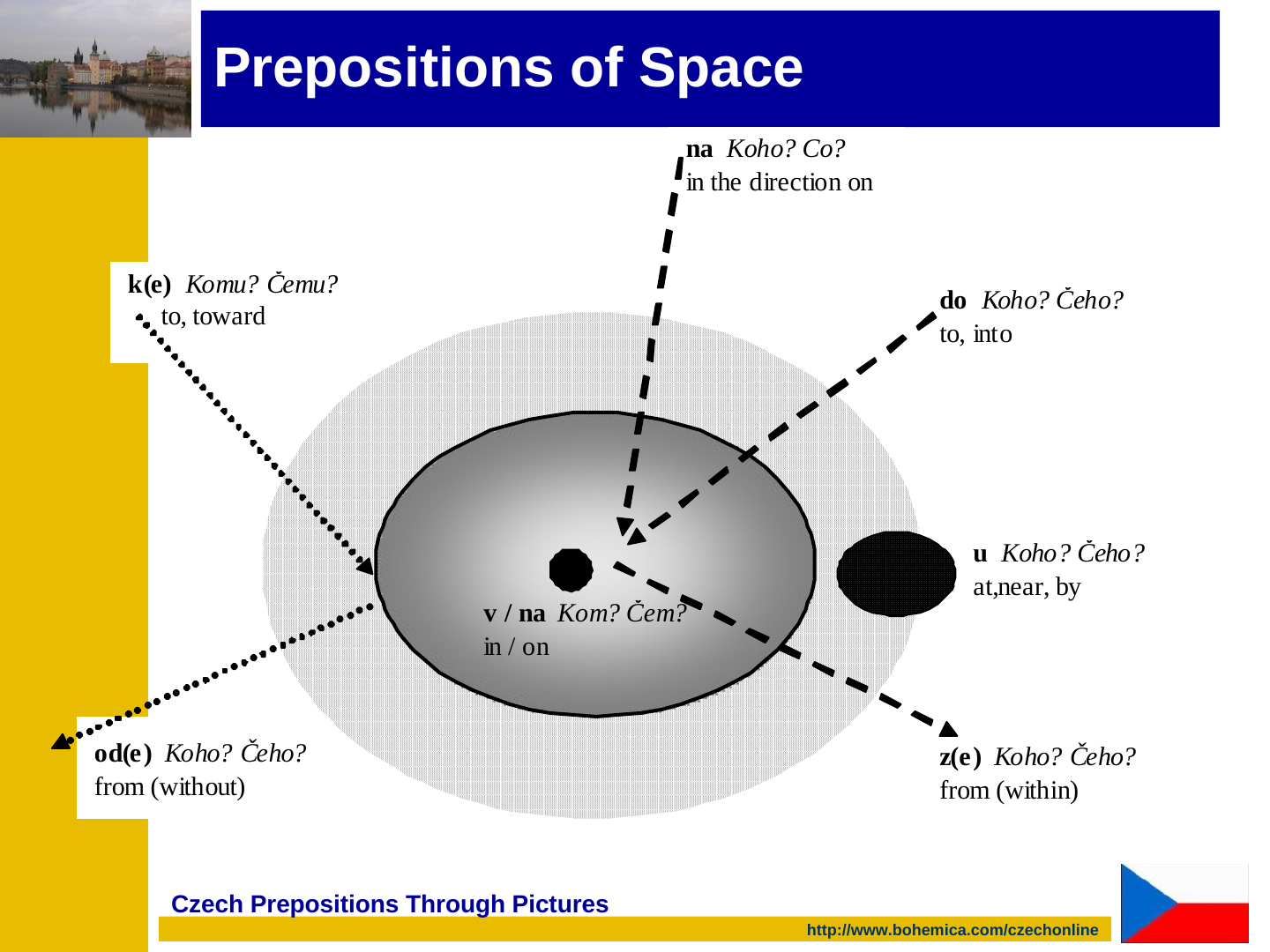
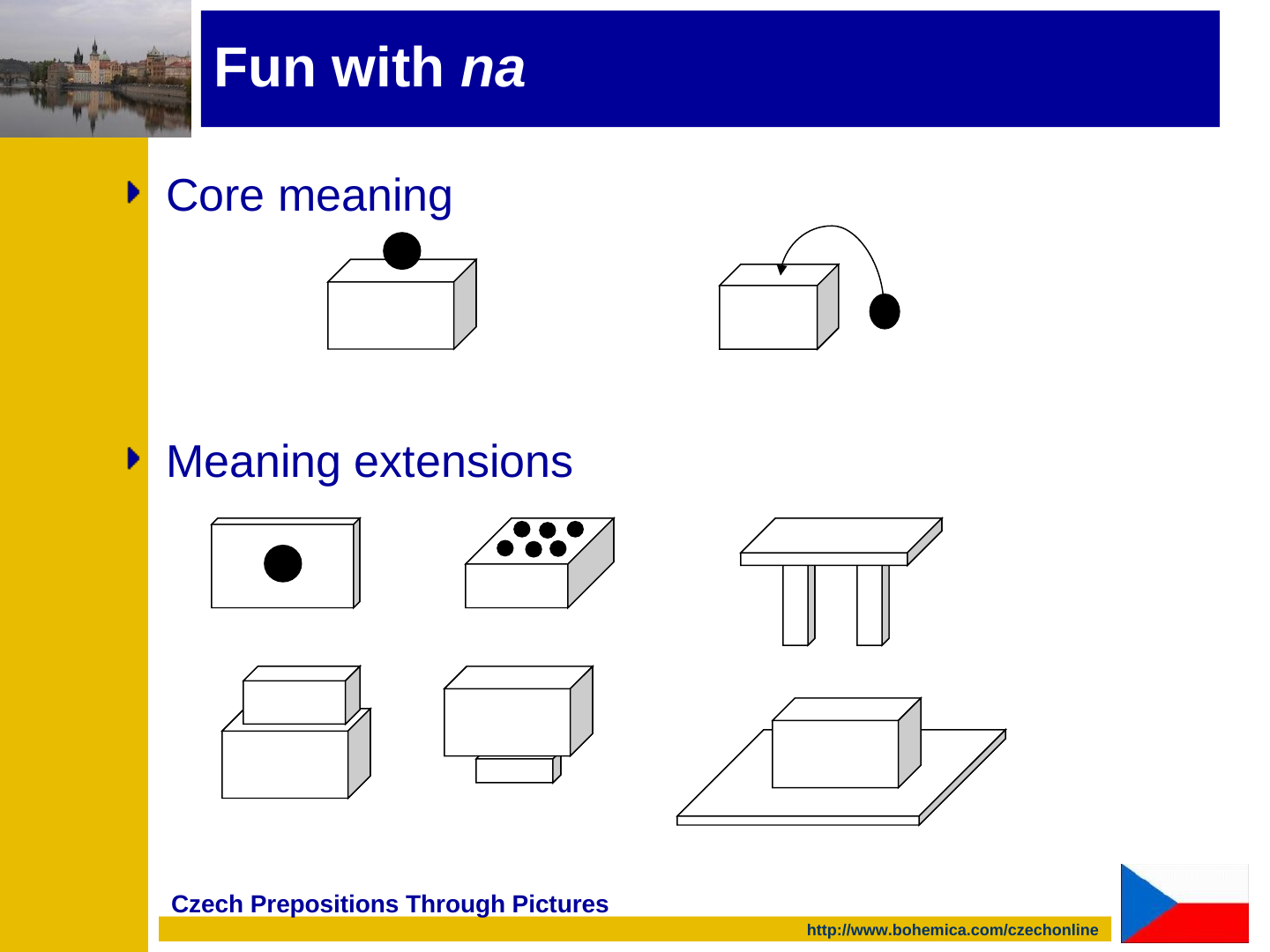
- Native speakers create image schemas that describe the core spatial meaning of prepositions. Each situation is then reduced to a schema.
- The schemas consist of so called landmarks (stationary elements) and trajectors (moving elements).
- When prepositions are used to describe non-spatial situations, the landmark and trajectors become metaphorically linked to elements in the situation.
- Learners need to acquire both a stock of set uses and an ability to apply the right schema to the right situation. This requires both drilling and active image creation.
Slide 4: Prepositions of Space
Prepositions of Space
Slide 5: Prepositions of Space (cont.)
Prepositions of Space (cont.)
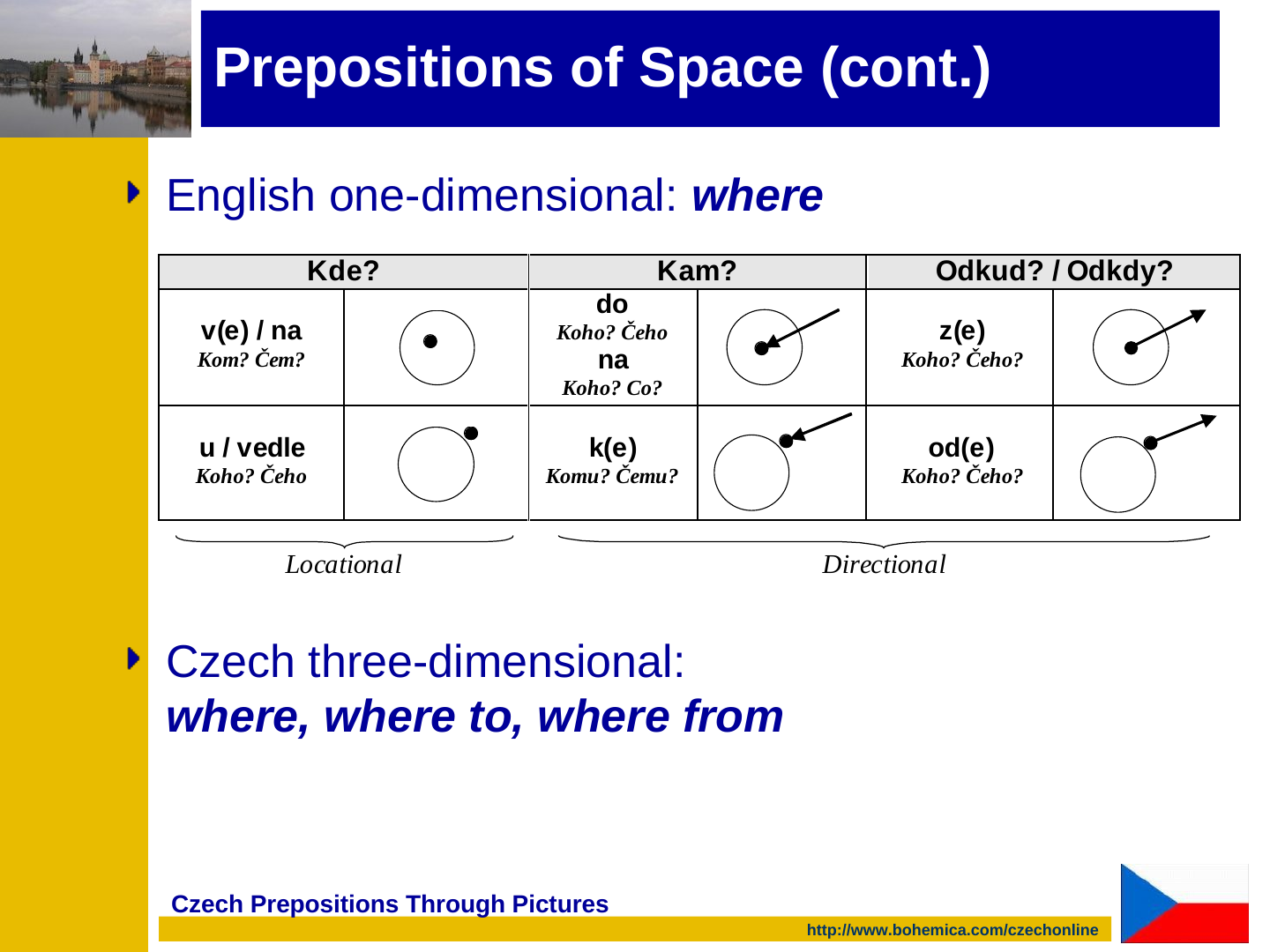
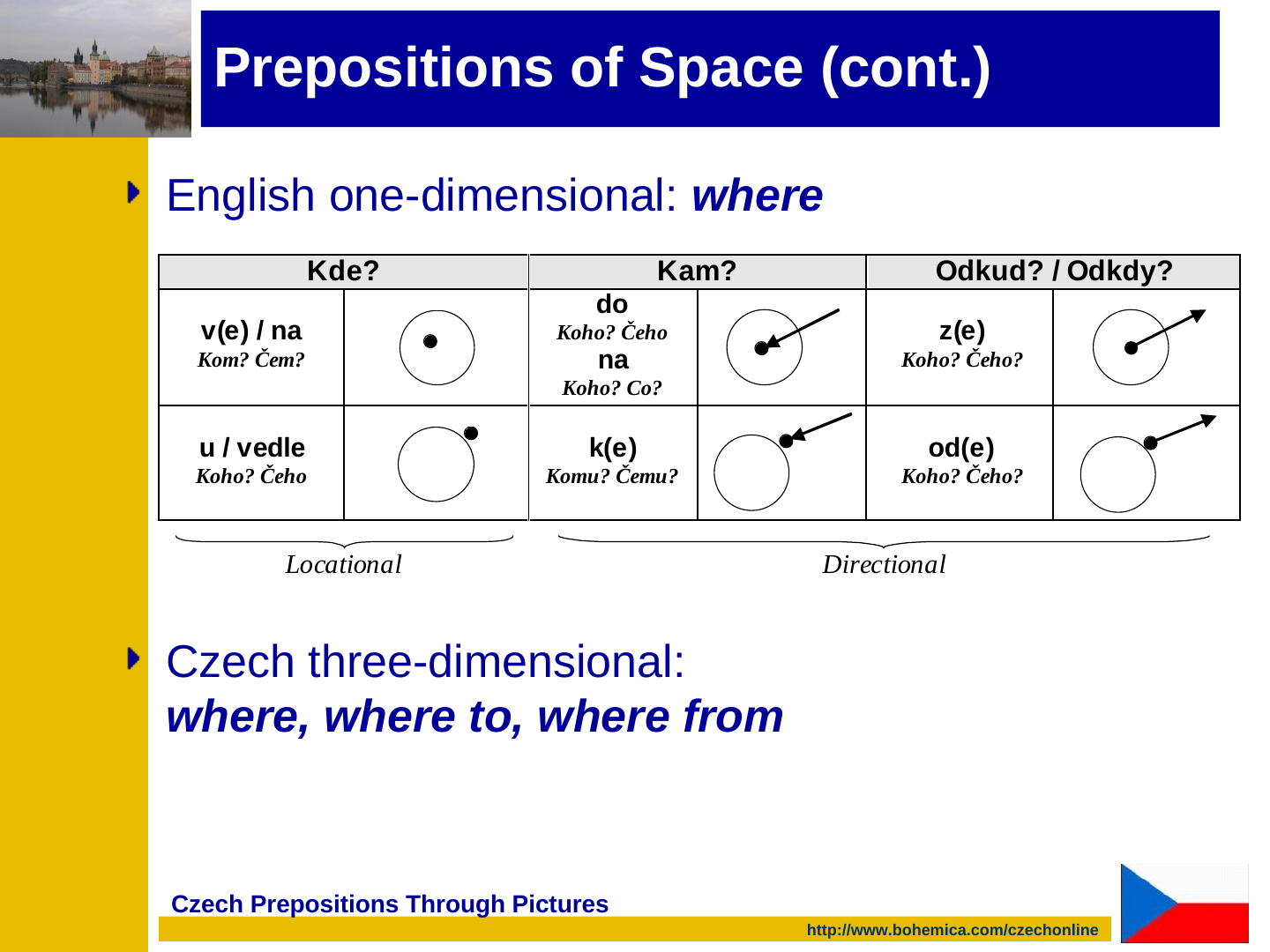
- English one-dimensional: where
- Czech three-dimensional: where, where to, where from
| Kde? | Kam? | Odkud? / Odkdy? |
|---|---|---|
| v(e) / na Kom? Čem? | do Koho? Čeho / na Koho? Co? | z(e) Koho? Čeho? |
| u / vedle Koho? Čeho | k(e) Komu? Čemu? | od(e) Koho? Čeho? |
Slide 6: How it works
How it works
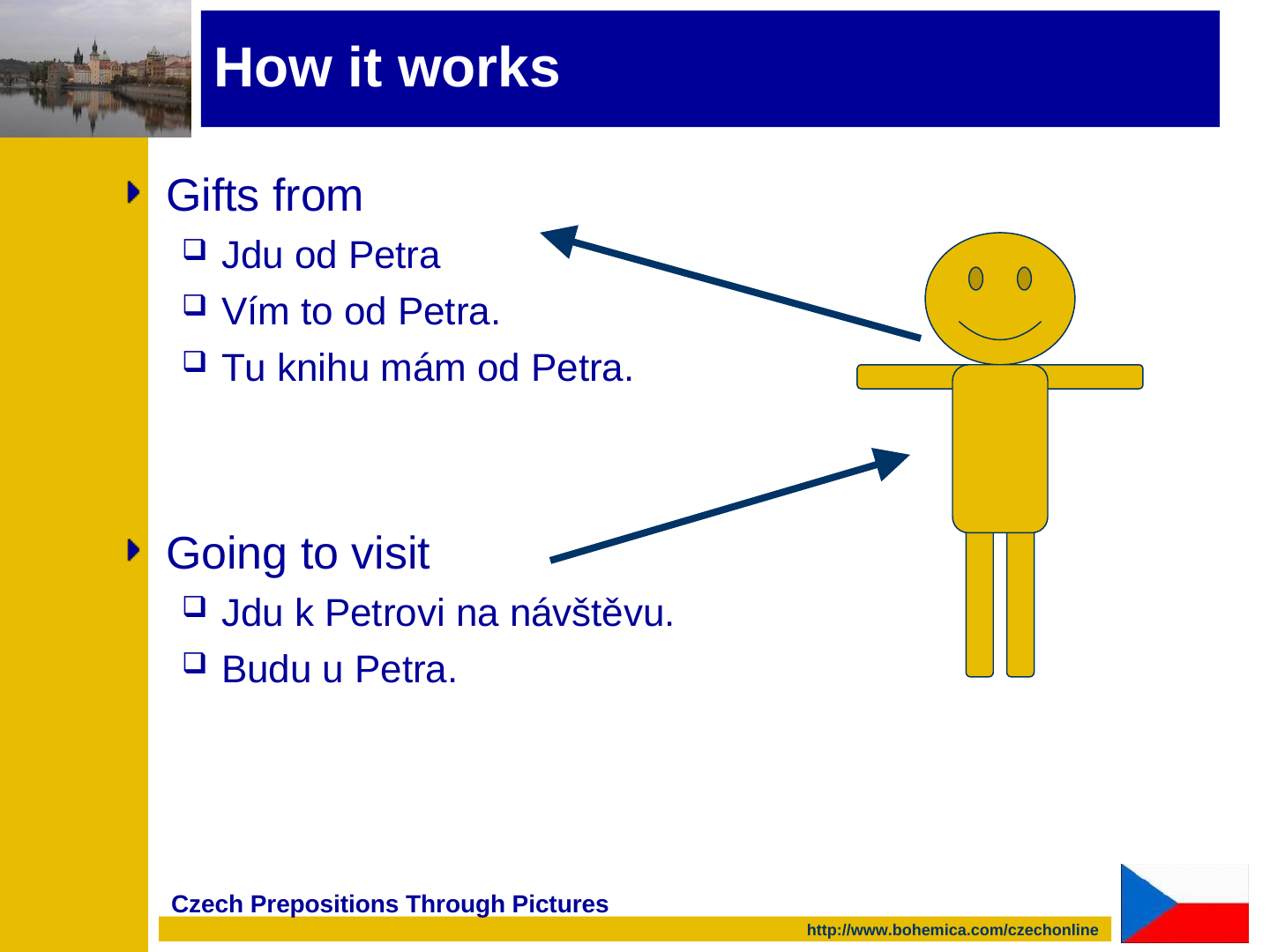
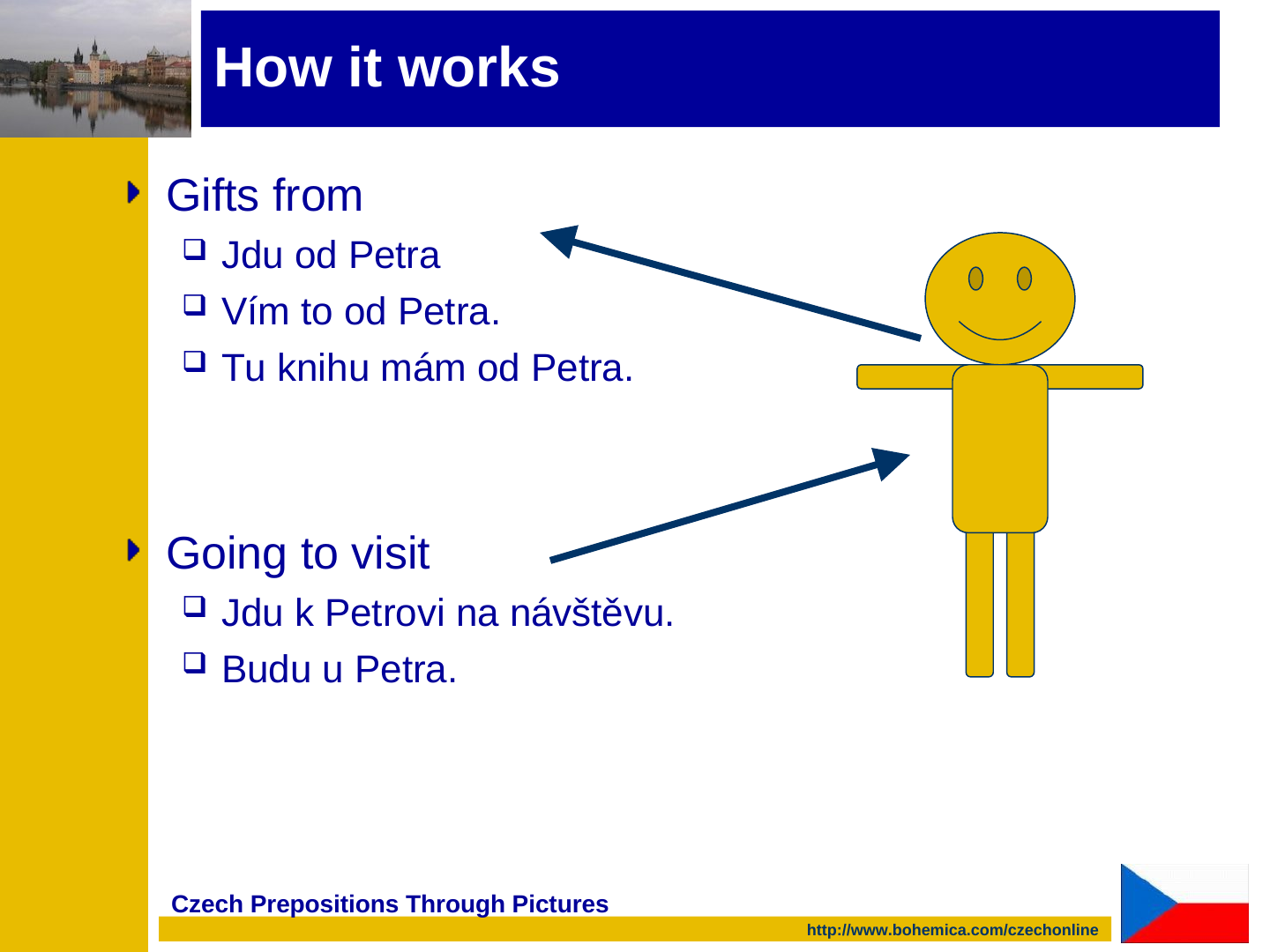
- Gifts from
- Jdu od Petra
- Vím to od Petra.
- Tu knihu mám od Petra.
- Going to visit
- Jdu k Petrovi na návštěvu.
- Budu u Petra.
Slide 7: How it does NOT work
How it does NOT work
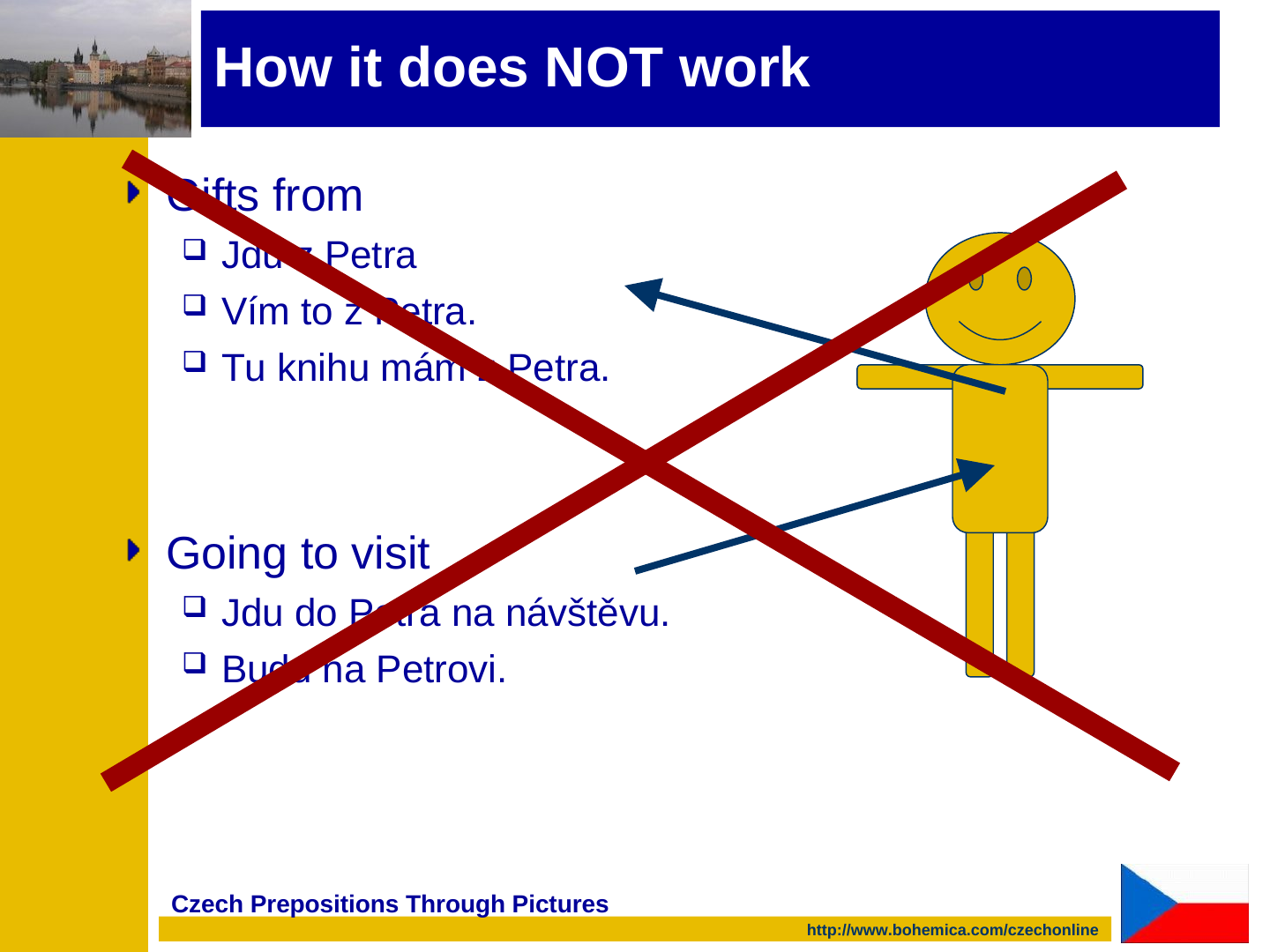
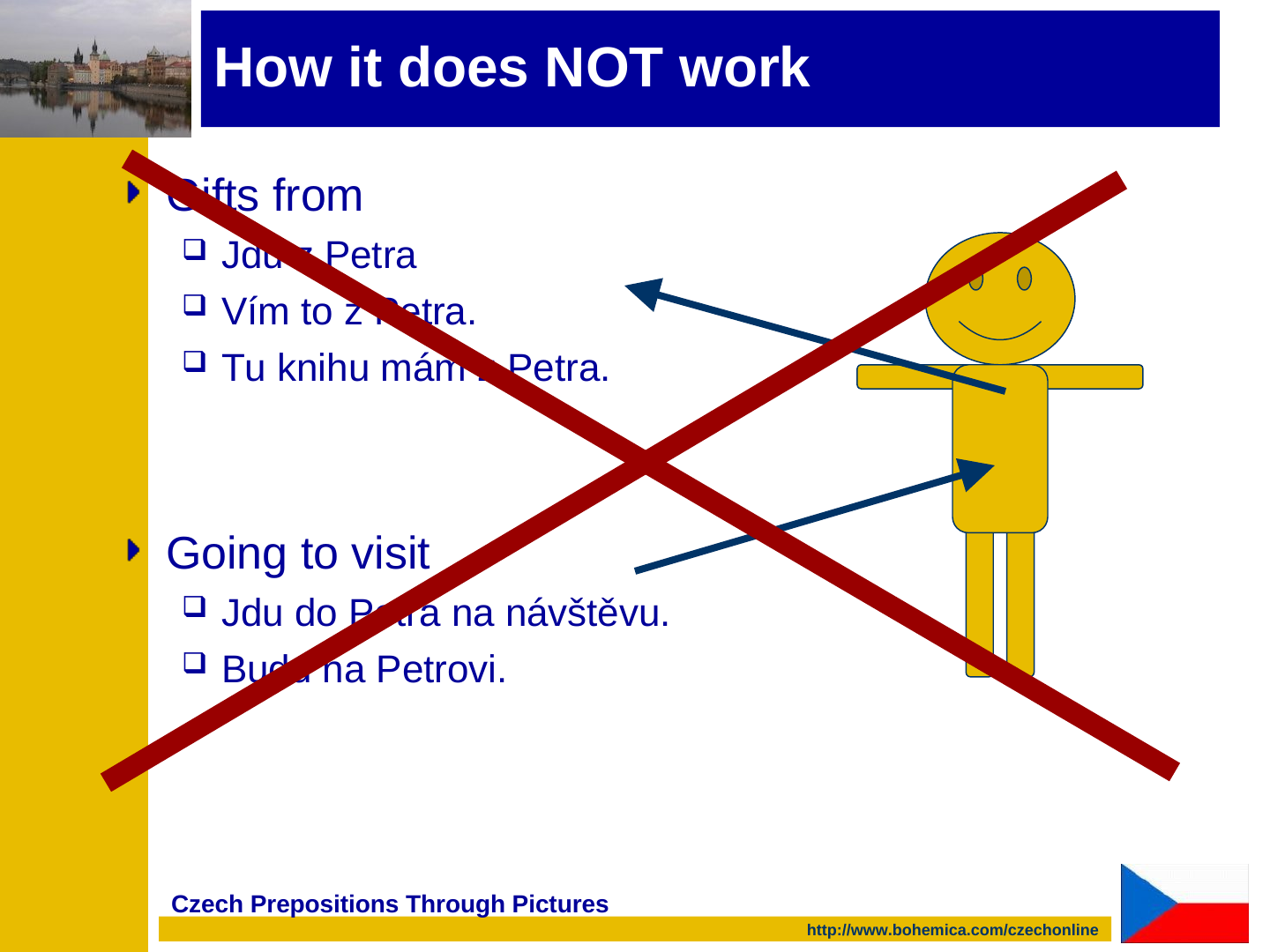
- Gifts from
- Jdu z Petra
- Vím to z Petra.
- Tu knihu mám z Petra.
- Going to visit
- Jdu do Petra na návštěvu.
- Budu na Petrovi.
Slide 8: Fun with na
Fun with na
- Core meaning
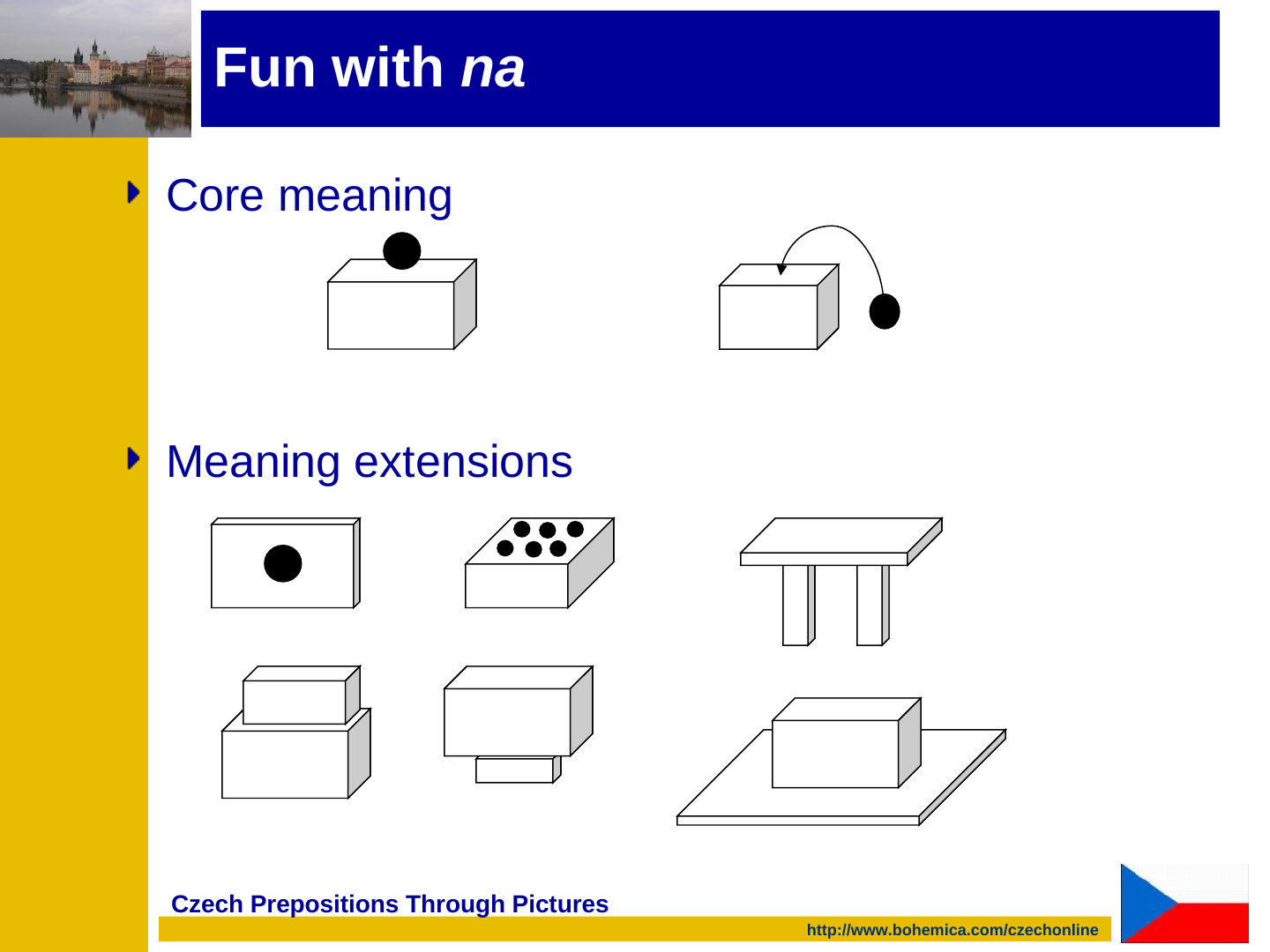
- Meaning extensions
Slide 9: Spatial uses of NA
Spatial uses of NA
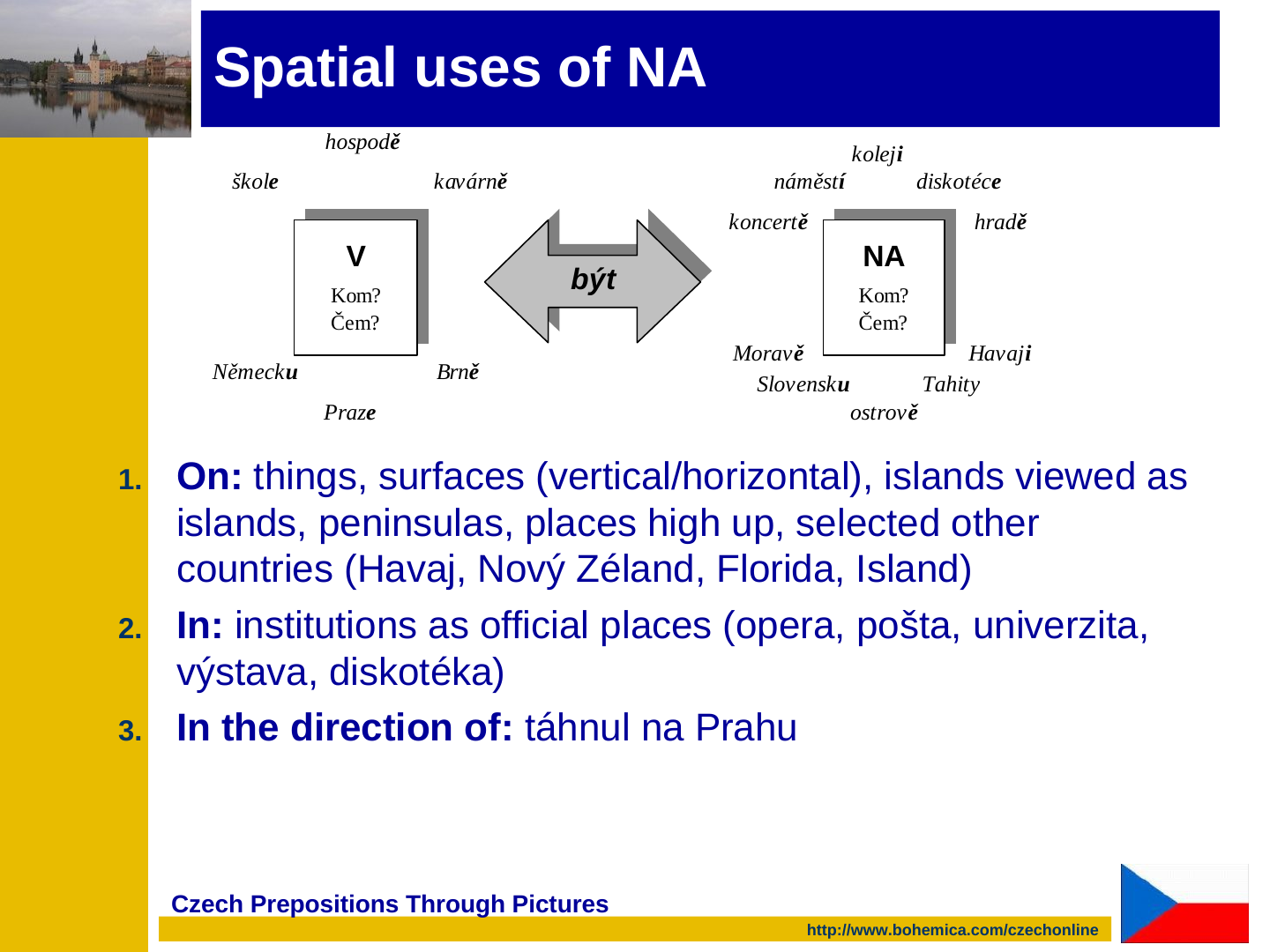
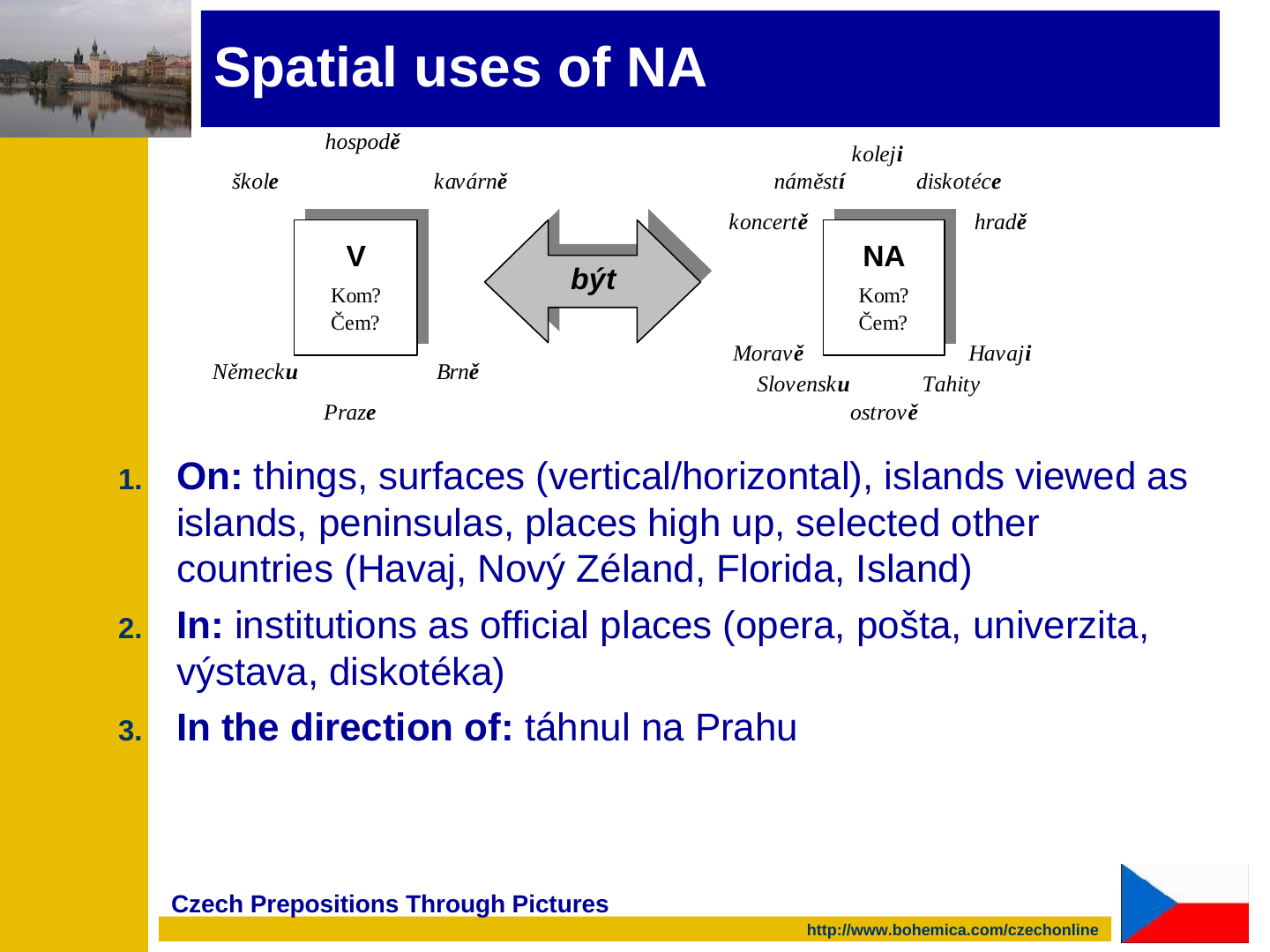
- On: things, surfaces (vertical/horizontal), islands viewed as islands, peninsulas, places high up, selected other countries (Havaj, Nový Zéland, Florida, Island)
- In: institutions as official places (opera, pošta, univerzita, výstava, diskotéka)
- In the direction of: táhnul na Prahu
Slide 10: Extended uses of NA
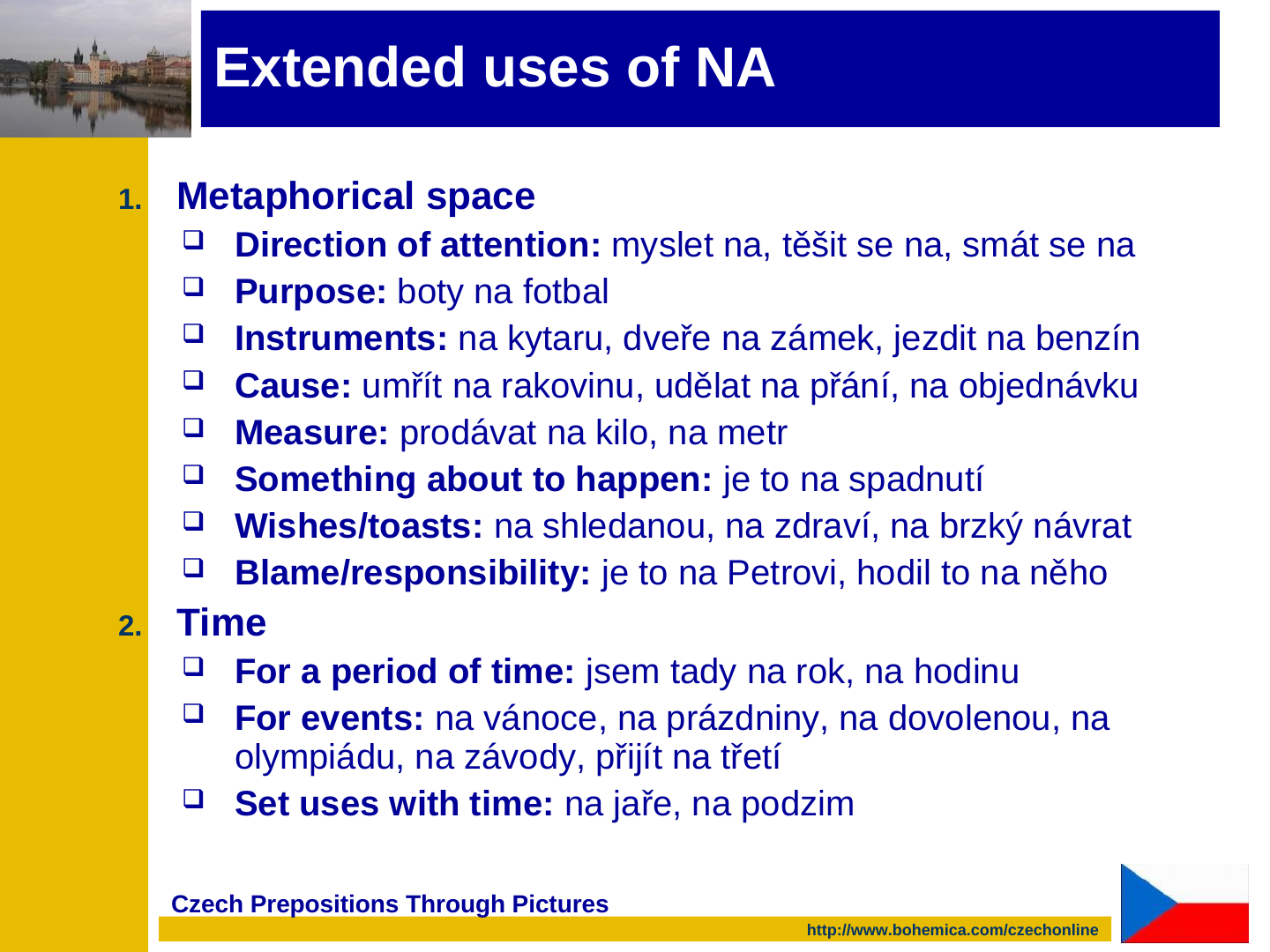
Extended uses of NA
- Metaphorical space
- Direction of attention: myslet na, těšit se na, smát se na
- Purpose: boty na fotbal
- Instruments: na kytaru, dveře na zámek, jezdit na benzín
- Cause: umřít na rakovinu, udělat na přání, na objednávku
- Measure: prodávat na kilo, na metr
- Something about to happen: je to na spadnutí
- Wishes/toasts: na shledanou, na zdraví, na brzký návrat
- Blame/responsibility: je to na Petrovi, hodil to na něho
- Time
- For a period of time: jsem tady na rok, na hodinu
- For events: na vánoce, na prázdniny, na dovolenou, na olympiádu, na závody, přijít na třetí
- Set uses with time: na jaře, na podzim
Slide 11: Non-prepositional uses of NA
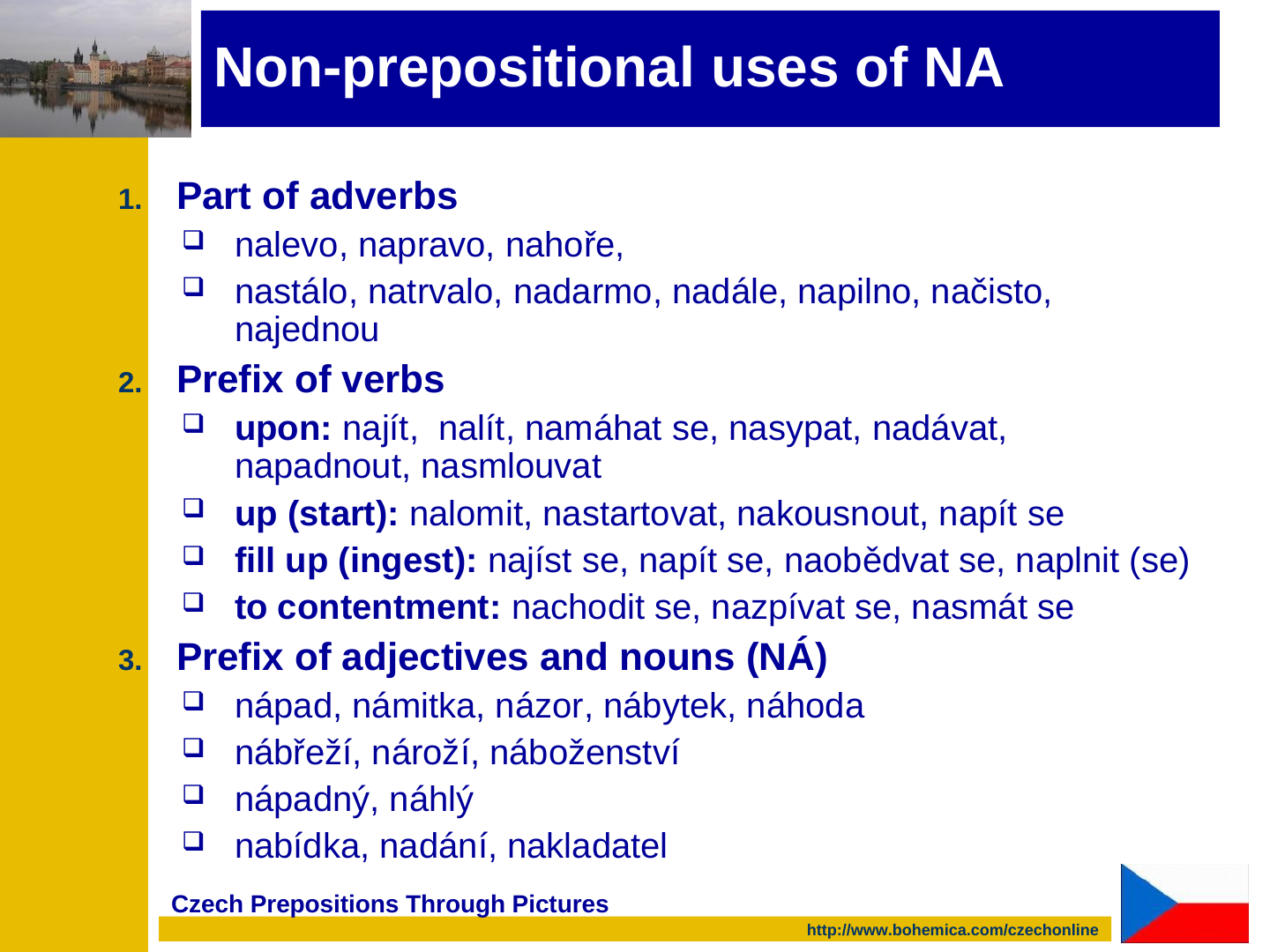
Non-prepositional uses of NA
- Part of adverbs
- nalevo, napravo, nahoře,
- nastálo, natrvalo, nadarmo, nadále, napilno, načisto, najednou
- Prefix of verbs
- upon: najít, nalít, namáhat se, nasypat, nadávat, napadnout, nasmlouvat
- up (start): nalomit, nastartovat, nakousnout, napít se
- fill up (ingest): najíst se, napít se, naobědvat se, naplnit (se)
- to contentment: nachodit se, nazpívat se, nasmát se
- Prefix of adjectives and nouns (NÁ)
- nápad, námitka, názor, nábytek, náhoda
- nábřeží, nároží, náboženství
- nápadný, náhlý
- nabídka, nadání, nakladatel
Slide 12: Learners’ lab
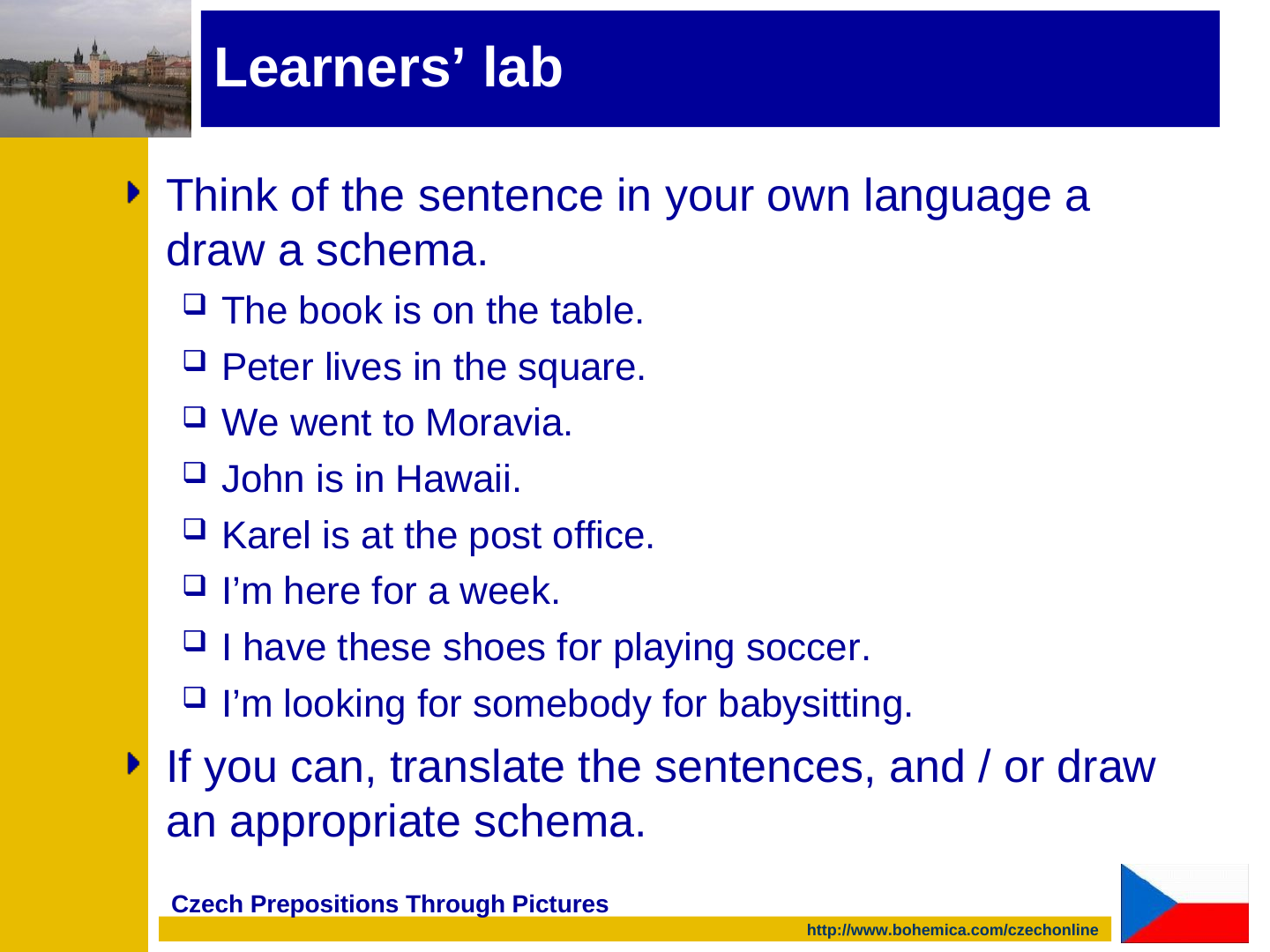
Learners’ lab
- Think of the sentence in your own language a draw a schema.
- The book is on the table.
- Peter lives in the square.
- We went to Moravia.
- John is in Hawaii.
- Karel is at the post office.
- I’m here for a week.
- I have these shoes for playing soccer.
- I’m looking for somebody for babysitting.
- If you can, translate the sentences, and / or draw an appropriate schema.
Slide 13: Learners’ lab (cont.)
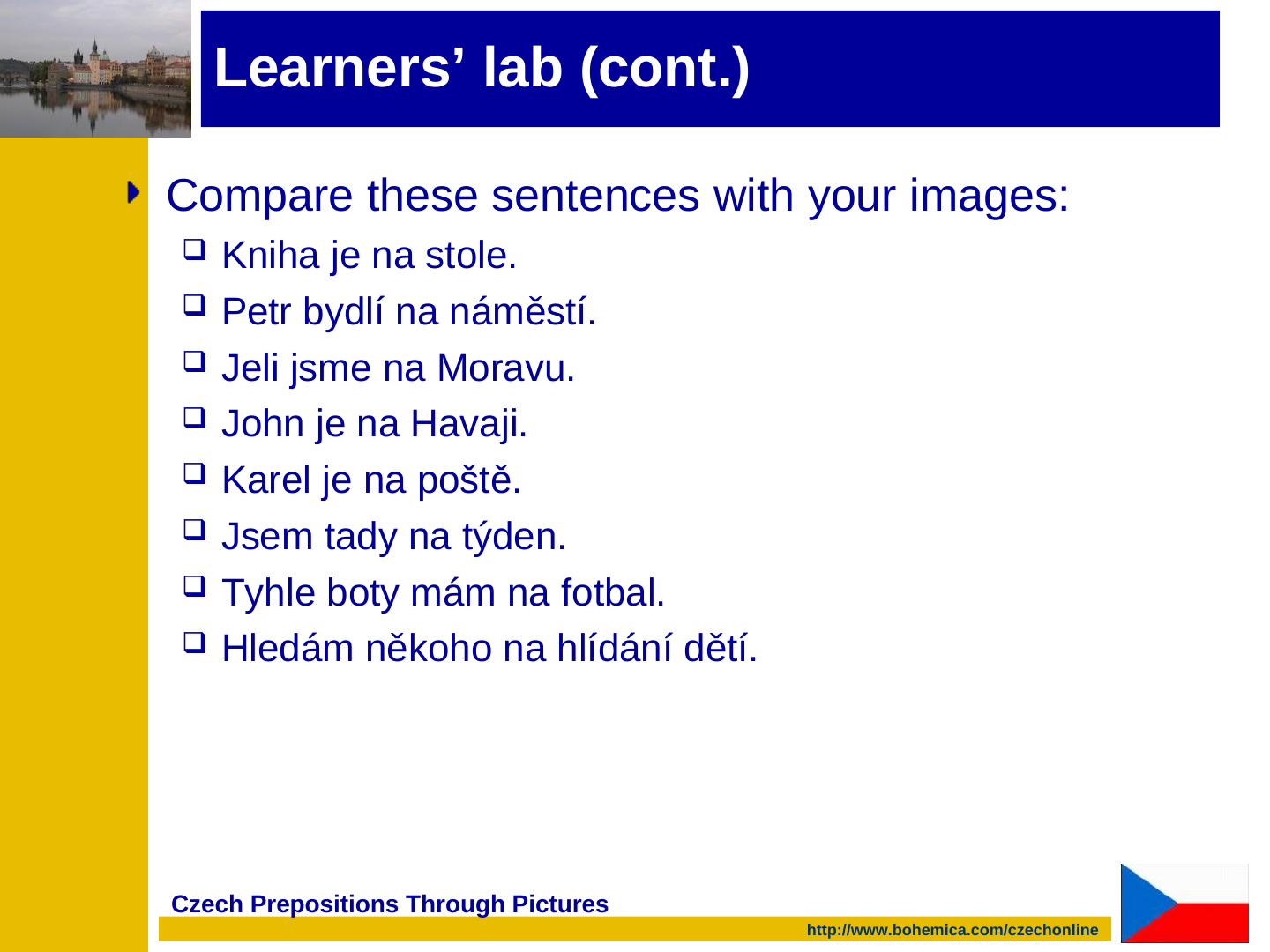
Learners’ lab (cont.)
- Compare these sentences with your images:
- Kniha je na stole.
- Petr bydlí na náměstí.
- Jeli jsme na Moravu.
- John je na Havaji.
- Karel je na poště.
- Jsem tady na týden.
- Tyhle boty mám na fotbal.
- Hledám někoho na hlídání dětí.
Slide 14: Learning tips
Learning tips
- Learn the core spatial meaning of each preposition
- Learn as many different uses of each preposition
- Create an image for each use based on the core meaning
- For abstract meanings link elements on both sides of the preposition to the original meaning