(Language) Teaching and Internet Technologies: Replacing Teachers or Empowering Them?
- SlideShare title: Presenting Bohemica.com
- Talk date: Not established
- SlideShare upload: 2007-08-18 (upload date, not the delivery date)
- Event: Not established
- Place: Not established
- Topics: Teaching & technology
- Language: en
- Slides in the original listing: 8
- Coverage: Full text of all 8 slides, each paired with its original slide image (slide N is section N).
- Original listing: https://www.slideshare.net/slideshow/presenting-bohemicacom/93770
- Cover image: https://slides.dominiklukes.net/readers/presenting-bohemicacom/pages/page-01.png
- Reader data (JSON): https://slides.dominiklukes.net/readers/presenting-bohemicacom/presentation.json
- TalkWeaver package (outline and images, ZIP): https://slides.dominiklukes.net/presenting-bohemicacom/presenting-bohemicacom-talkweaver.zip
- TalkWeaver outline: https://slides.dominiklukes.net/presenting-bohemicacom/talkweaver/presenting-bohemicacom-outline.md
- Markdown copy: https://slides.dominiklukes.net/presenting-bohemicacom/index.md
Slide 1: (Language) Teaching and Internet Technologies: Replacing Teachers or Empowering Them?
(Language) Teaching and Internet Technologies: Replacing Teachers or Empowering Them?
Dominik Lukeš
School of Slavonic and East European Languages
March 2001

Slide 2: Questions to Ask
Questions to Ask
- Philosophy of computer-assisted instruction
- Teachers aren't machines, or are they?
- What is the internet through the teacher's eyes
- Simple, cheap, available technologies: why aren't they used?
- Developing and using real online teaching materials
- Increasing the power of communication between students and teachers
- Distributed teaching and independent learning
Slide 3: The Technology of Teaching: Teaching Machines
The Technology of Teaching: Teaching Machines
Will machines replace teachers? On the contrary, they are capital equipment to be used by teachers to save time and labor. In assigning certain mechanizable functions to machines, the teacher emerges in his proper role as an indispensable human being. He may teach more students than heretofore—this is probably inevitable if the worldwide demand for education is to be satisfied—but he will do so in fewer hours and with fewer burdensome chores. In return for his greater productivity he can ask society to improve his economic condition.
Slide 4: Taking it to the Internet
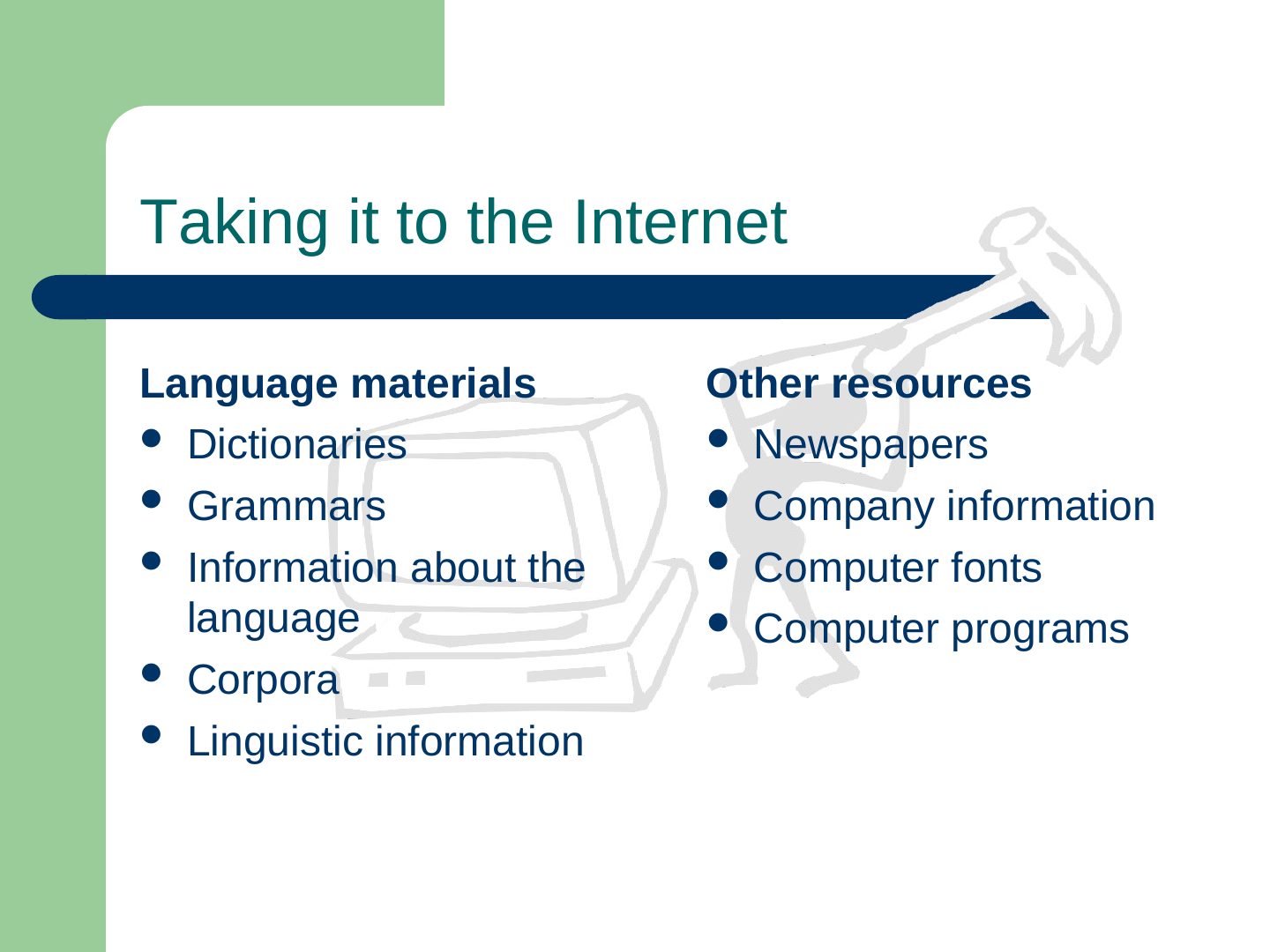
Taking it to the Internet
Language materials
- Dictionaries
- Grammars
- Information about the language
- Corpora
- Linguistic information
Other resources
- Newspapers
- Company information
- Computer fonts
- Computer programs
Slide 5: Leap of faith
Leap of faith
- Internet is good
- Computers are not here to replace teachers
- Technology doesn’t change the nature of the tasks involved
- Technology is powerful enough already to help teachers with most of what they do
Slide 6: The Big Question - Why not now
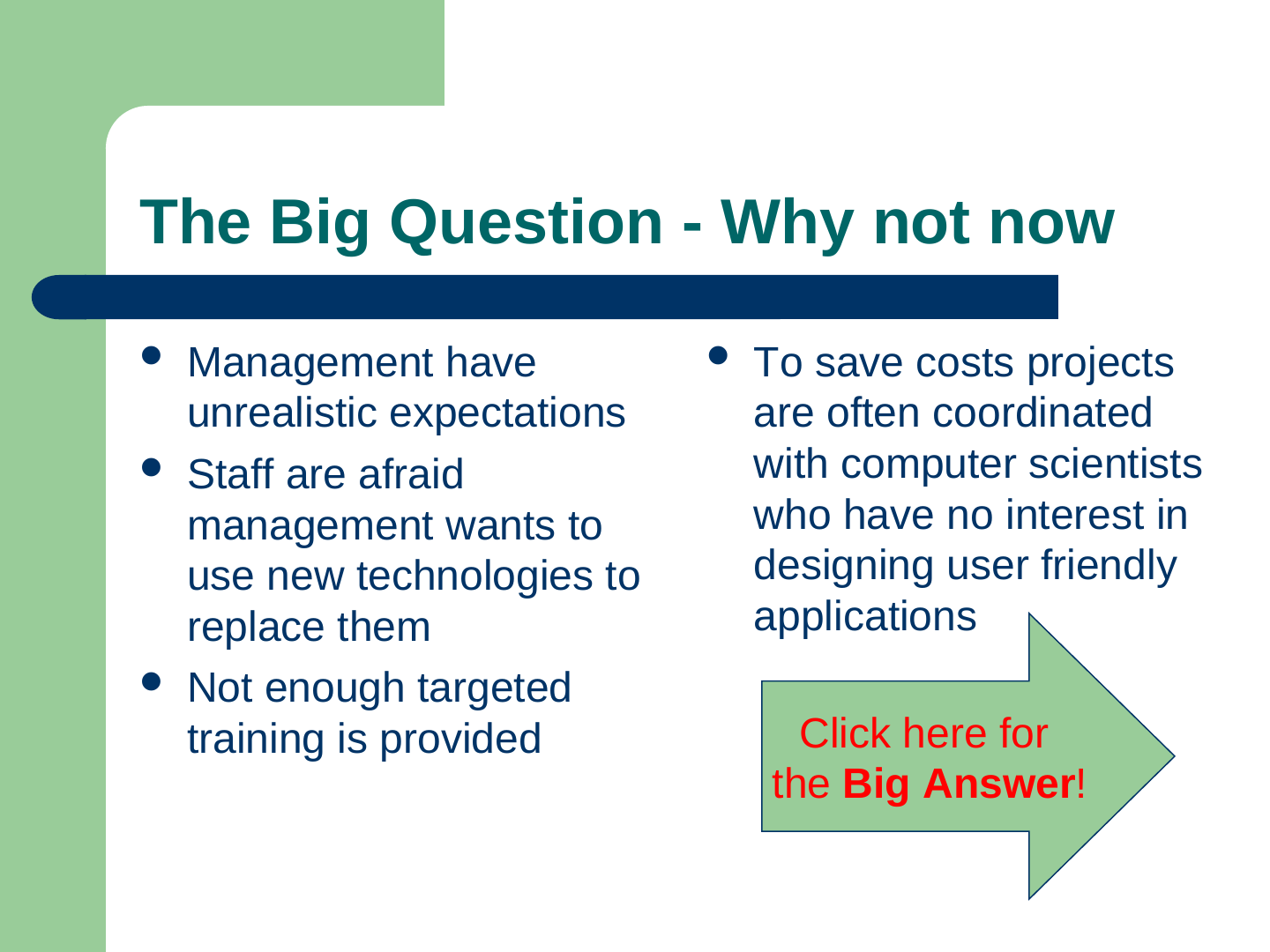
The Big Question - Why not now
- Management have unrealistic expectations
- Staff are afraid management wants to use new technologies to replace them
- Not enough targeted training is provided
- To save costs projects are often coordinated with computer scientists who have no interest in designing user friendly applications
Click here for the Big Answer!
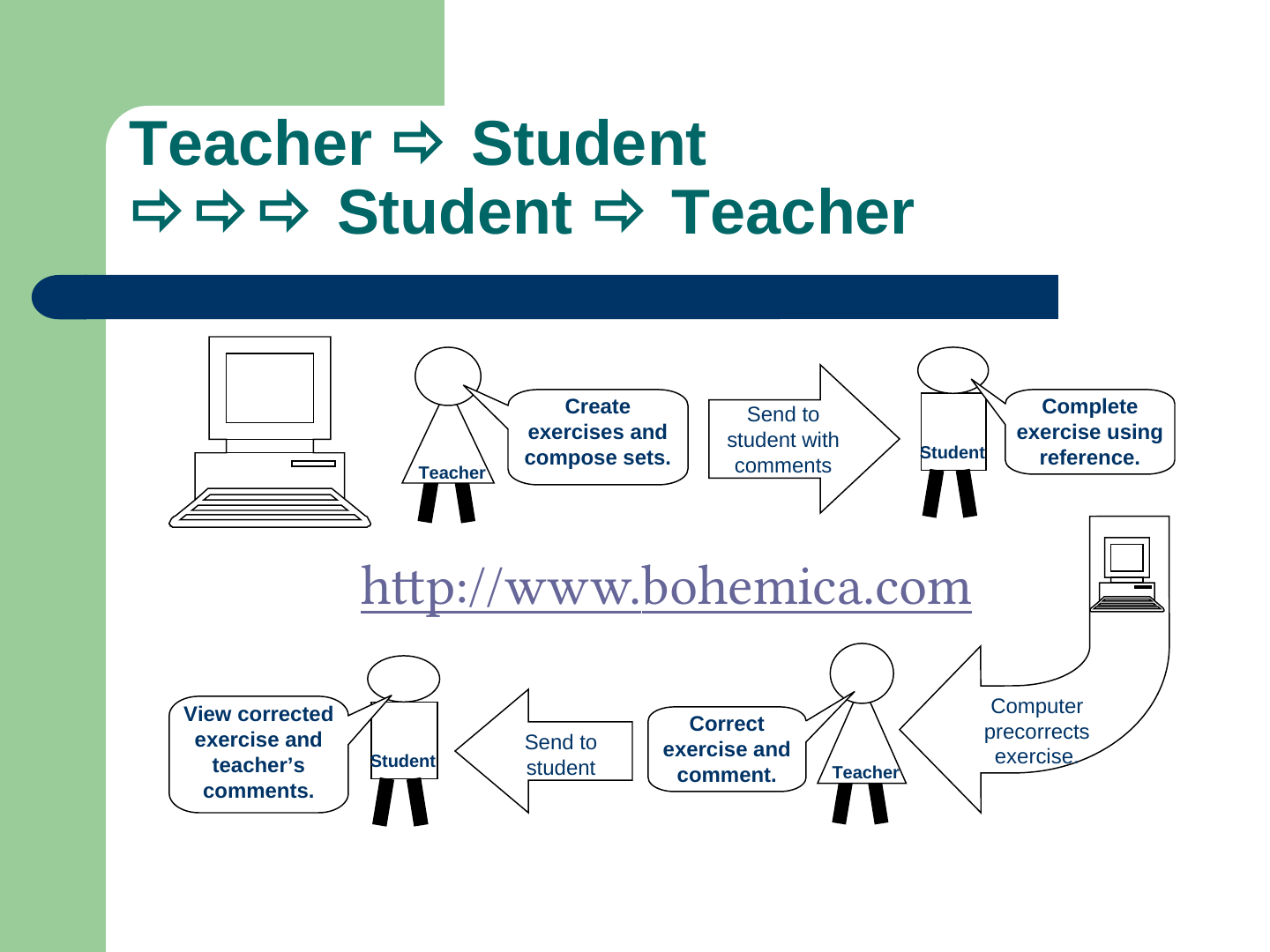
Slide 7: Teacher ⇨ Student ⇨⇨⇨ Student ⇨ Teacher
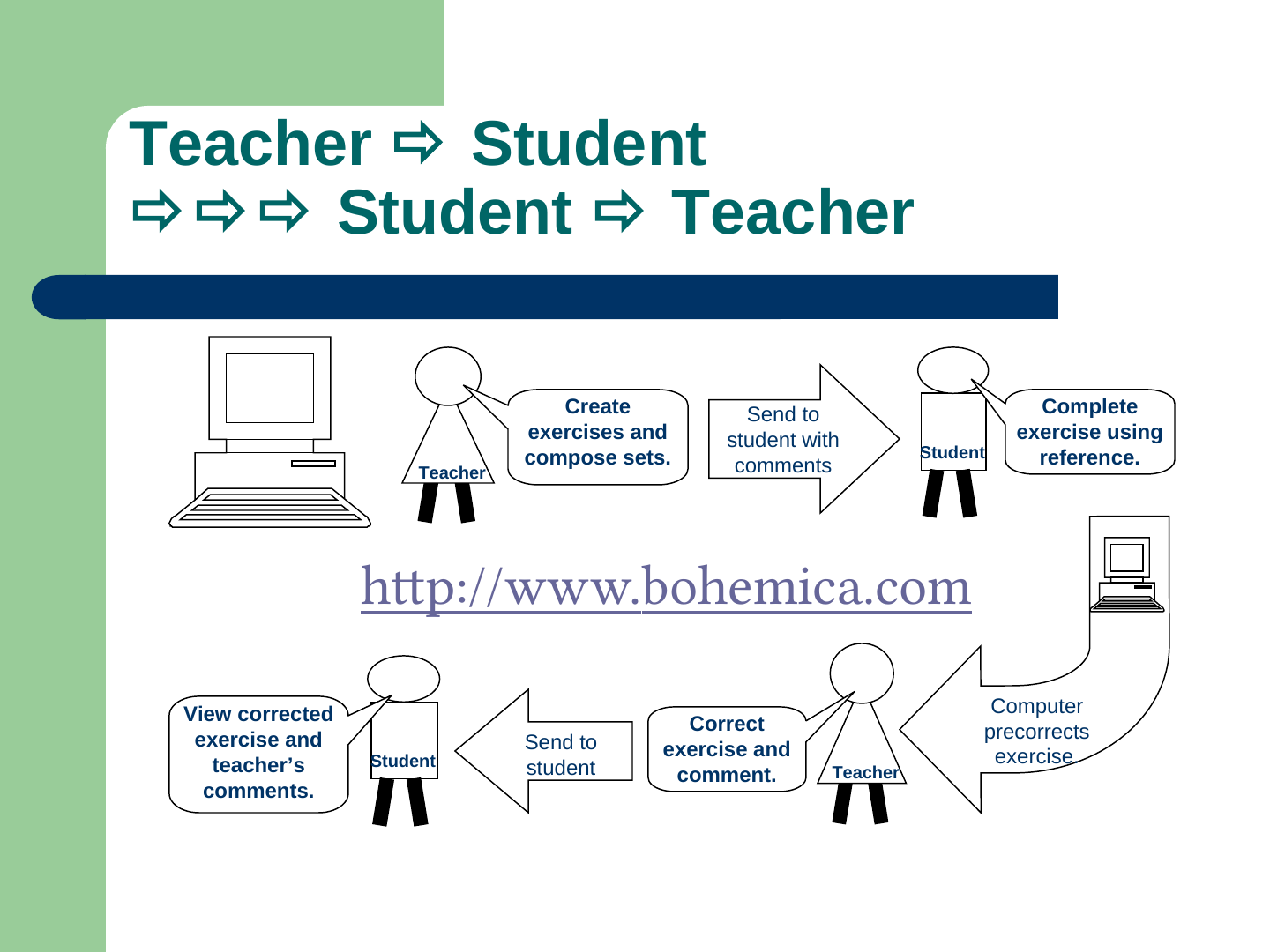
Teacher ⇨ Student ⇨⇨⇨ Student ⇨ Teacher
- Teacher: Create exercises and compose sets.
- Send to student with comments
- Student: Complete exercise using reference.
- Computer precorrects exercise.
- Teacher: Correct exercise and comment.
- Send to student
- Student: View corrected exercise and teacher’s comments.
Slide 8: Looking at the whole picture
Looking at the whole picture
Advantages of the whole system:
- Automates tasks where teachers behave like machines
- Makes communication possible outside classroom
- Anybody who can use the web can use it
- Uses cheap readily available technologies
- Isn’t limited to text
- Can incorporate other languages and other subjects
- Can incorporate future technologies

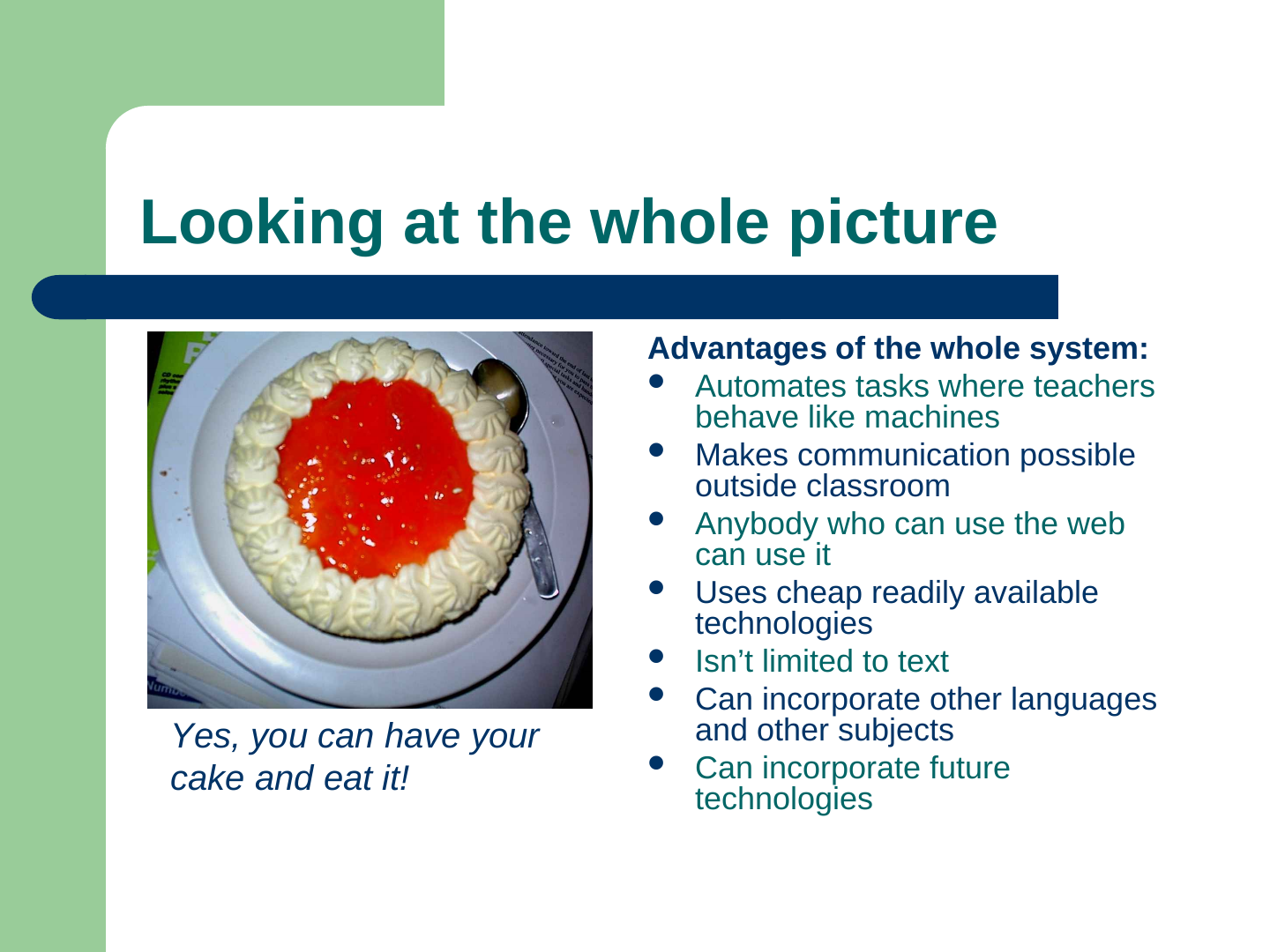
Yes, you can have your cake and eat it!