Online Corpus: Literacy Teachers’ Best Friend
- SlideShare title: Using online corpus for literacy teachers
- Talk date: Not established
- SlideShare upload: 2016-03-12 (upload date, not the delivery date)
- Event: Not established
- Place: Not established
- Topics: Language & meaning
- Language: en
- Slides in the original listing: 68
- Coverage: Full text of all 68 slides, each paired with its original slide image (slide N is section N).
- Original listing: https://www.slideshare.net/slideshow/using-online-corpus-for-literacy-teachers/59463001
- Cover image: https://slides.dominiklukes.net/readers/using-online-corpus-for-literacy-teachers/pages/page-01.png
- Reader data (JSON): https://slides.dominiklukes.net/readers/using-online-corpus-for-literacy-teachers/presentation.json
- TalkWeaver package (outline and images, ZIP): https://slides.dominiklukes.net/using-online-corpus-for-literacy-teachers/using-online-corpus-for-literacy-teachers-talkweaver.zip
- TalkWeaver outline: https://slides.dominiklukes.net/using-online-corpus-for-literacy-teachers/talkweaver/using-online-corpus-for-literacy-teachers-outline.md
- Markdown copy: https://slides.dominiklukes.net/using-online-corpus-for-literacy-teachers/index.md
Slide 1: Online Corpus Literacy Teachers’ Best Friend
Online Corpus Literacy Teachers’ Best Friend
Dominik Lukeš
[email protected] @techczech

Slide 2: Outline
Outline
- What is a corpus
- Answering questions with a corpus
- The language of corpus searches
- The corpus and the classroom
- Practice

Slide 3: Corpus / Corpora
Corpus / Corpora
????
Slide 4: of about
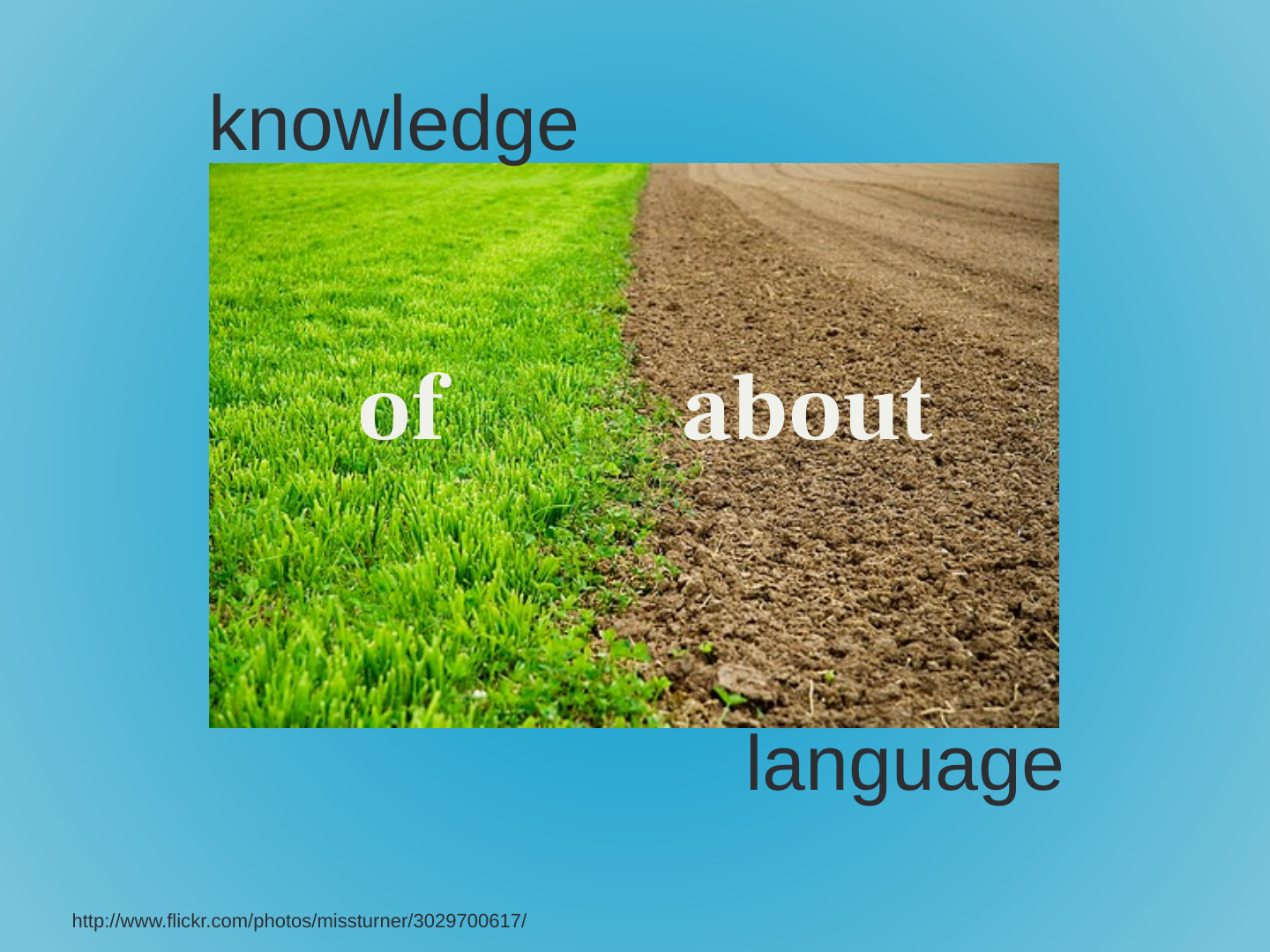
of about

On the slide, the word “knowledge” is above the photograph and “language” below it; the words “of” (over the grass) and “about” (over the soil) are written on the photograph itself.
knowledge
language
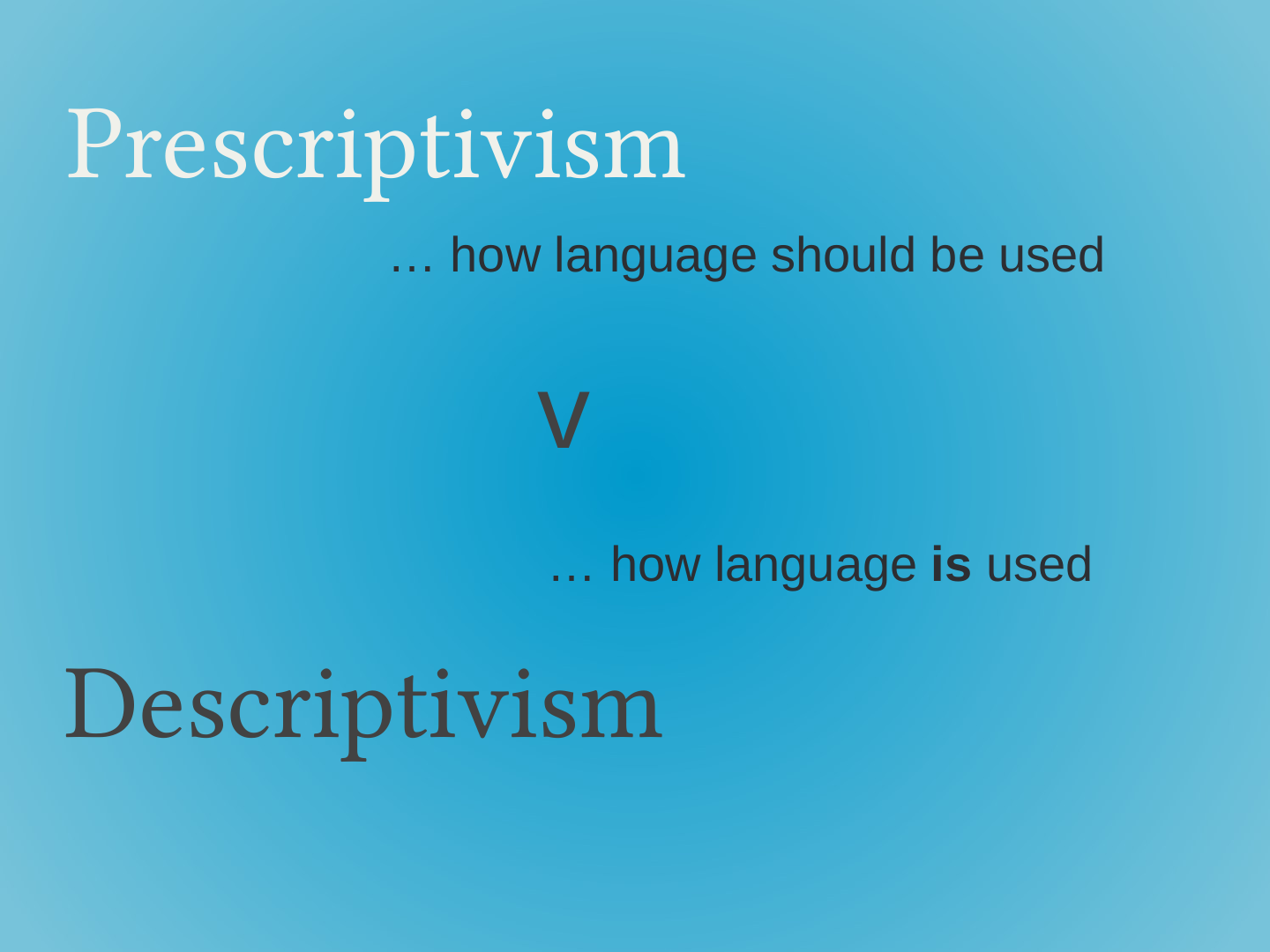
Slide 5: Prescriptivism
Prescriptivism
… how language should be used
v
… how language is used
Descriptivism
Slide 6: Slide 6
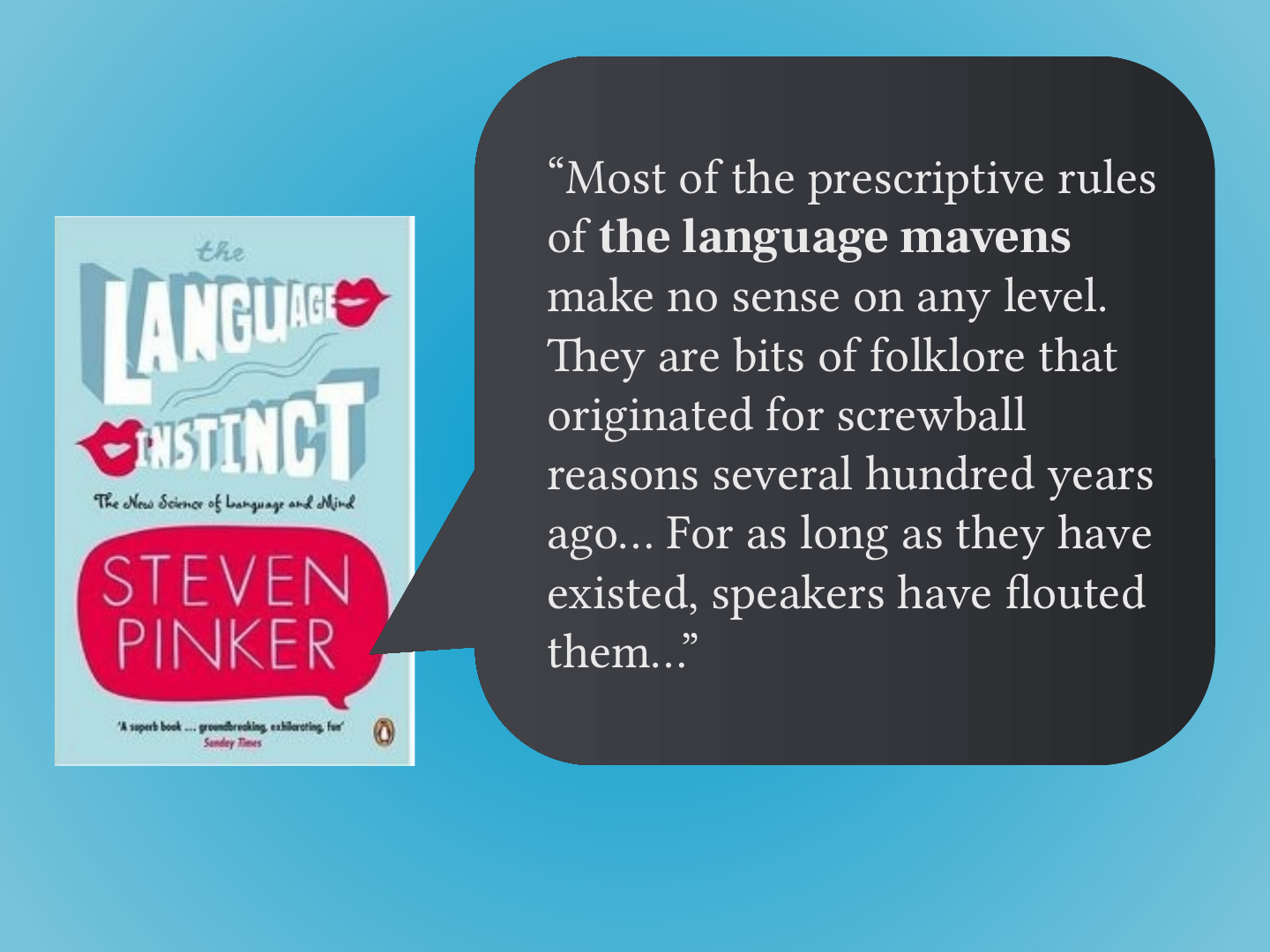
“Most of the prescriptive rules of the language mavens make no sense on any level. They are bits of folklore that originated for screwball reasons several hundred years ago… For as long as they have existed, speakers have flouted them…”
— Steven Pinker, The Language Instinct
Slide 7: Slide 7
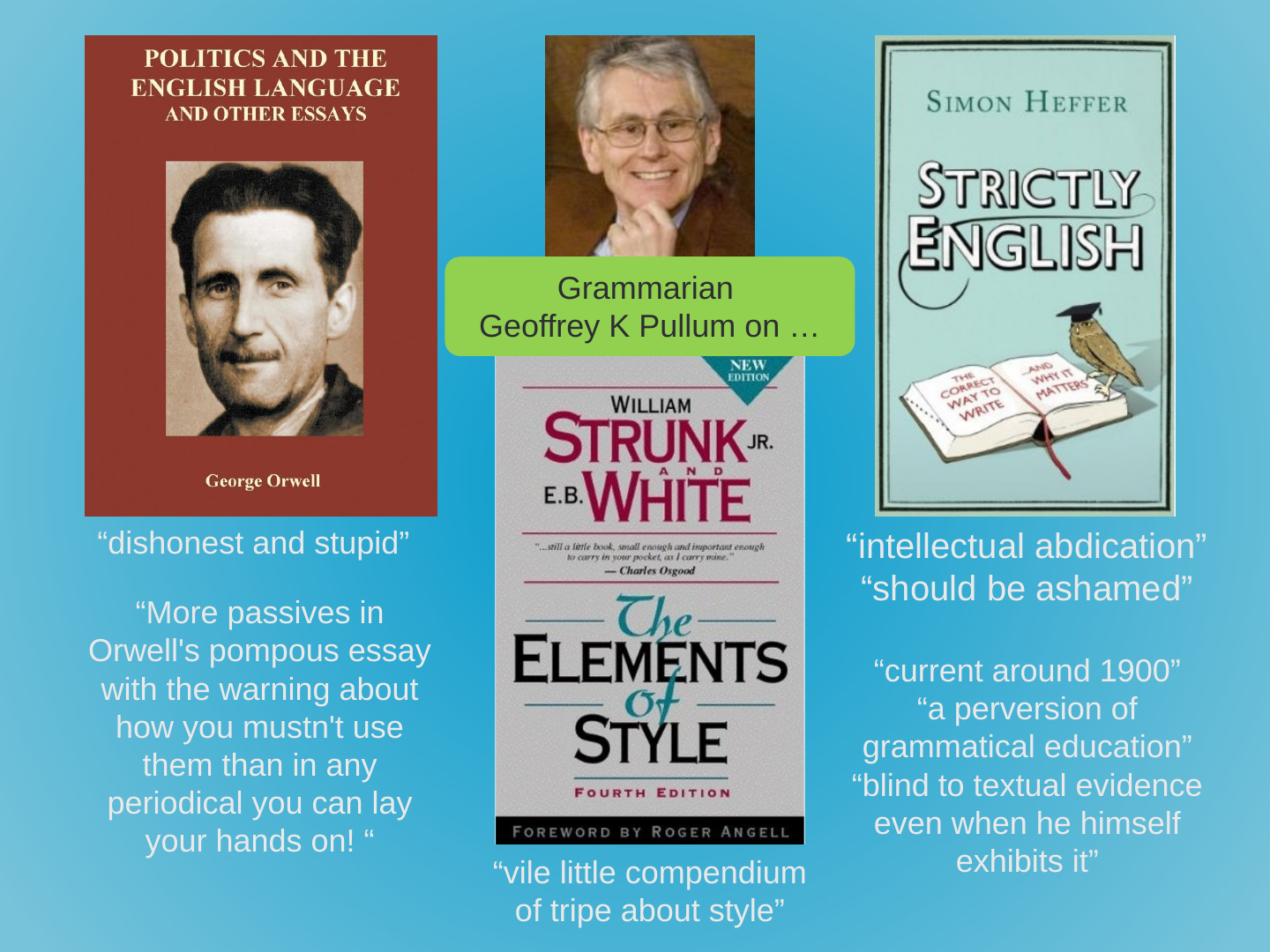
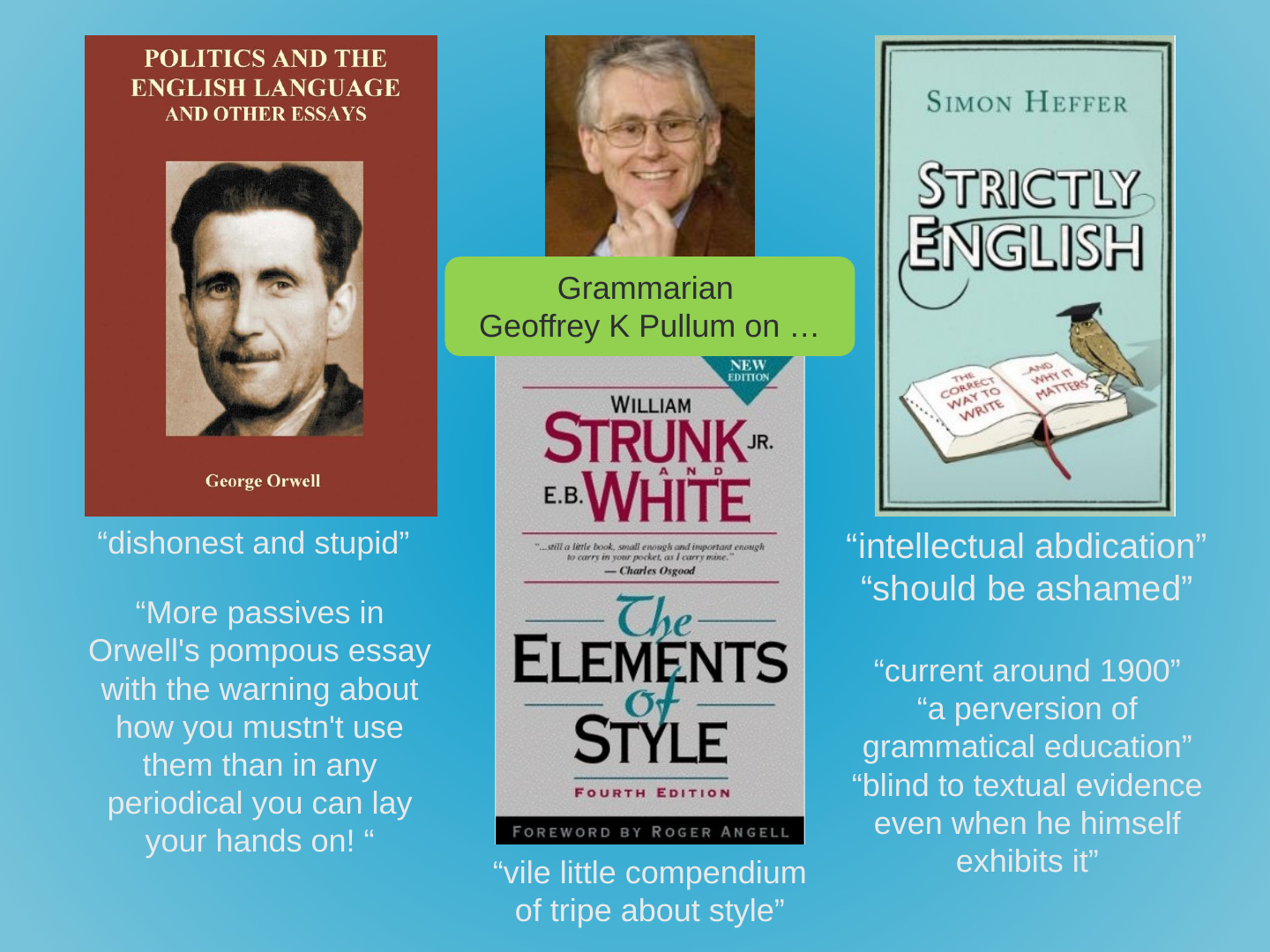
- Grammarian Geoffrey K Pullum on …
- Orwell, Politics and the English Language
- “dishonest and stupid”
- “More passives in Orwell's pompous essay with the warning about how you mustn't use them than in any periodical you can lay your hands on! “
- Strunk and White, The Elements of Style
- “vile little compendium of tripe about style”
- Heffer, Strictly English
- “intellectual abdication”
- “should be ashamed”
- “current around 1900”
- “a perversion of grammatical education”
- “blind to textual evidence even when he himself exhibits it”
- Orwell, Politics and the English Language
Slide 8: Slide 8
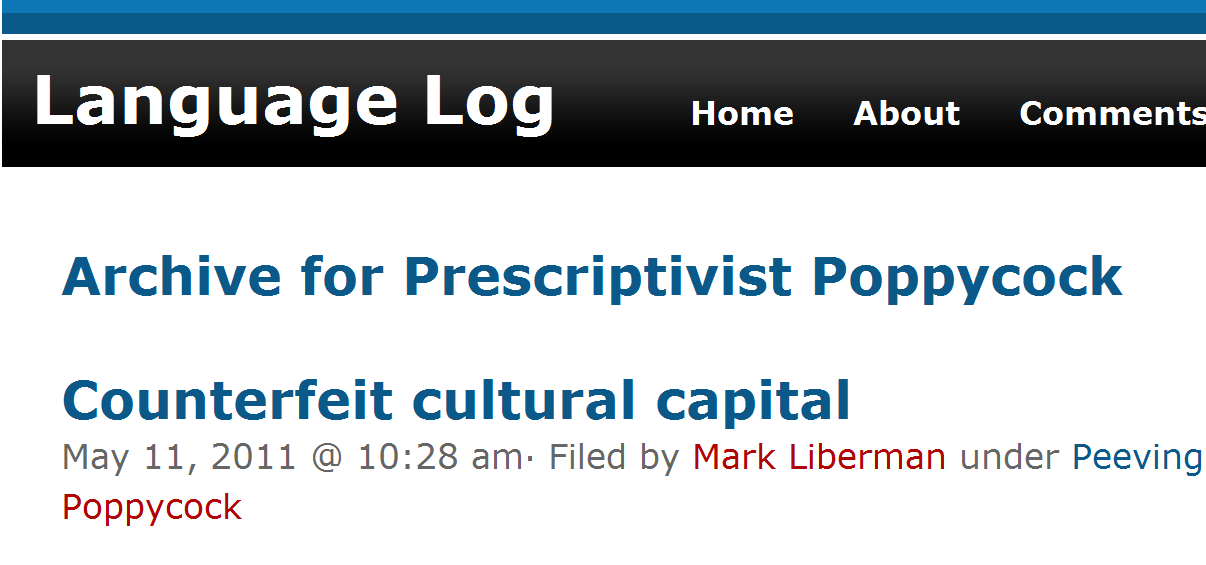
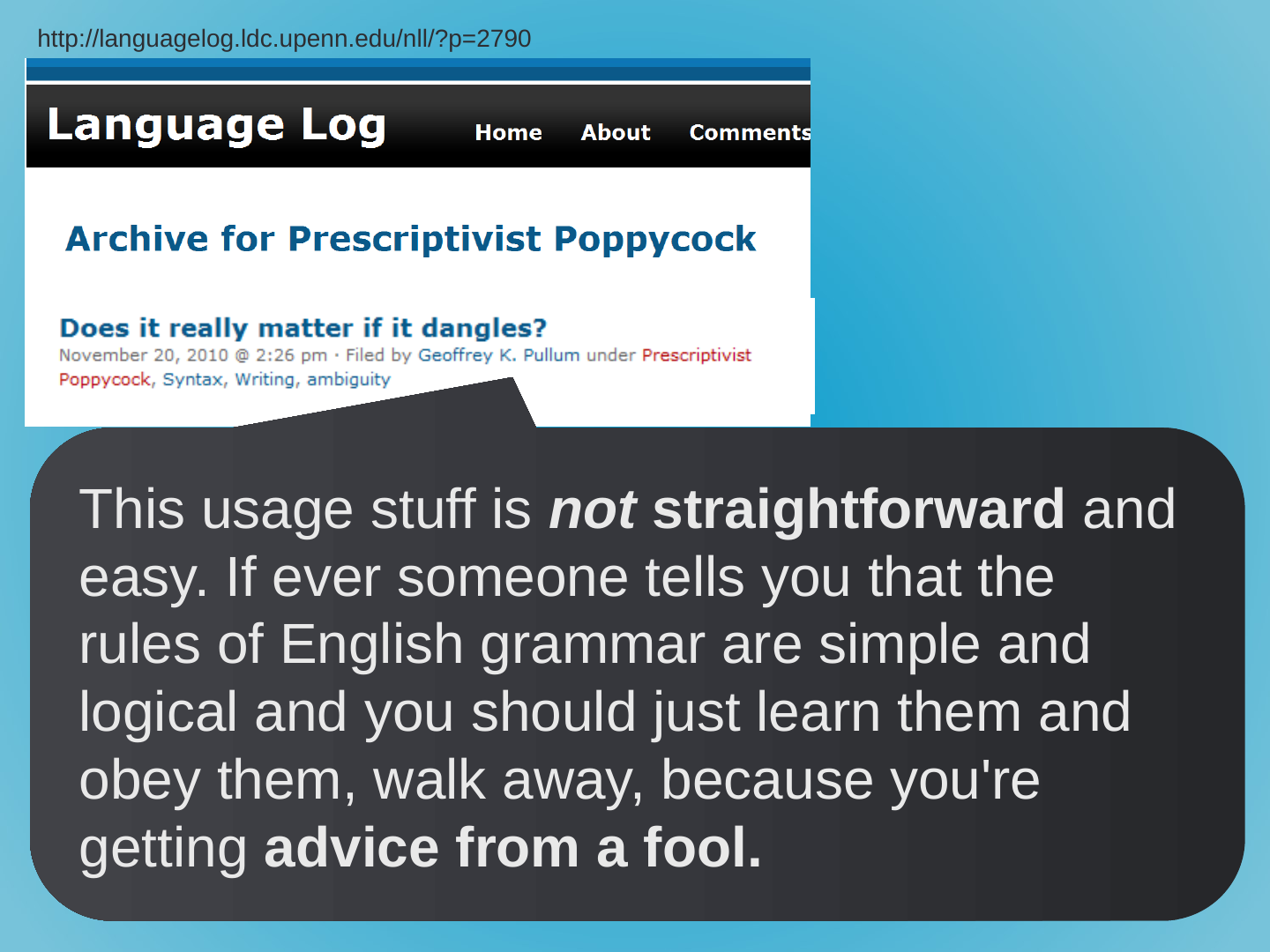
http://languagelog.ldc.upenn.edu/nll/?p=2790

This usage stuff is not straightforward and easy. If ever someone tells you that the rules of English grammar are simple and logical and you should just learn them and obey them, walk away, because you're getting advice from a fool.
Slide 9: Corpus
Corpus
Key modern tool for finding out about how language works…
Slide 10: Corpus
Corpus
… is a large database of representative language samples …
Slide 11: Corpus
Corpus
… 100s of millions of words from (mostly) written language in different genres in small samples (~2000 words) …
Slide 12: Corpus
Corpus
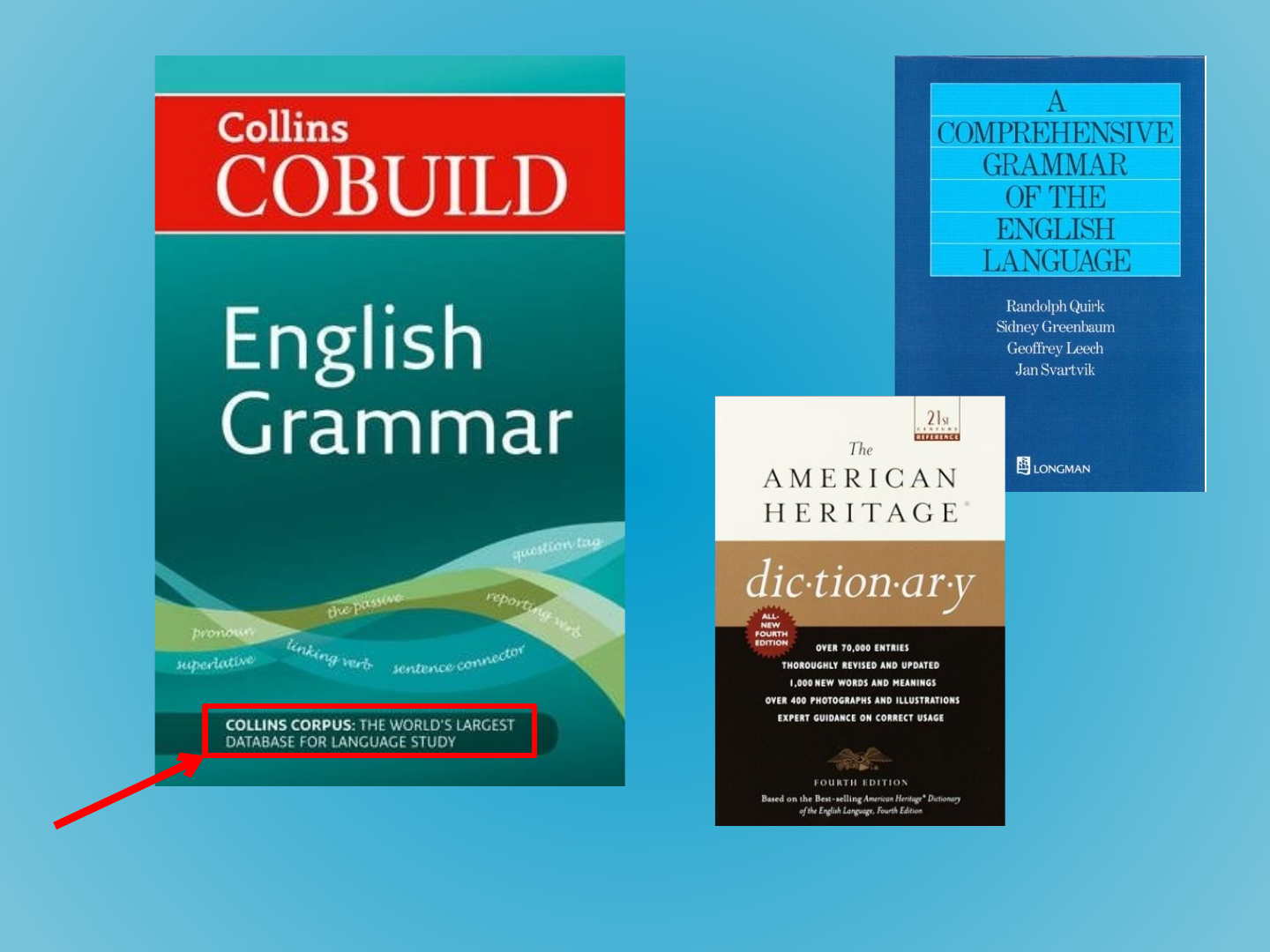
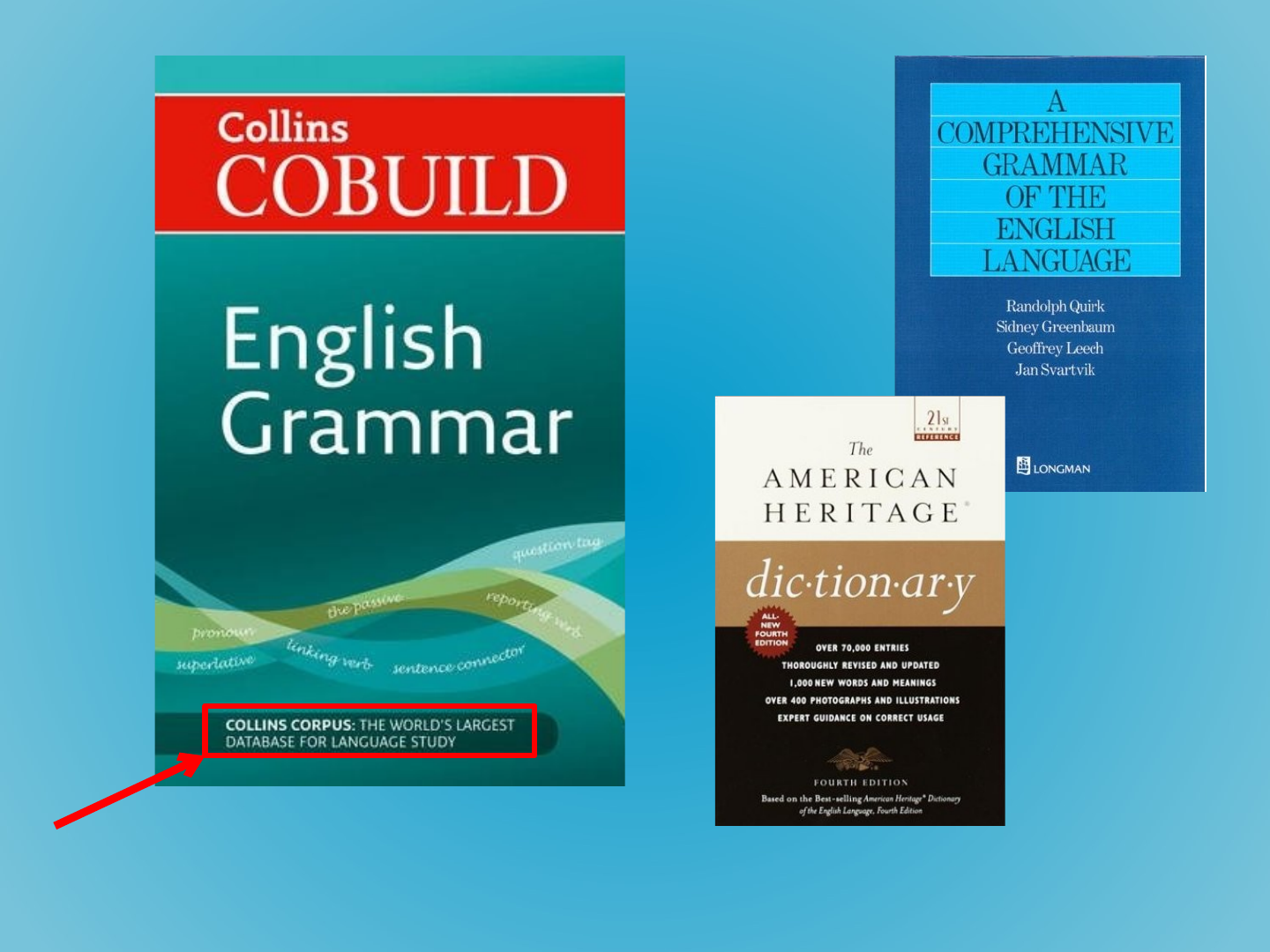
… used for linguistic research, making dictionaries, writing grammars, …
Slide 13: Slide 13
Slide 14: Corpora available for teachers
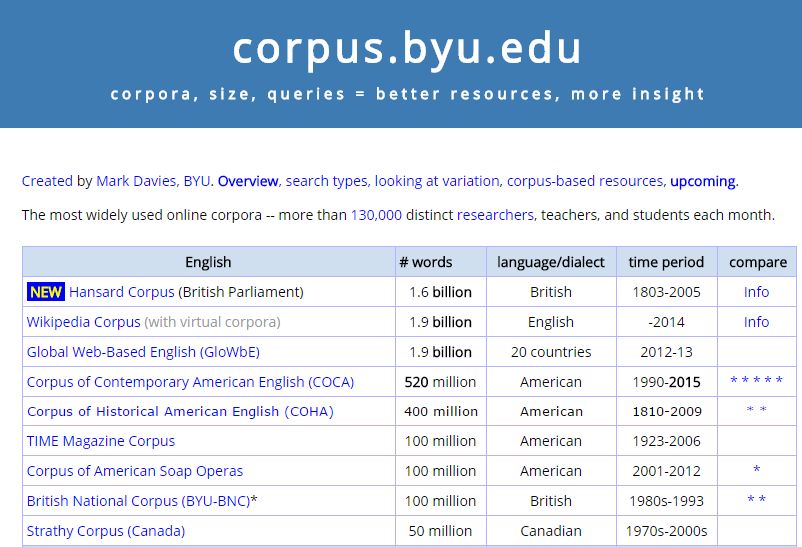
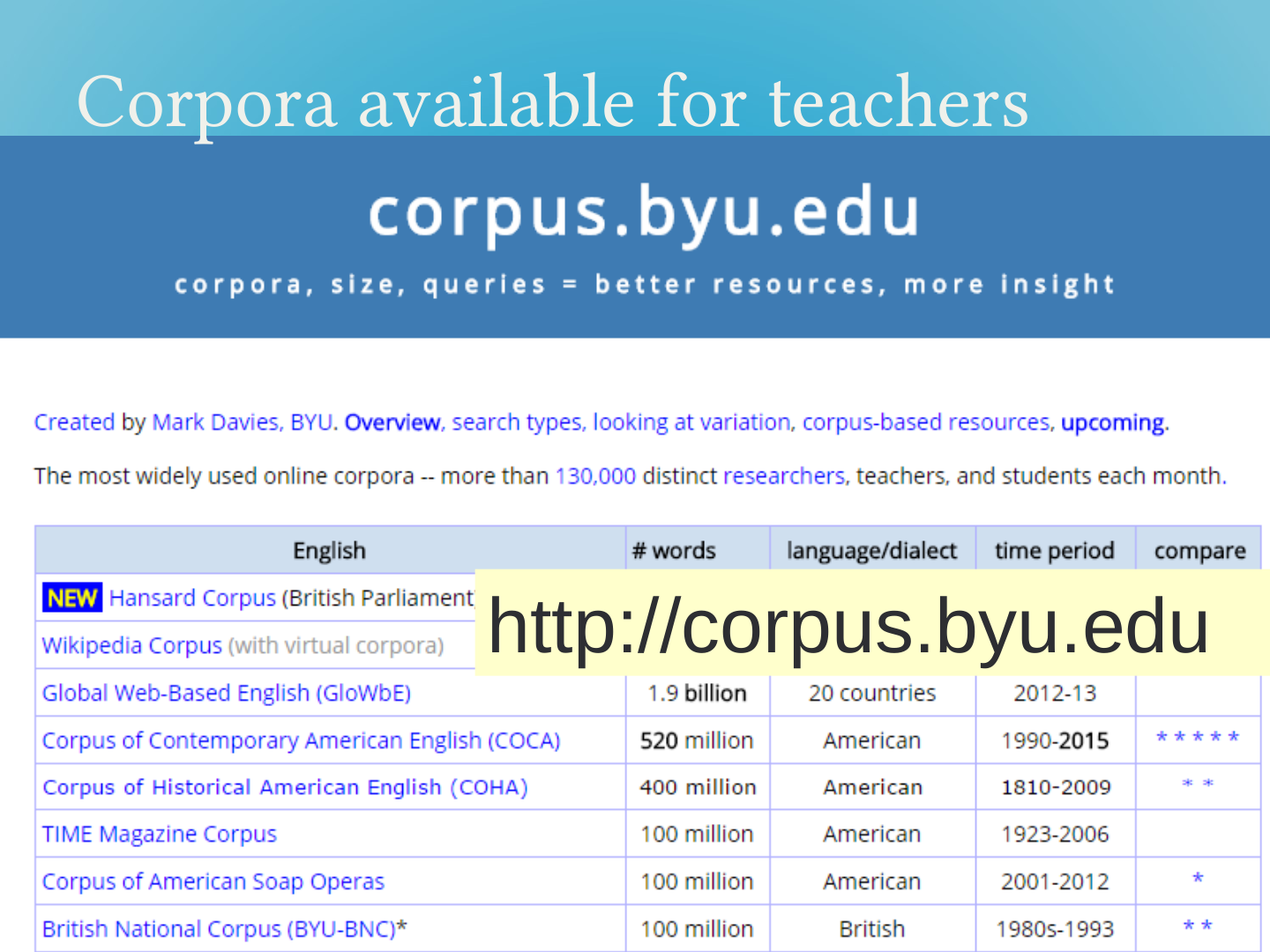
Corpora available for teachers
Slide 15: BYU corpora available
BYU corpora available
- COCA (contemporary Am English)
- COHA (historical Am English)
- GloWbE (global web English)
- Wikipedia
- Google Books (BrEng/AmEng)
- BNC (British National Corpus)
- Hansard (British parliamentary speeches)
- Spanish/Portugese

Slide 16: Access to COCA and related BYU corpora is free…
Access to COCA and related BYU corpora is free…
…but free registration required for more than ~10 queries a day

Slide 17: Slide 17
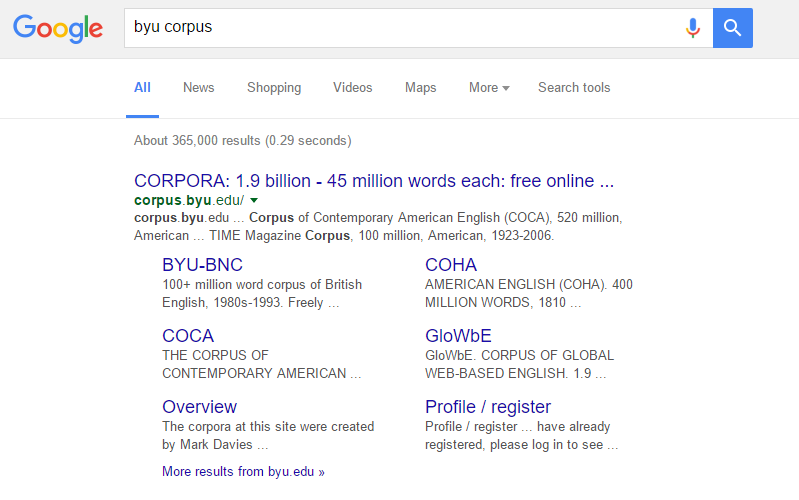
On the slide, a red ellipse is drawn round the search box that holds “byu corpus”.
Slide 18: Other resources derived from BYU corpora
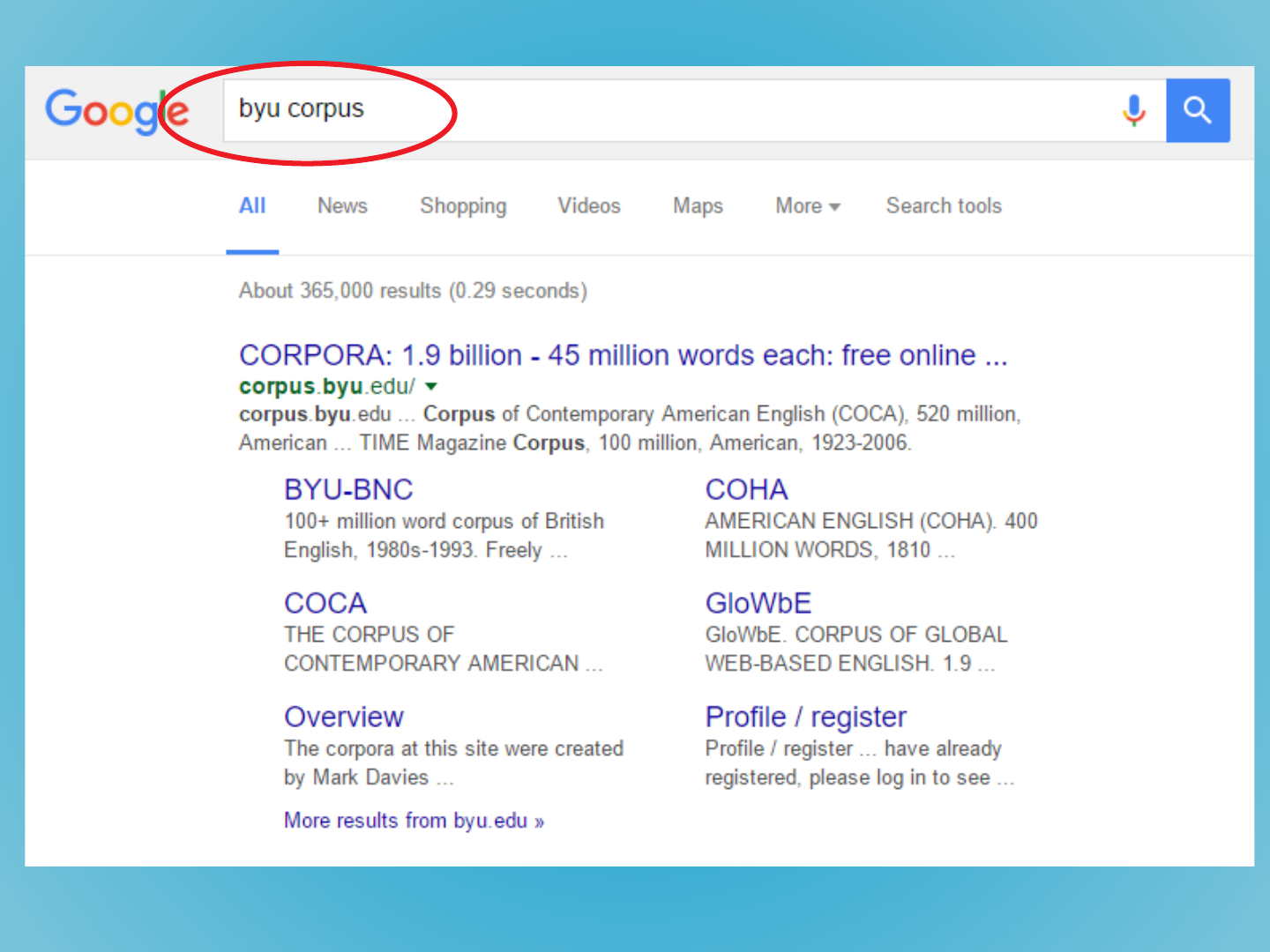
Other resources derived from BYU corpora
- WordFrequency.info
- WordAndPhrase.info
- AcademicWords.info
- Collocates.info
Slide 19: Slide 19


Slide 20: Slide 20
Slide 21: Slide 21

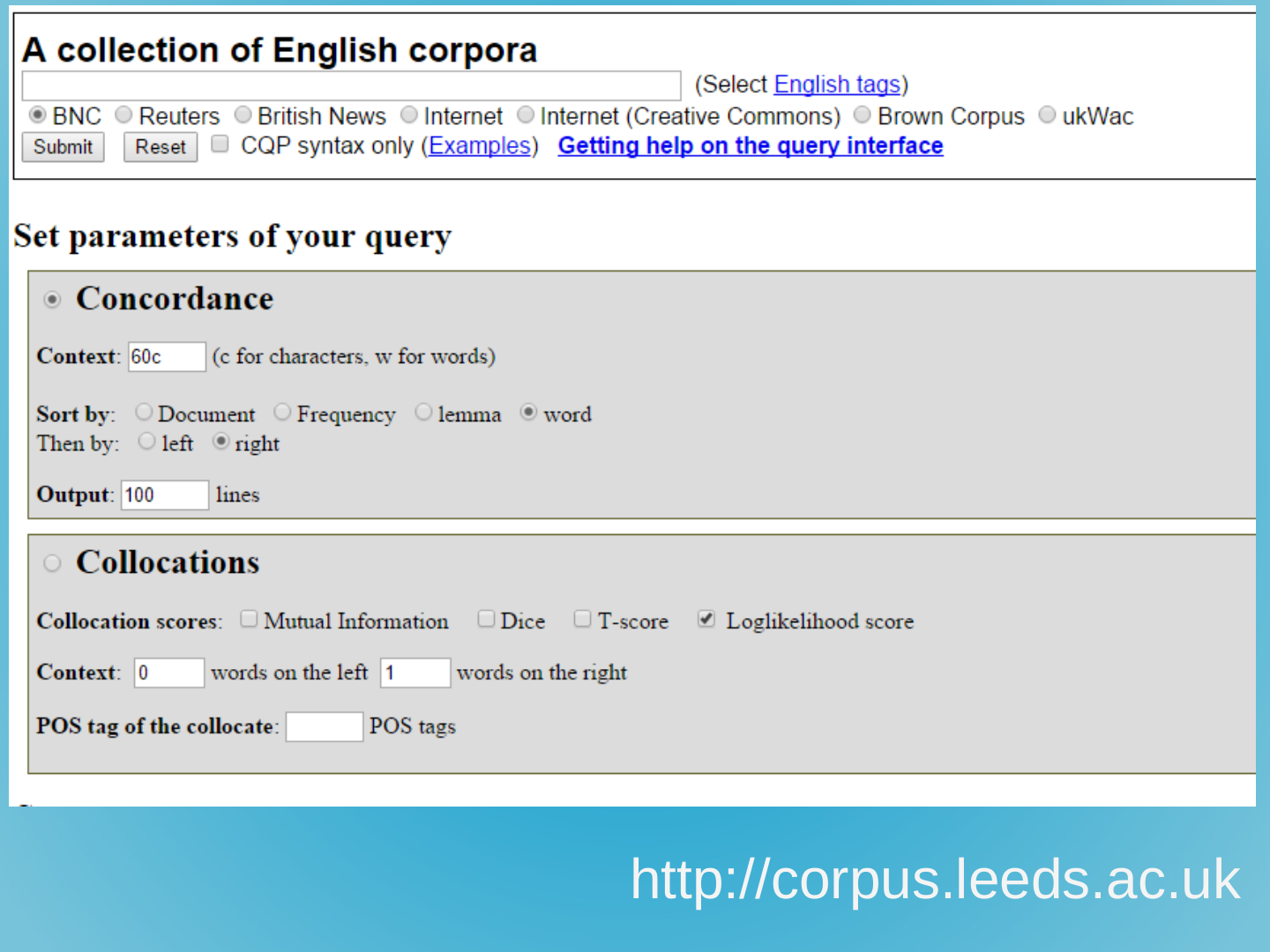
http://www.flickr.com/photos/atoach/3900591006/
Searching a corpus early on in the process of making a generalization can save you a lot of unpleasant surprises later.
Slide 22: How do we use the word dyslexia?
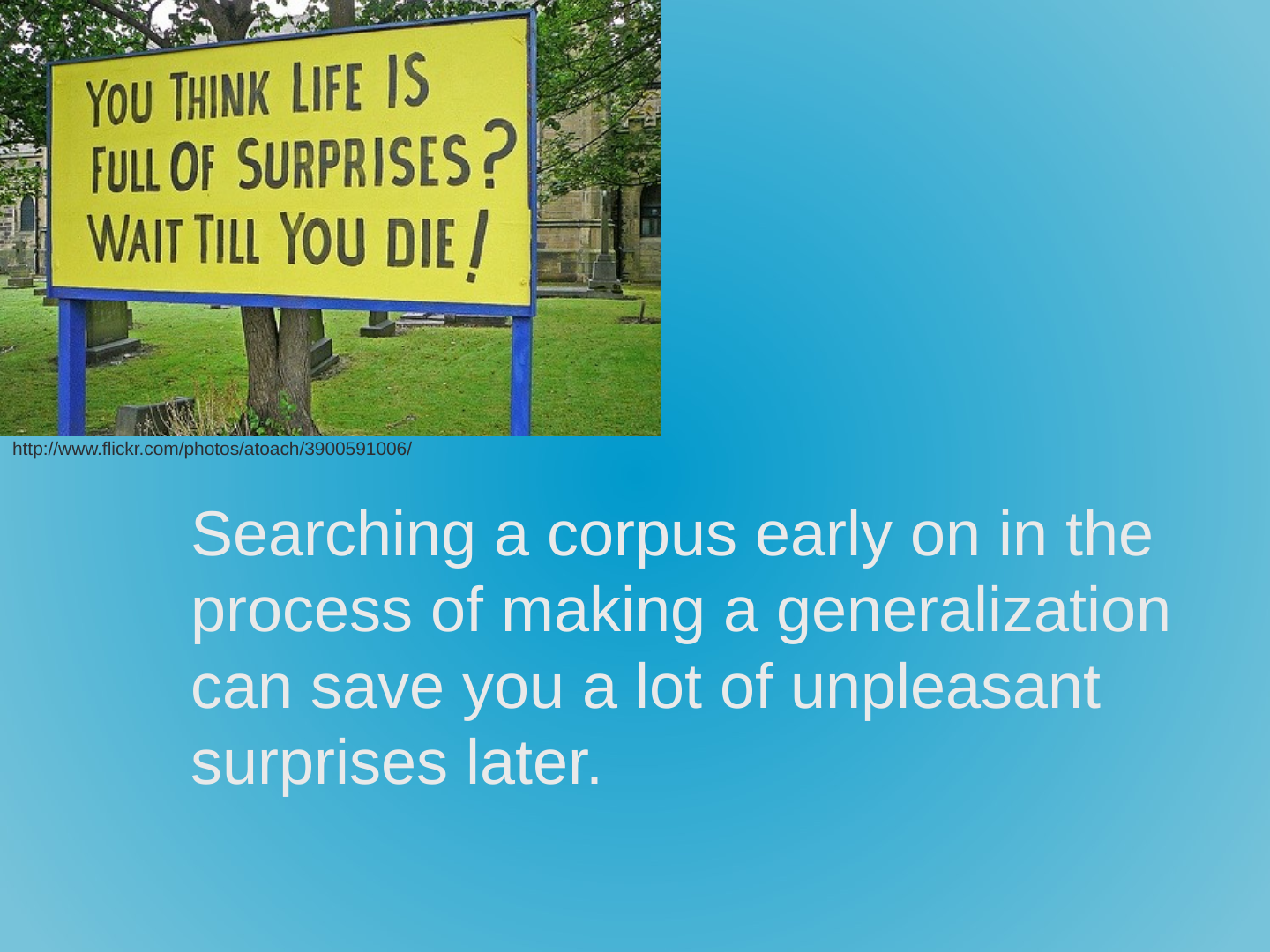
How do we use the word dyslexia?
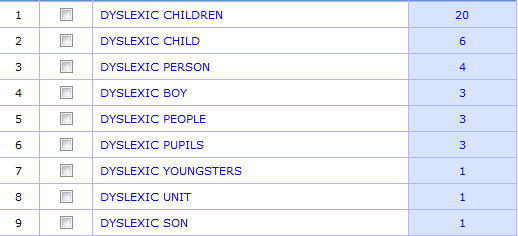
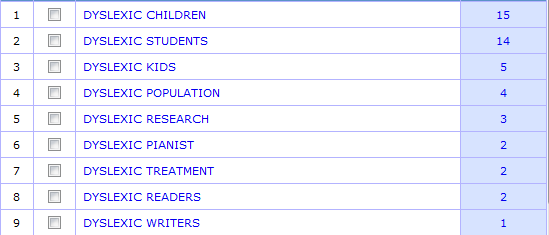
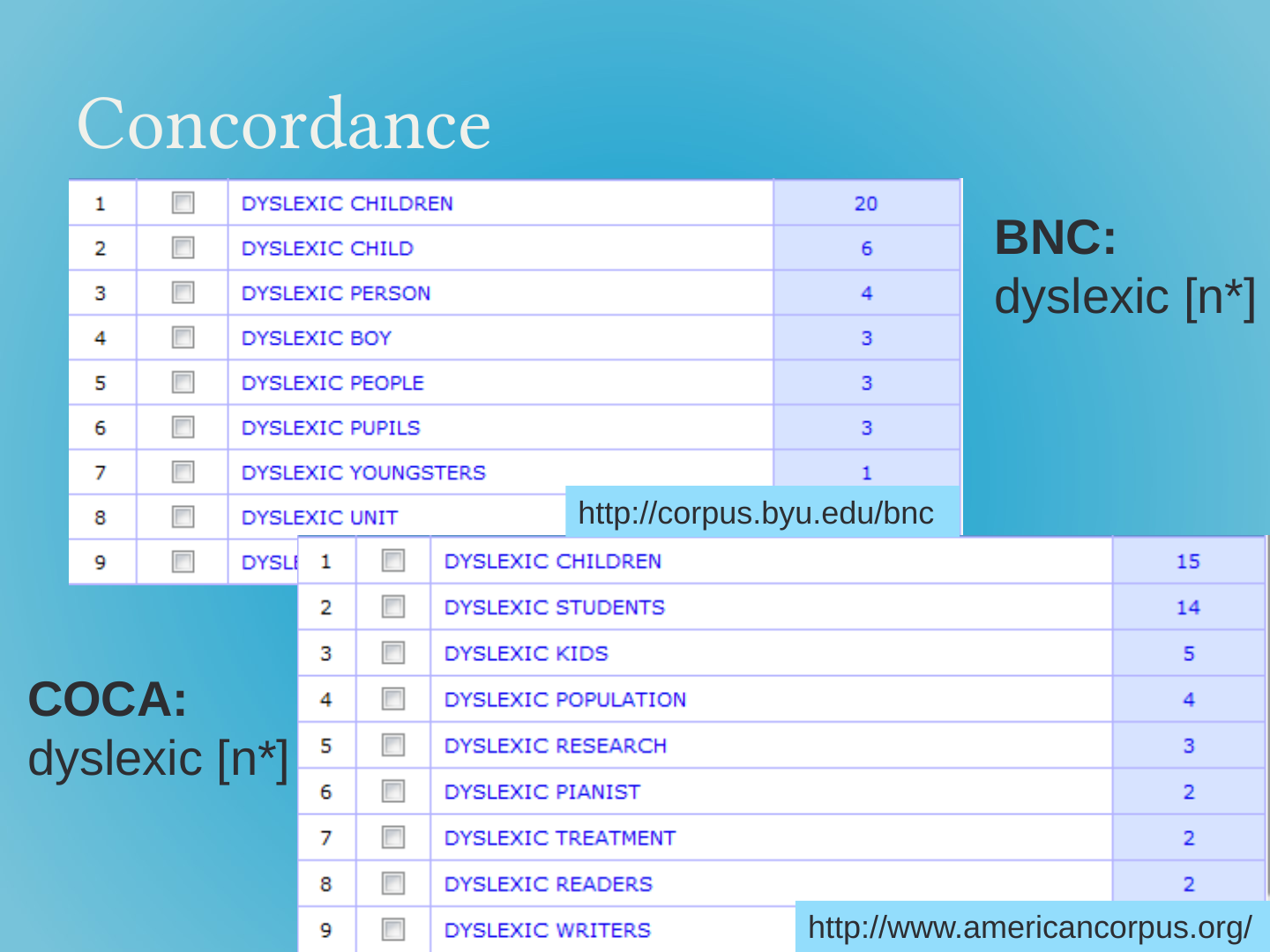
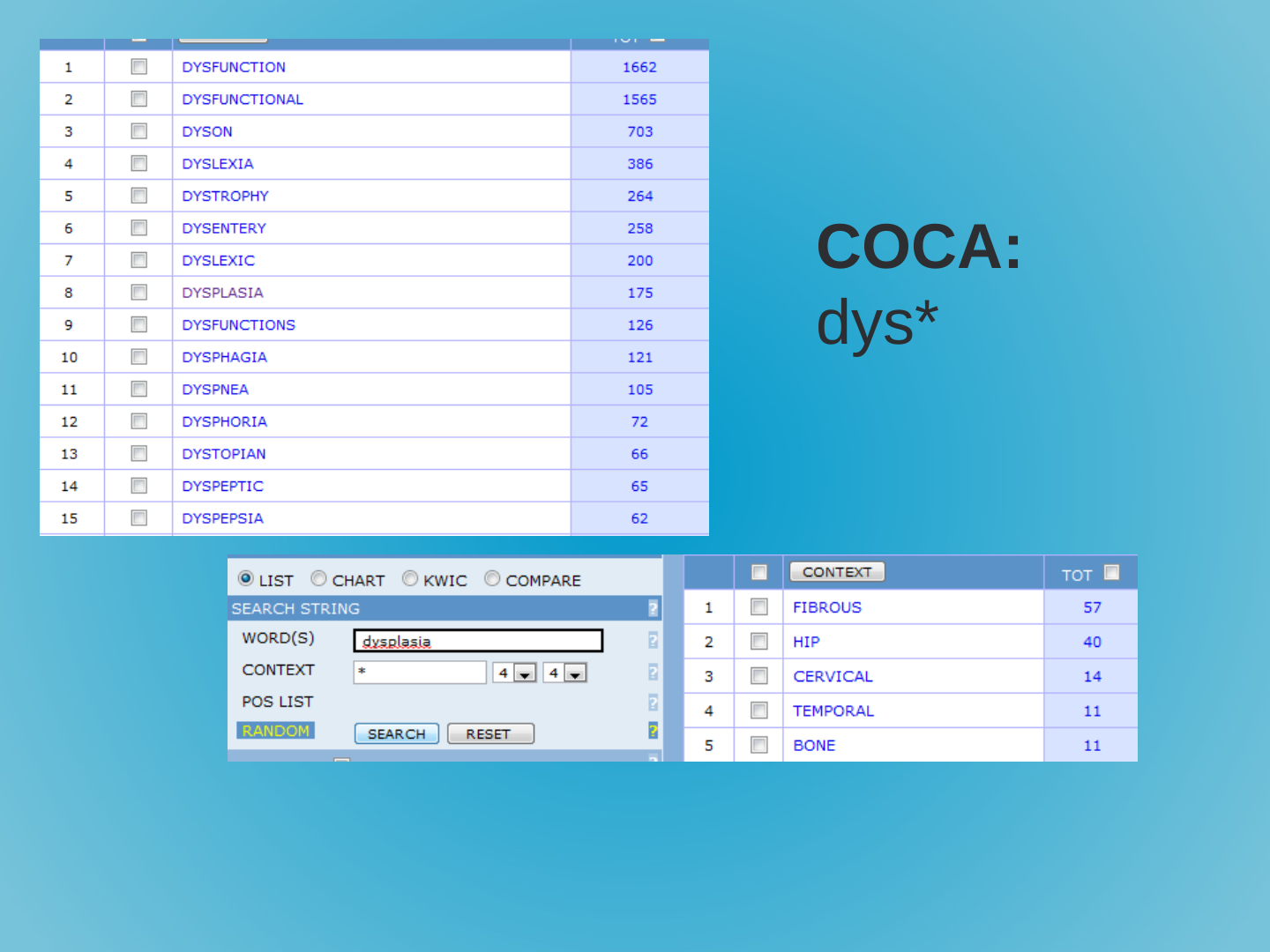
We speak more often of dyslexic children than adults.
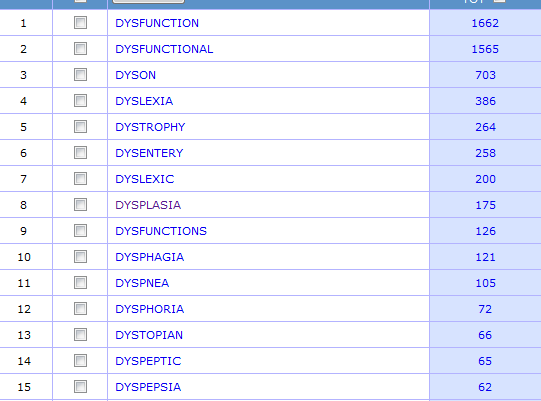
We speak more often of dyslexia than any other dys- word.
Slide 23: Concordance
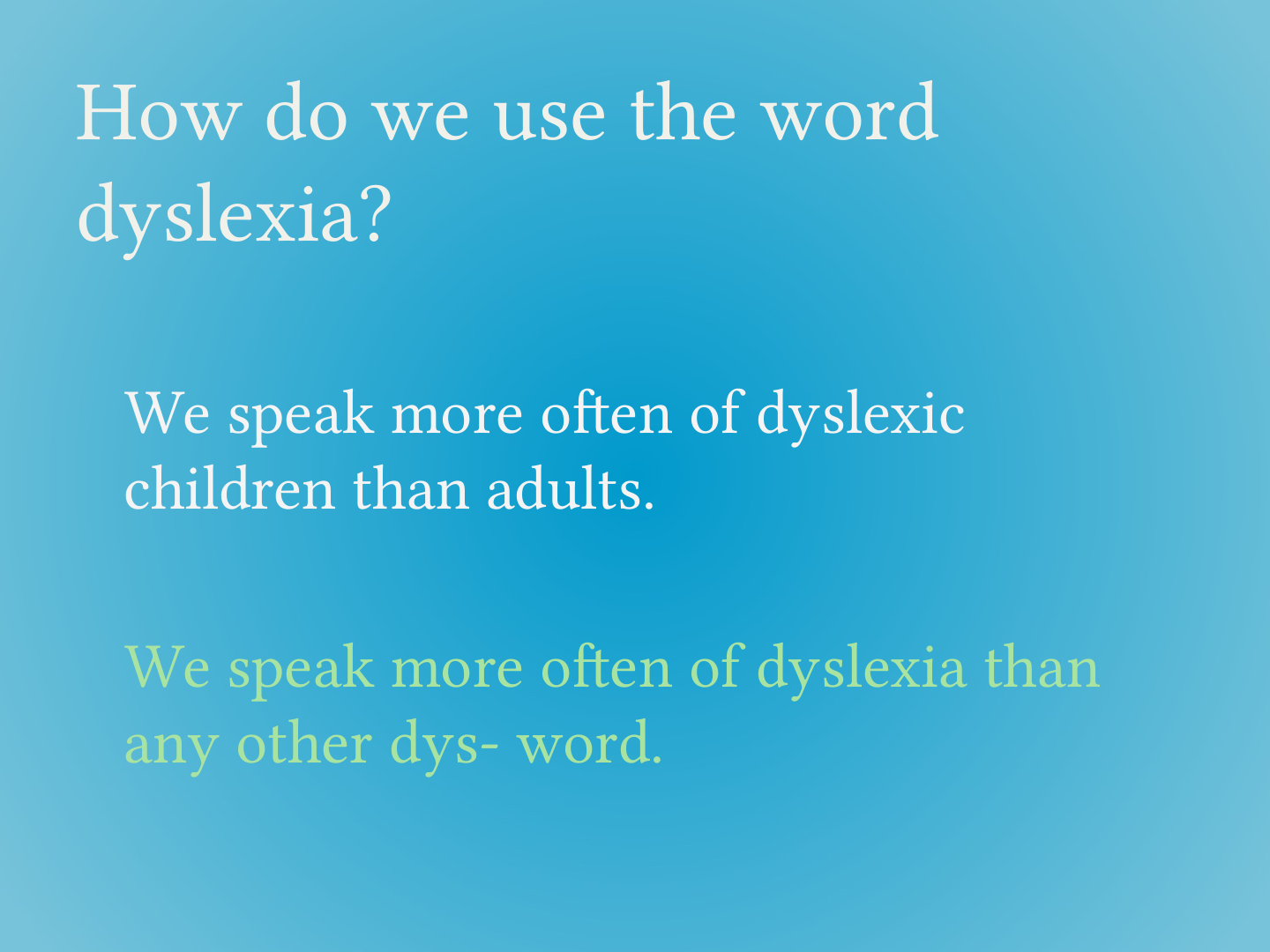
Concordance
- BNC:
dyslexic [n*] - COCA:
dyslexic [n*]
Slide 24: Slide 24
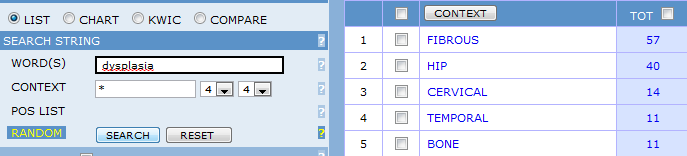
COCA: dys*
Slide 25: Suffixing rules
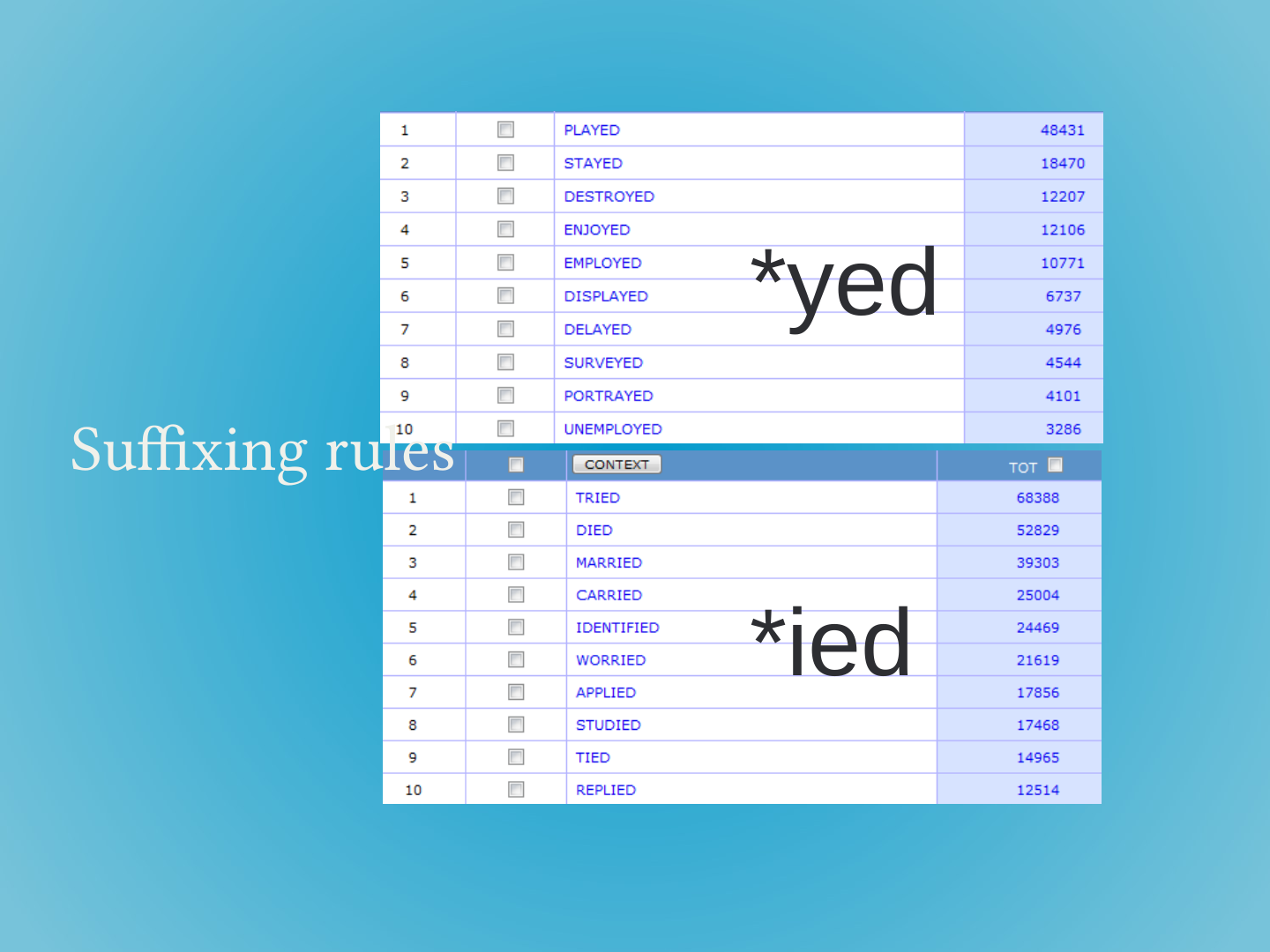
Suffixing rules
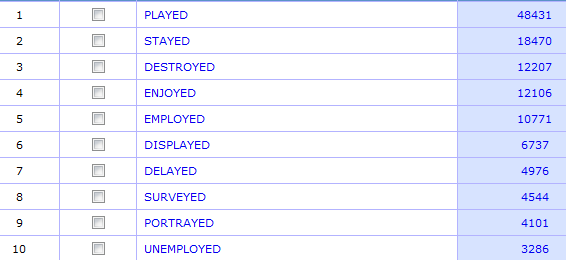
*yed
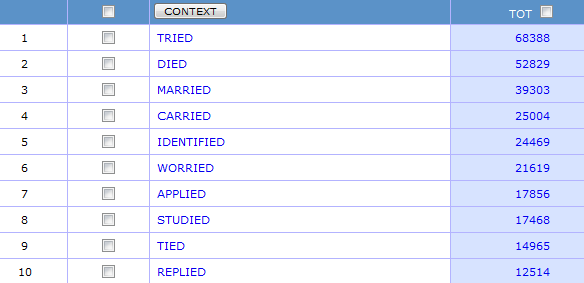
*ied
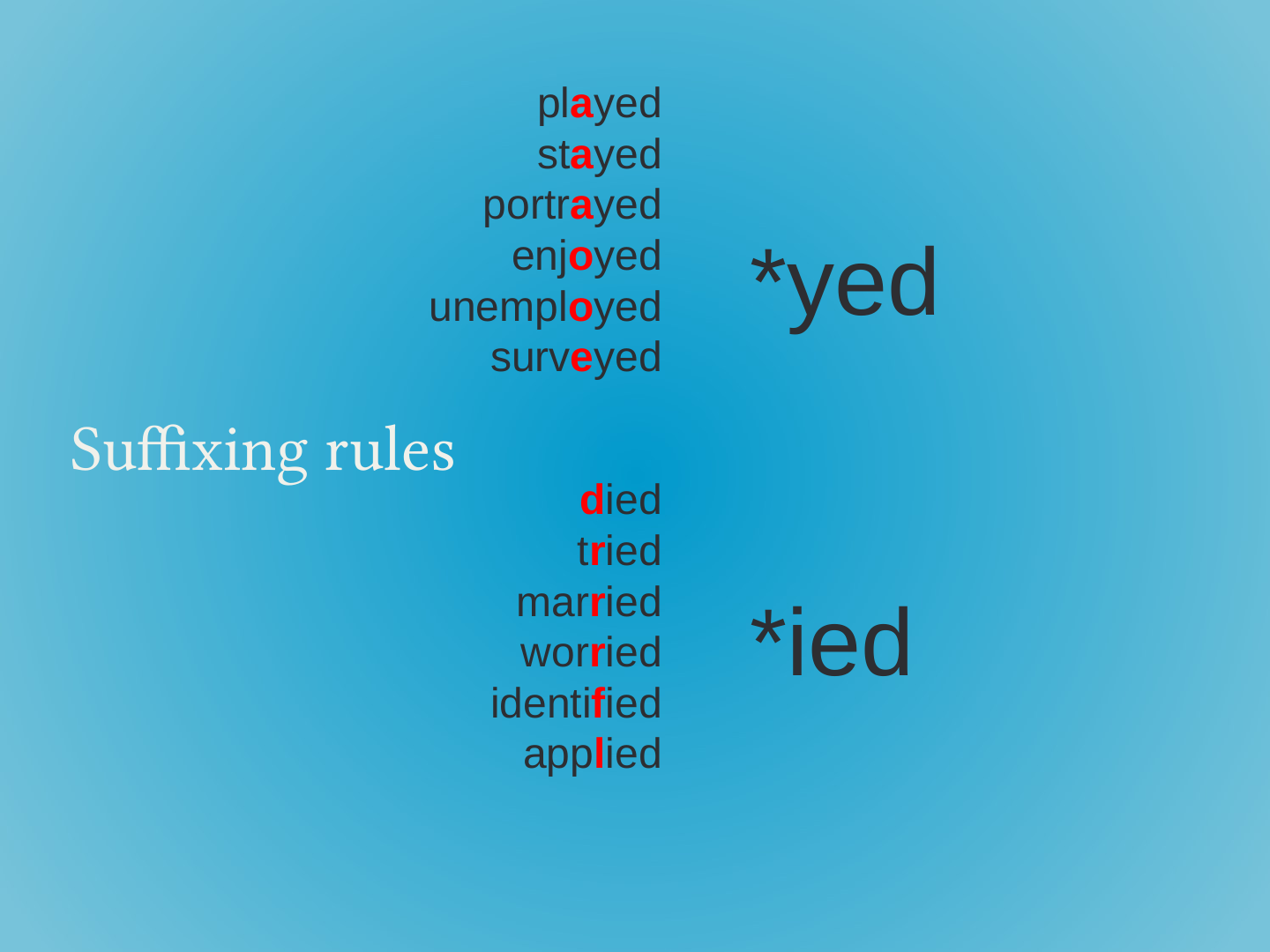
Slide 26: Suffixing rules
Suffixing rules
*yed
played
stayed
portrayed
enjoyed
unemployed
surveyed
*ied
died
tried
married
worried
identified
applied
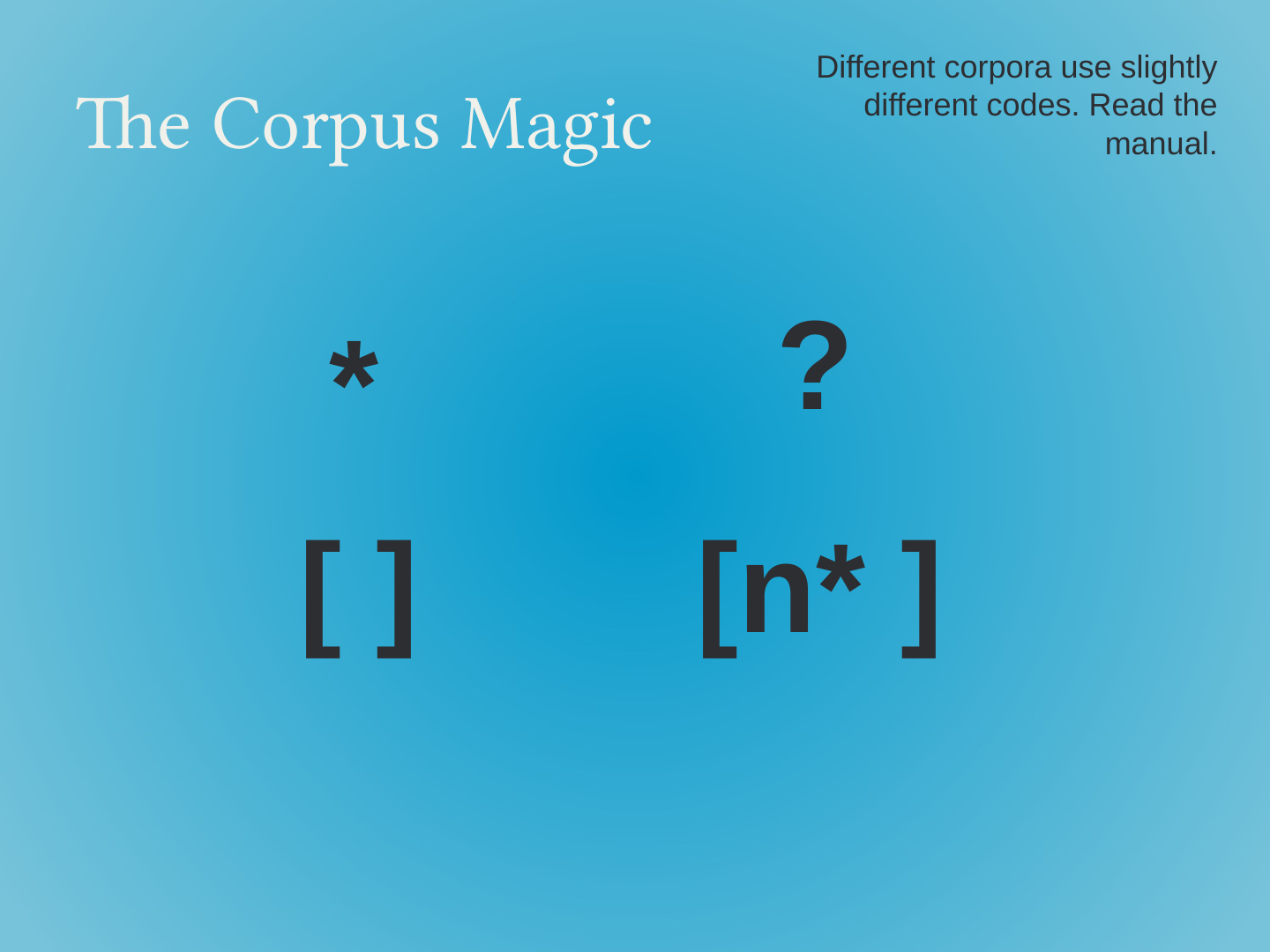
Slide 27: The Corpus Magic
The Corpus Magic
*
?
[ ]
[n* ]
Different corpora use slightly different codes. Read the manual.
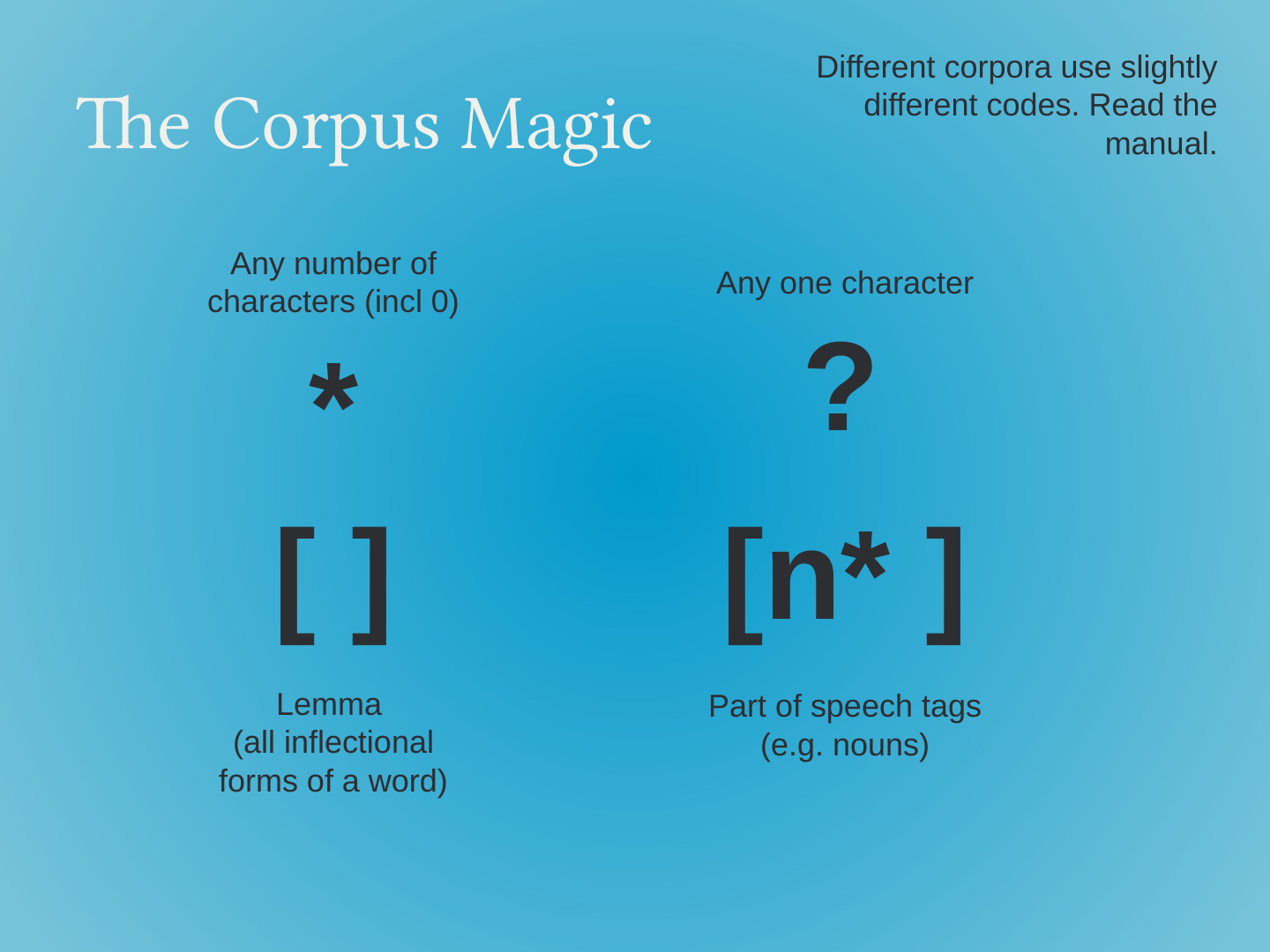
Slide 28: The Corpus Magic
The Corpus Magic
*Any number of characters (incl 0)?Any one character[ ]Lemma (all inflectional forms of a word)[n* ]Part of speech tags (e.g. nouns)
Different corpora use slightly different codes. Read the manual.
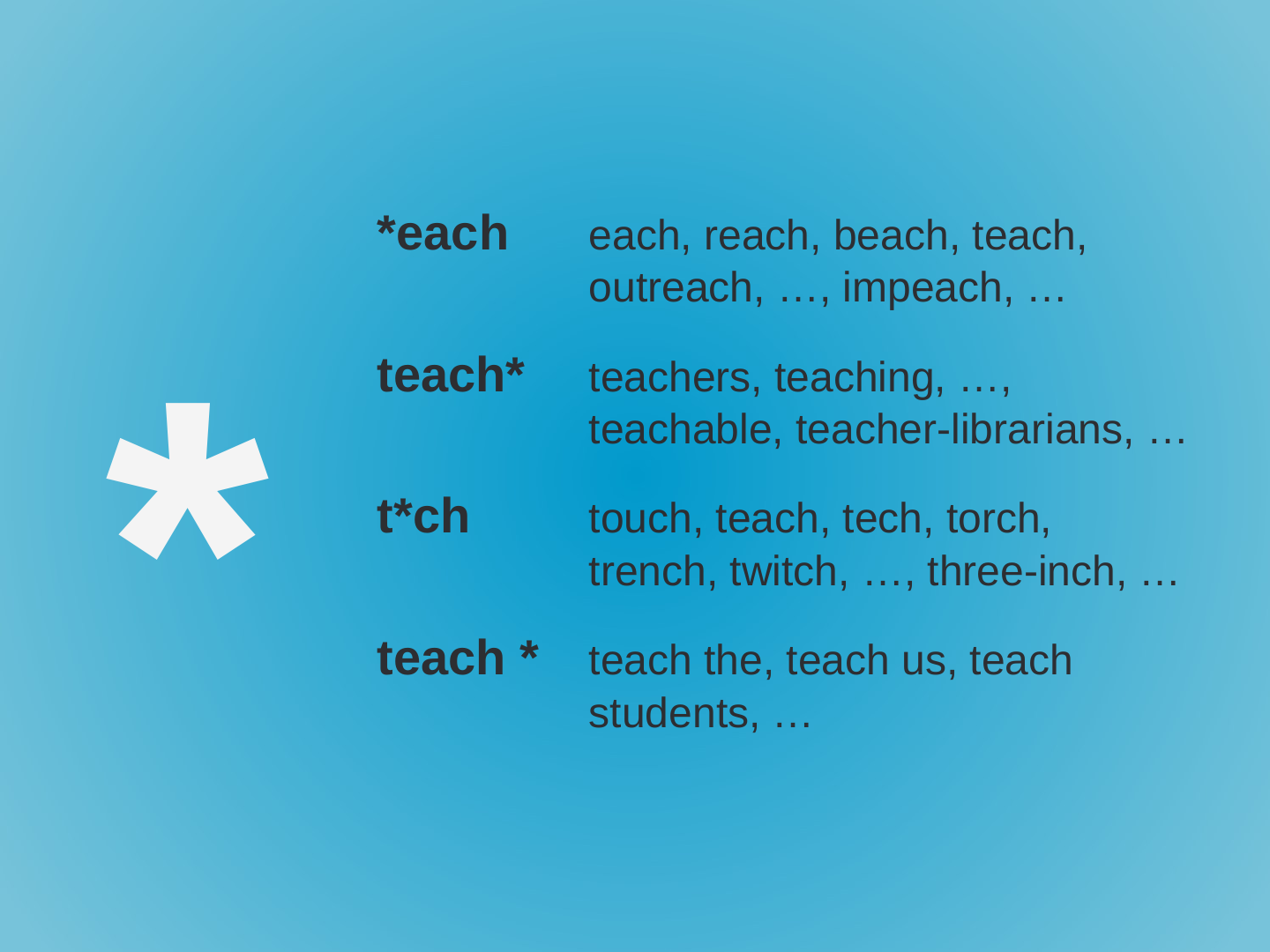
Slide 29: Slide 29
*
*eacheach, reach, beach, teach, outreach, …, impeach, …teach*teachers, teaching, …, teachable, teacher-librarians, …t*chtouch, teach, tech, torch, trench, twitch, …, three-inch, …teach *teach the, teach us, teach students, …
Slide 30: Slide 30
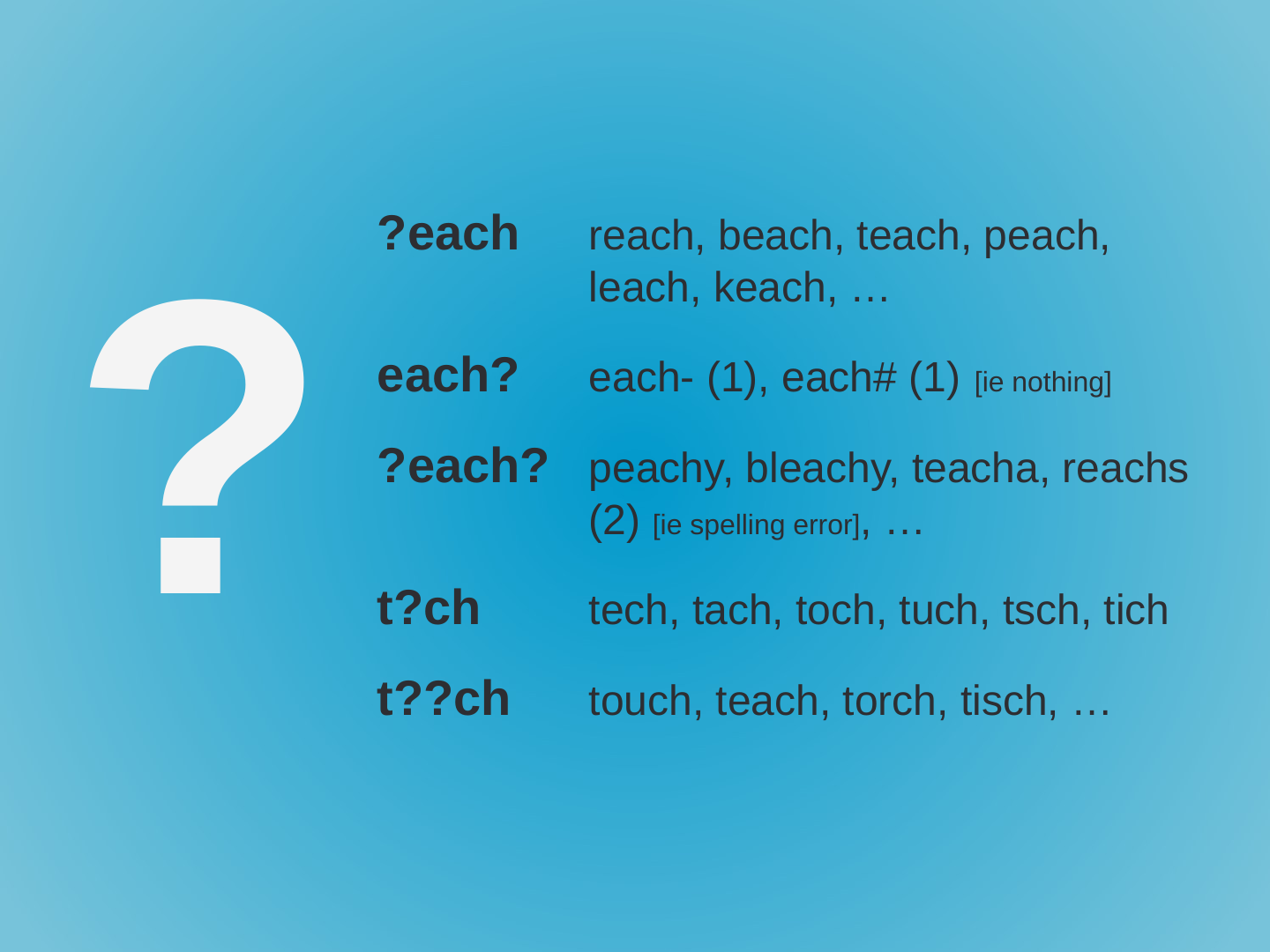
?
?eachreach, beach, teach, peach, leach, keach, …each?each- (1), each# (1) [ie nothing]?each?peachy, bleachy, teacha, reachs (2) [ie spelling error], …t?chtech, tach, toch, tuch, tsch, ticht??chtouch, teach, torch, tisch, …
Slide 31: [Lemma]
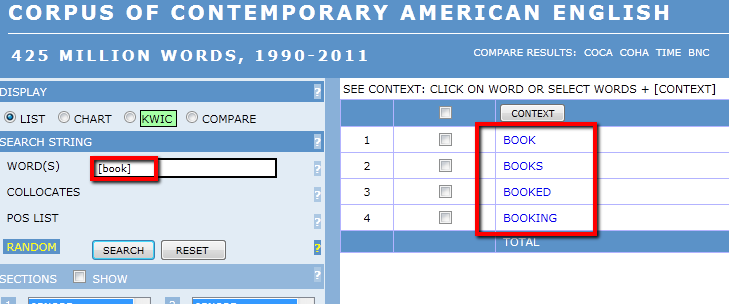
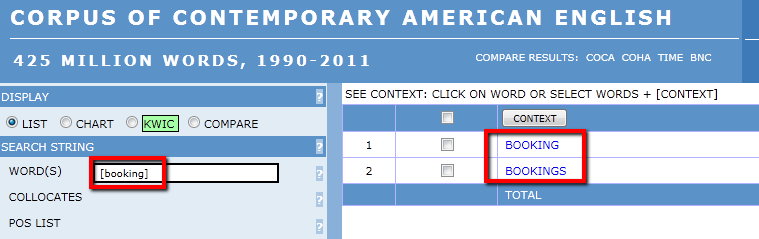
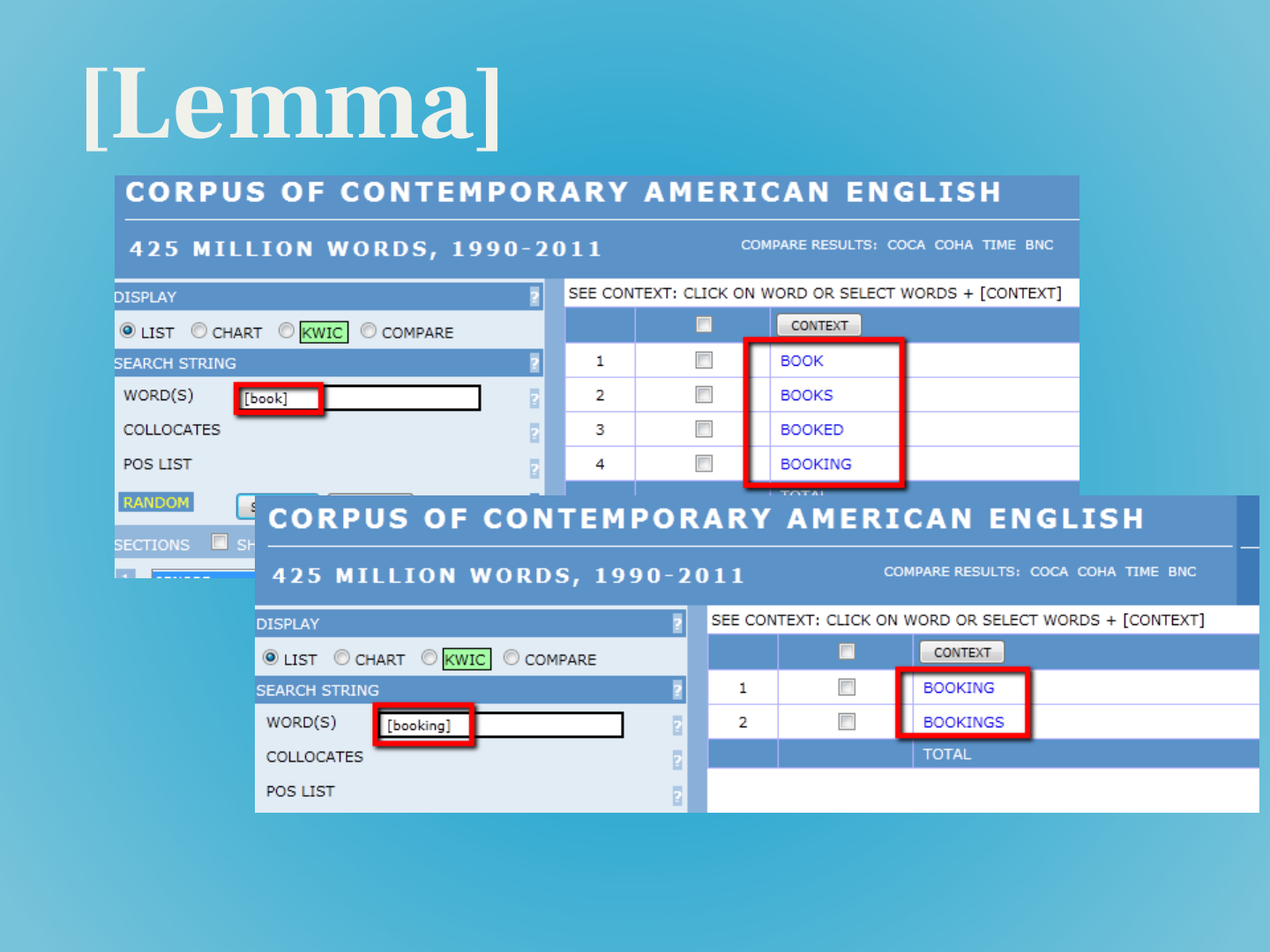
[Lemma]
Word box: [book]
Word box: [booking]
Slide 32: Part of speech tags
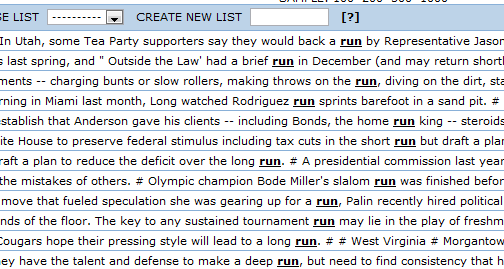
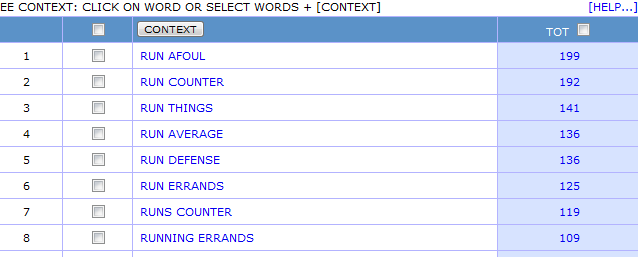
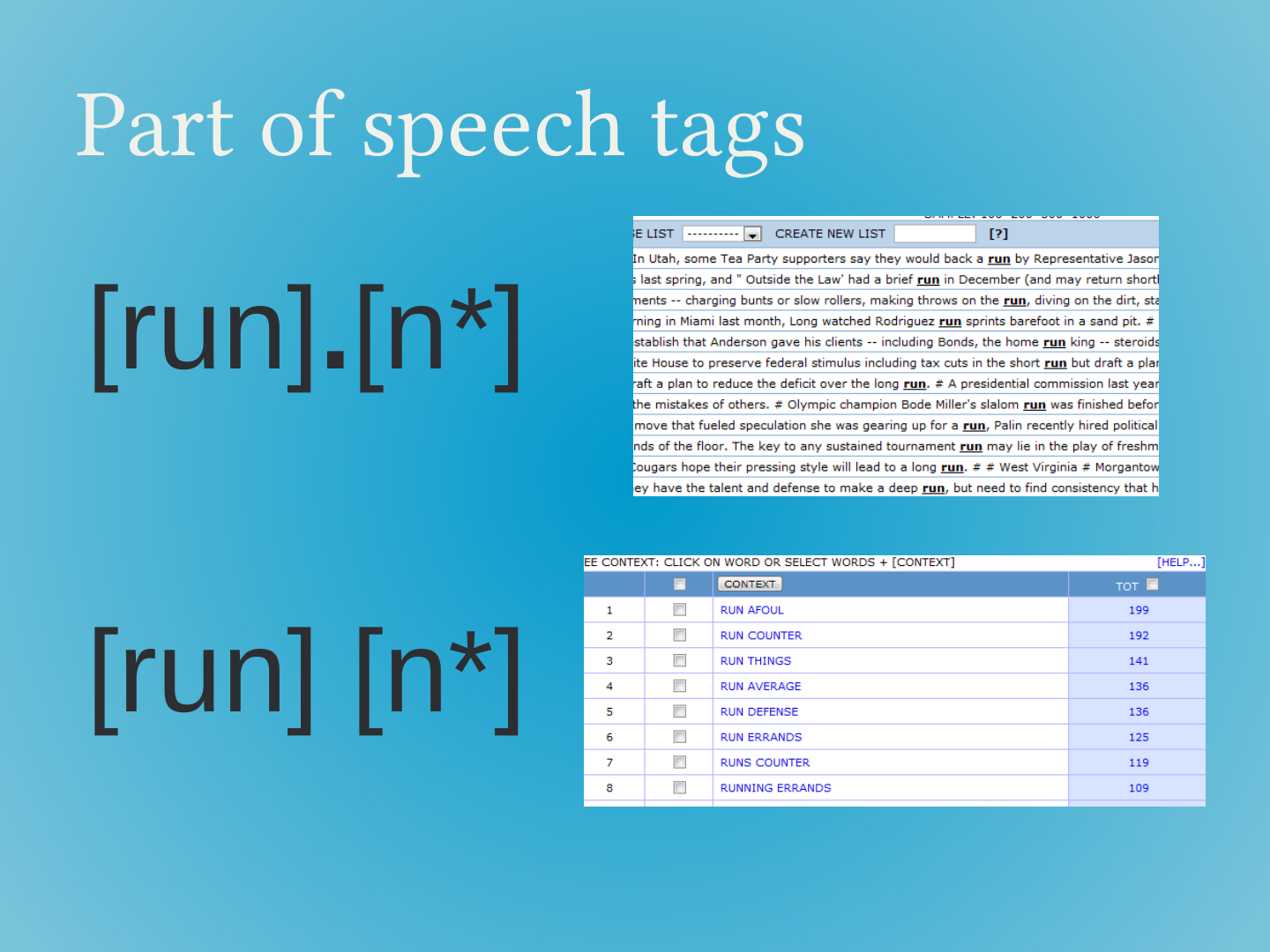
Part of speech tags
[run].[n*]
[run] [n*]
Slide 33: Common tags
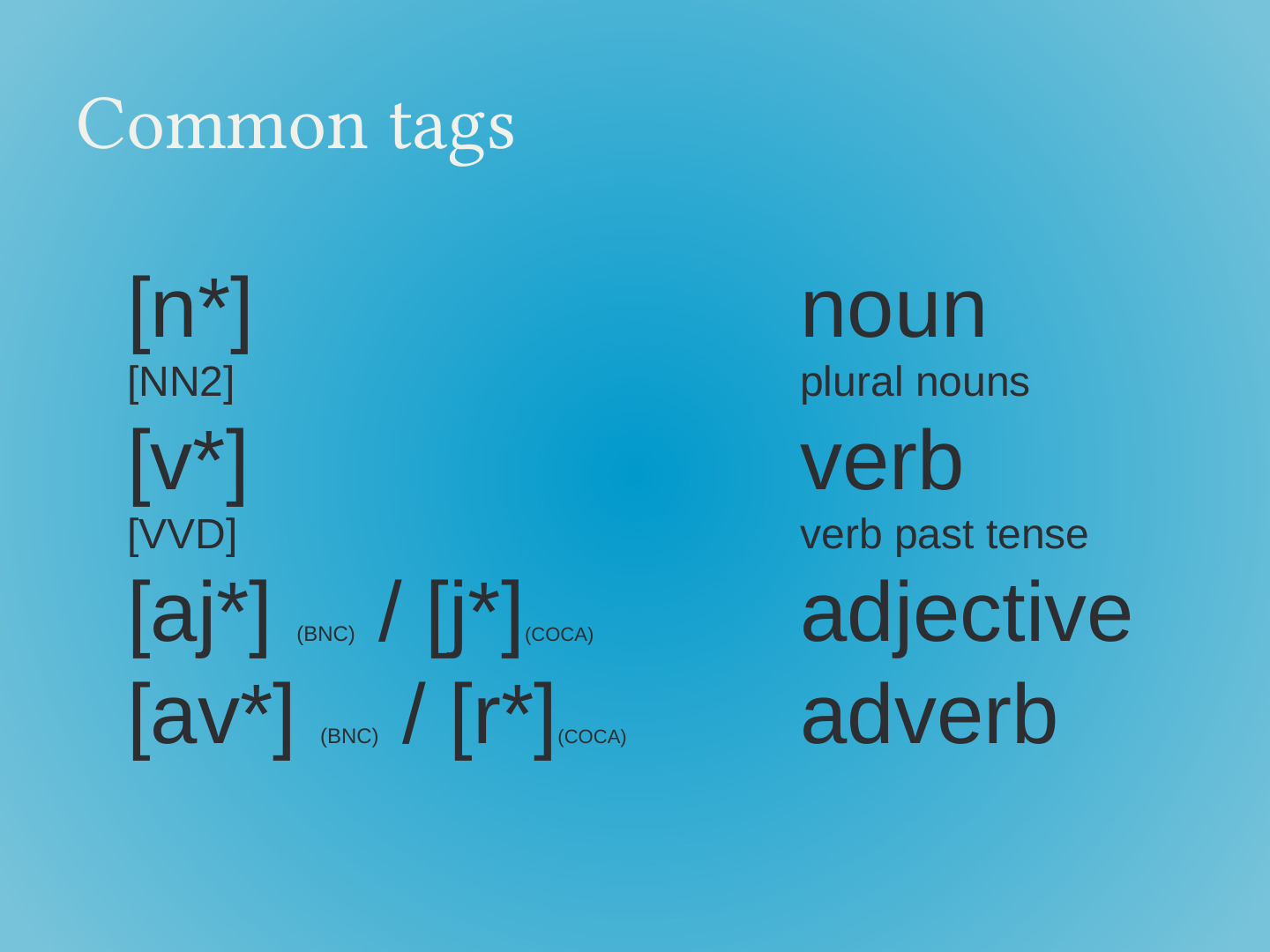
Common tags
[n*] | noun |
[NN2] | plural nouns |
[v*] | verb |
[VVD] | verb past tense |
[aj*] (BNC) | adjective |
[j*] (COCA) | adjective |
[av*] (BNC) | adverb |
[r*] (COCA) | adverb |
On the slide the BNC tag and the COCA tag for adjective, and for adverb, stand on one line, separated by a slash; the table gives each tag its own row with its corpus label.
Slide 34: Help
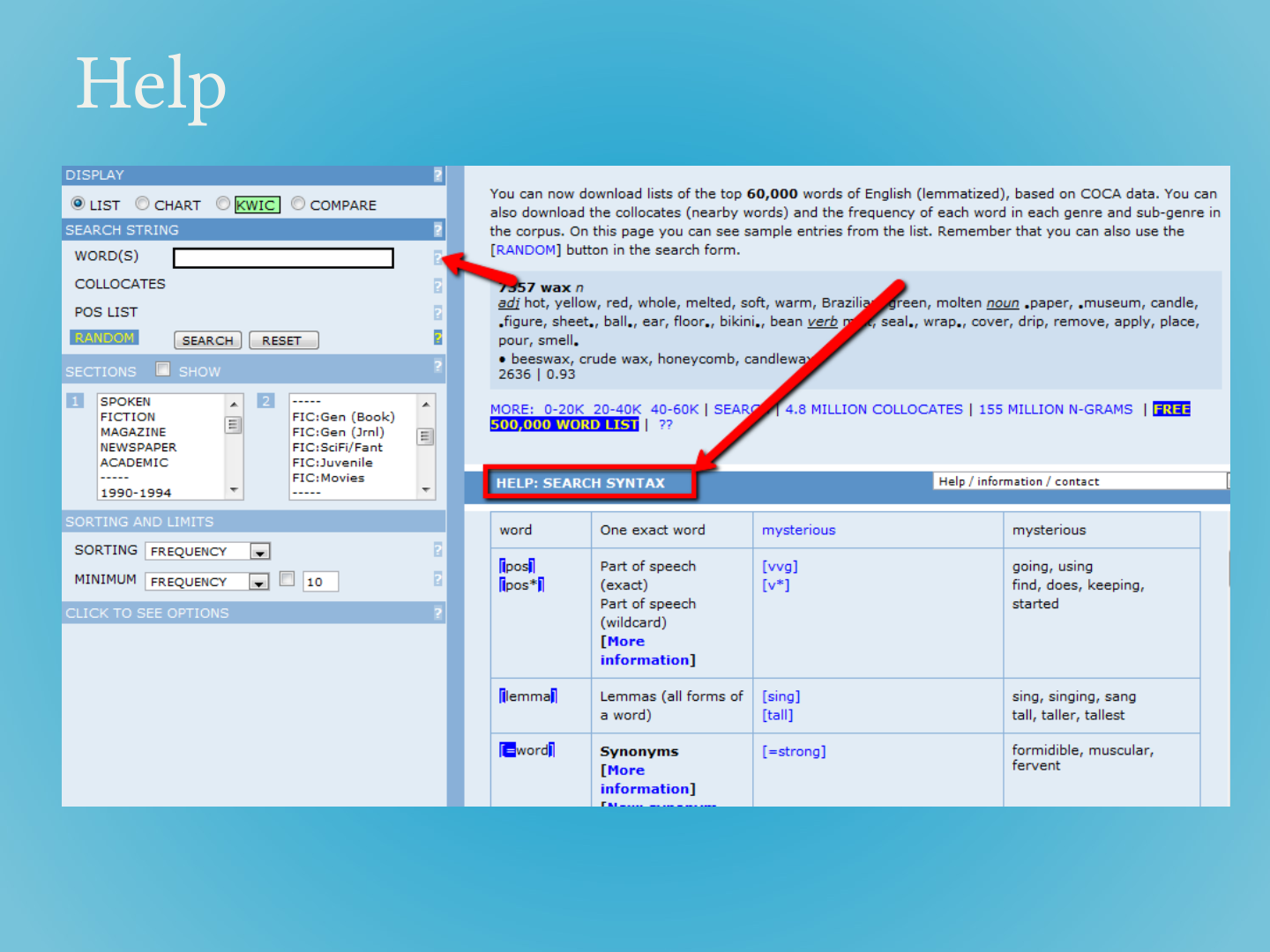
Help
Codes in the panel:
[pos]
[pos*]
[lemma]
[=word]
Examples in the panel:
[vvg]
[v*]
[sing]
[tall]
[=strong]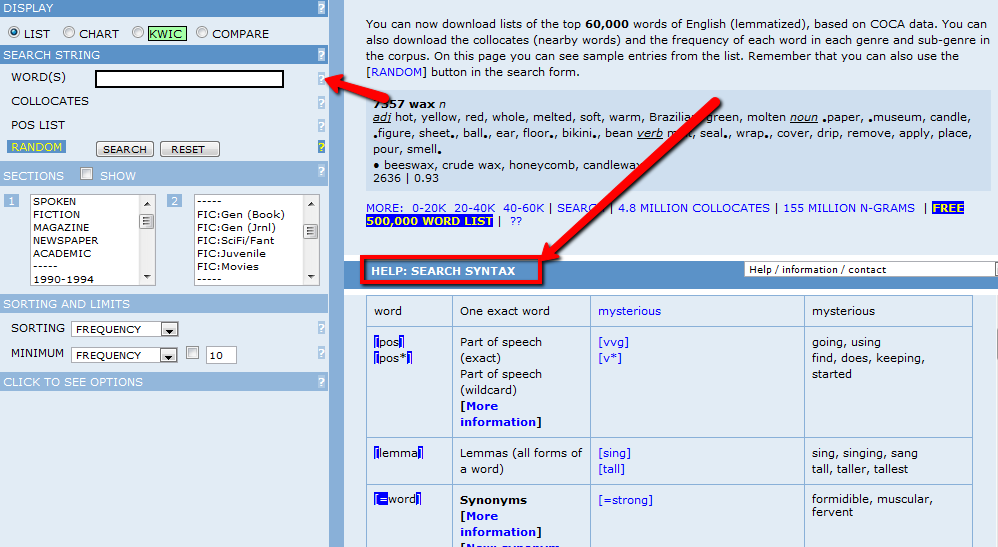
Slide 35: Slide 35
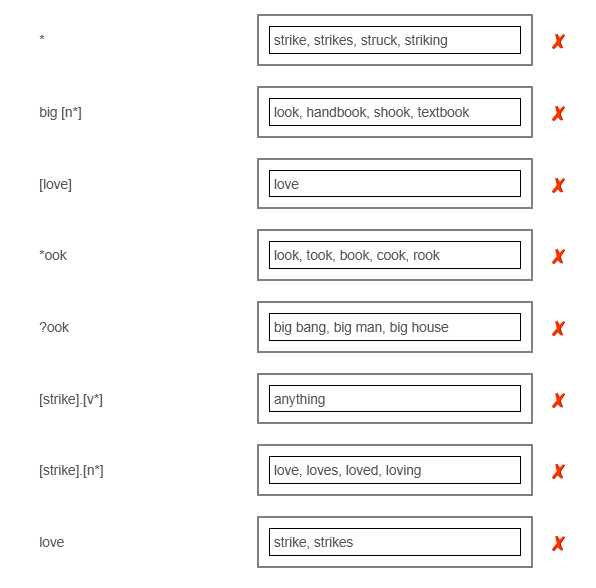
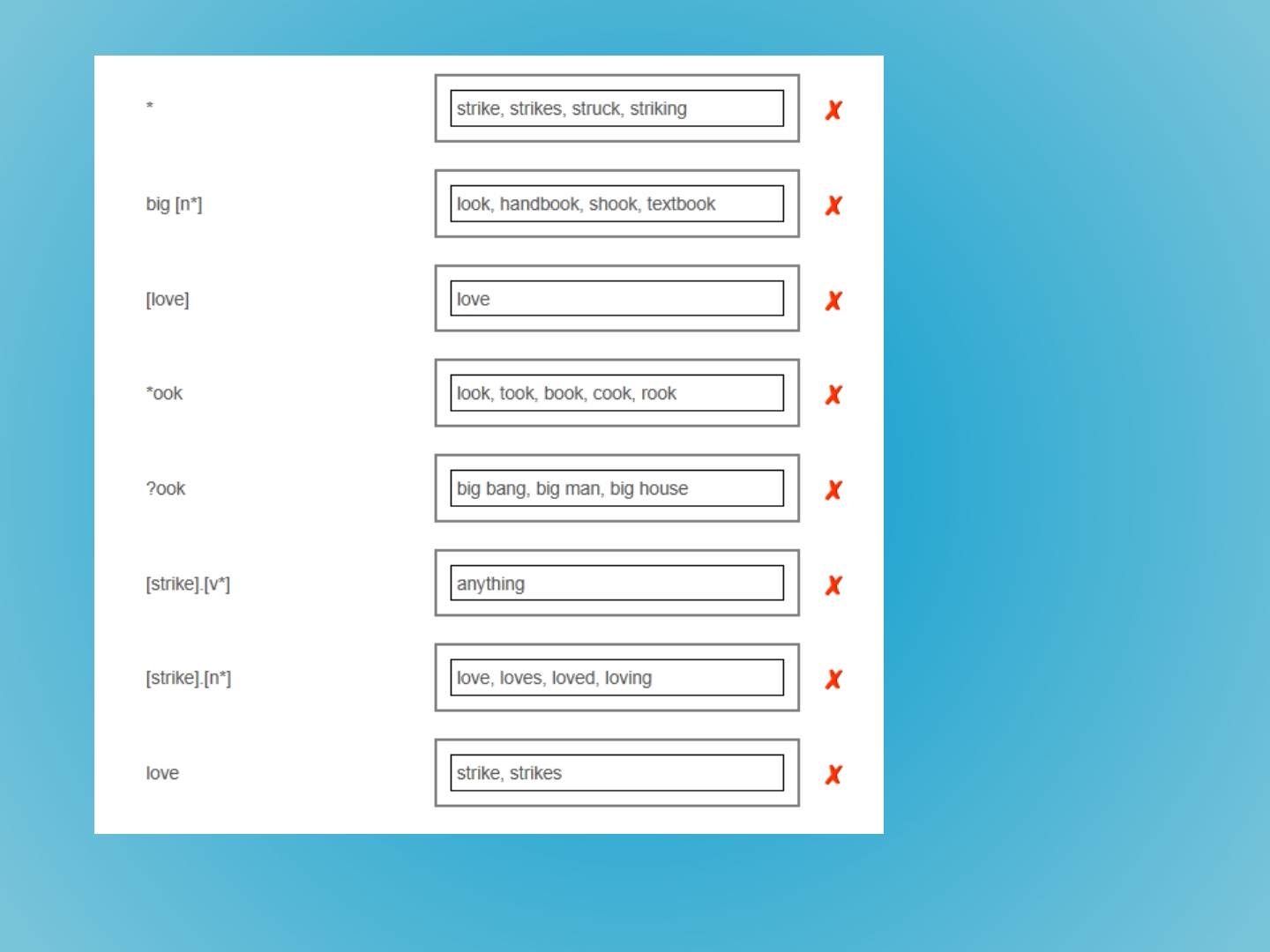
| Search string | Results shown |
|---|---|
* | strike, strikes, struck, striking |
big [n*] | look, handbook, shook, textbook |
[love] | love |
*ook | look, took, book, cook, rook |
?ook | big bang, big man, big house |
[strike].[v*] | anything |
[strike].[n*] | love, loves, loved, loving |
love | strike, strikes |
Slide 36: Slide 36
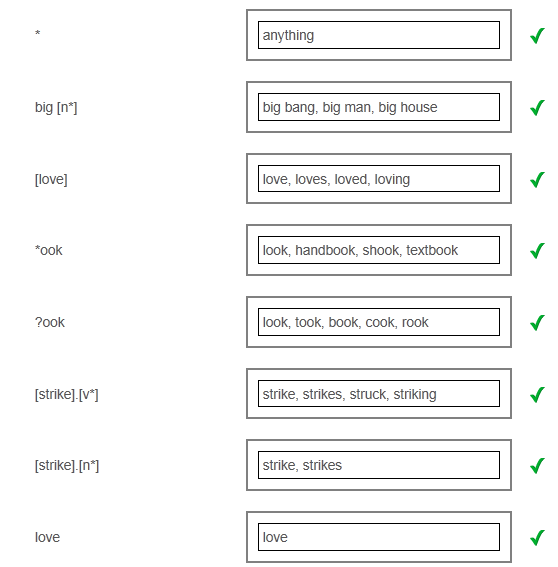
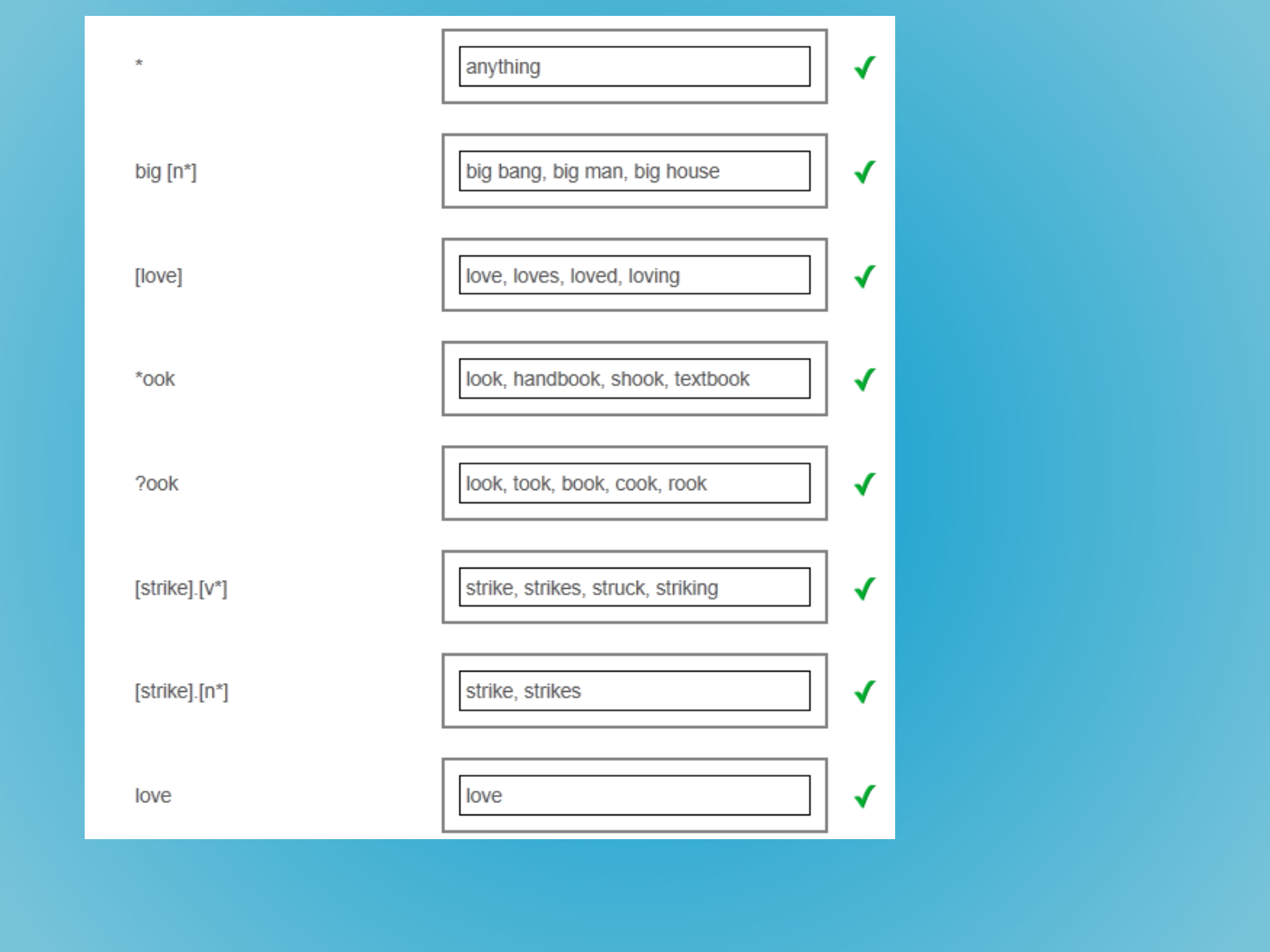
| Search string | Results shown |
|---|---|
* | anything |
big [n*] | big bang, big man, big house |
[love] | love, loves, loved, loving |
*ook | look, handbook, shook, textbook |
?ook | look, took, book, cook, rook |
[strike].[v*] | strike, strikes, struck, striking |
[strike].[n*] | strike, strikes |
love | love |
Slide 37: You can also
You can also
cats and dogssearch for idioms?each*scombine wildcards[=pretty]search for synonymscar|bike|horsesearch for alternativesused -carexclude searches
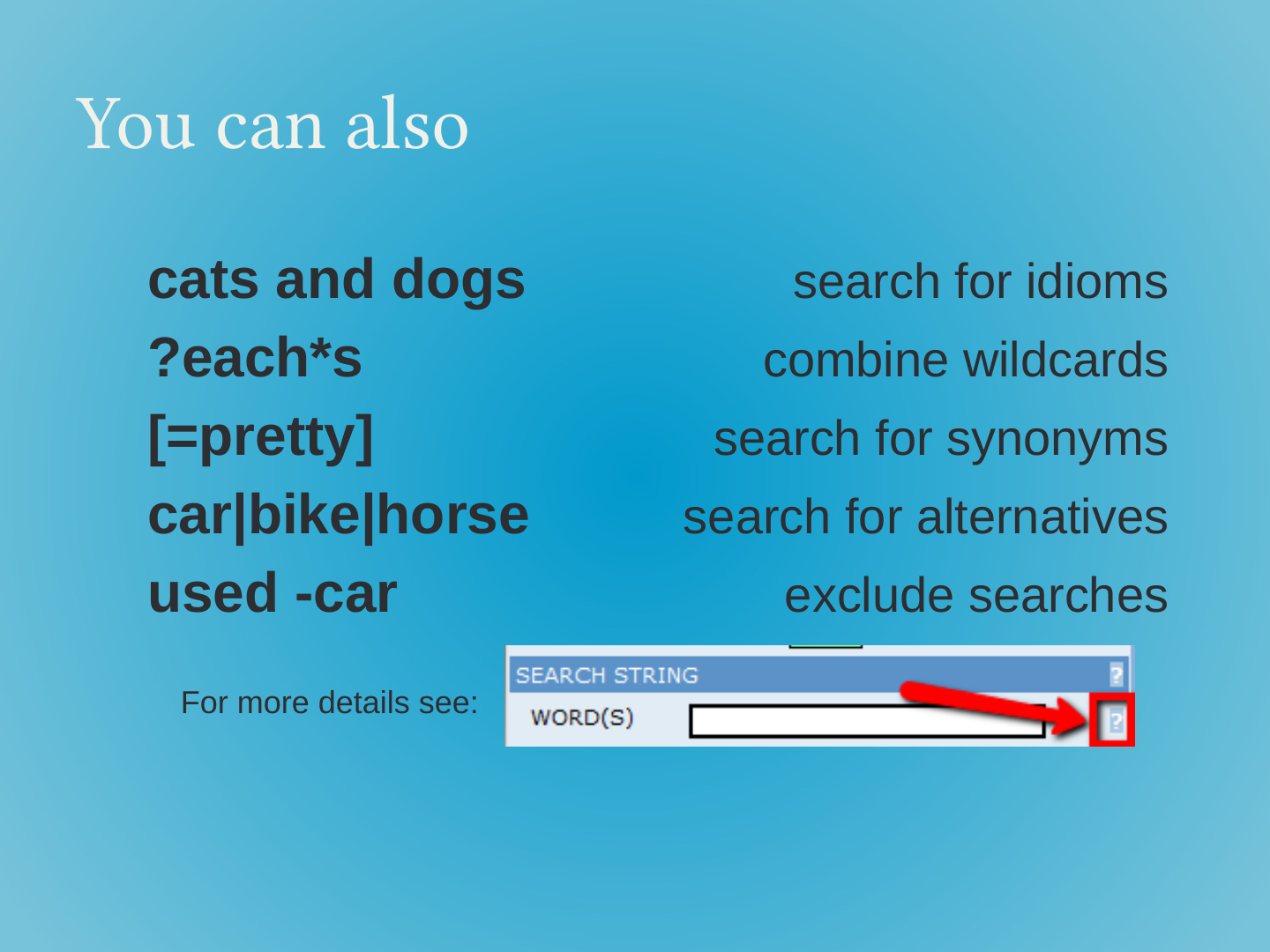
For more details see:

Slide 38: Concordance + KWIC
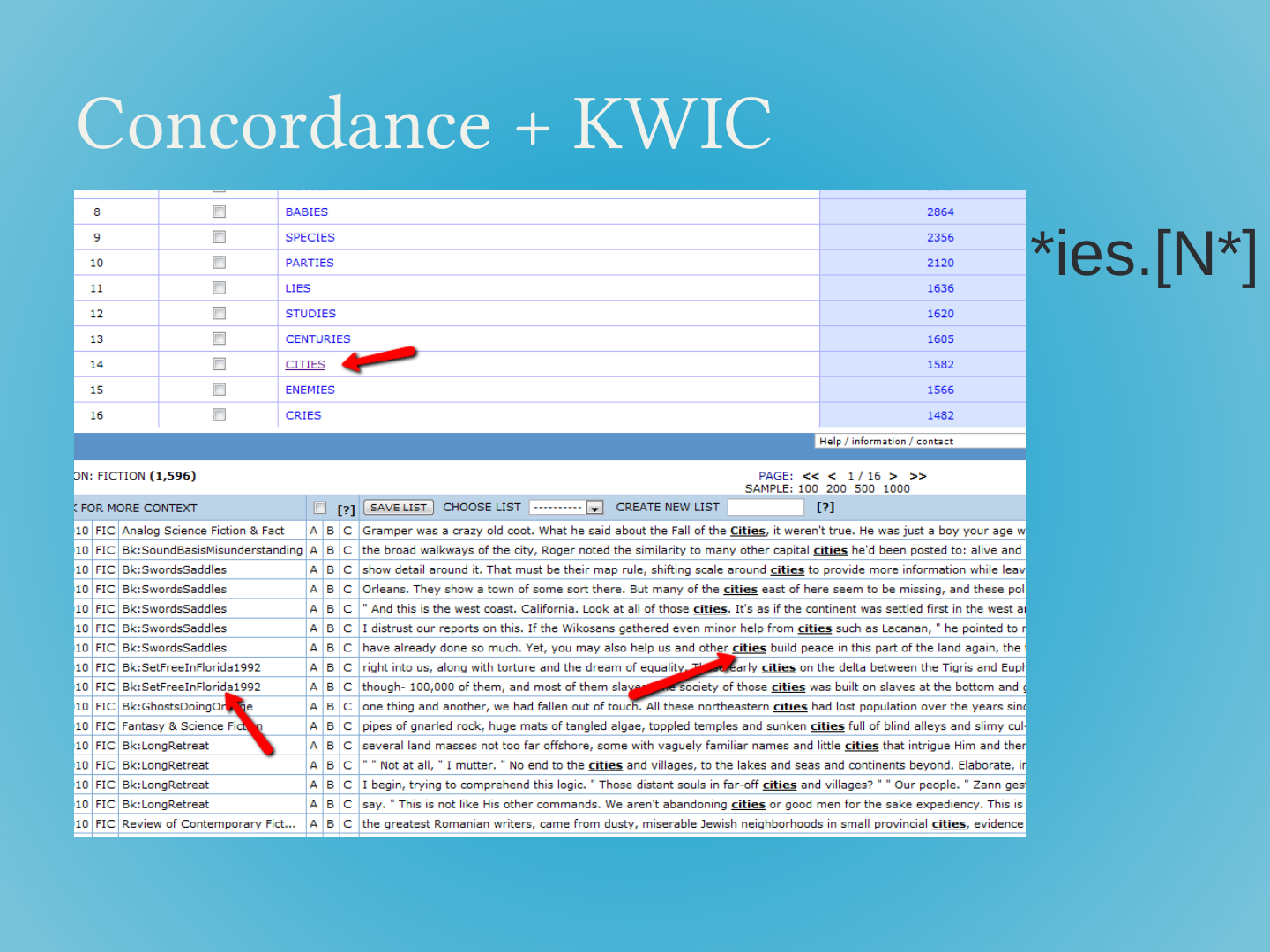
Concordance + KWIC
*ies.[N*]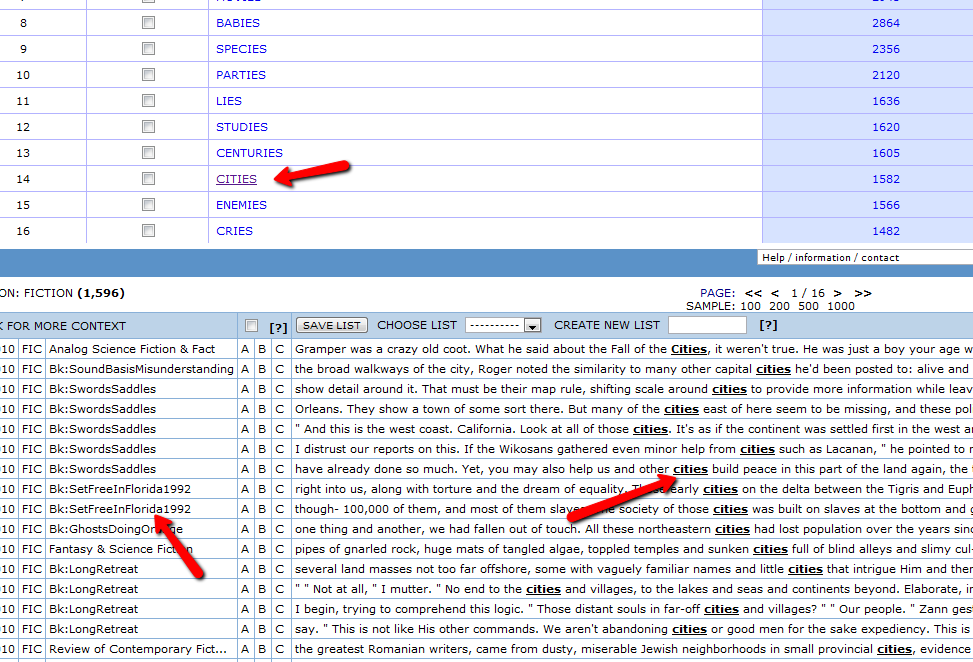
Slide 39: KWIC – Key-Word In Context
KWIC – Key-Word In Context
*ies.[N*]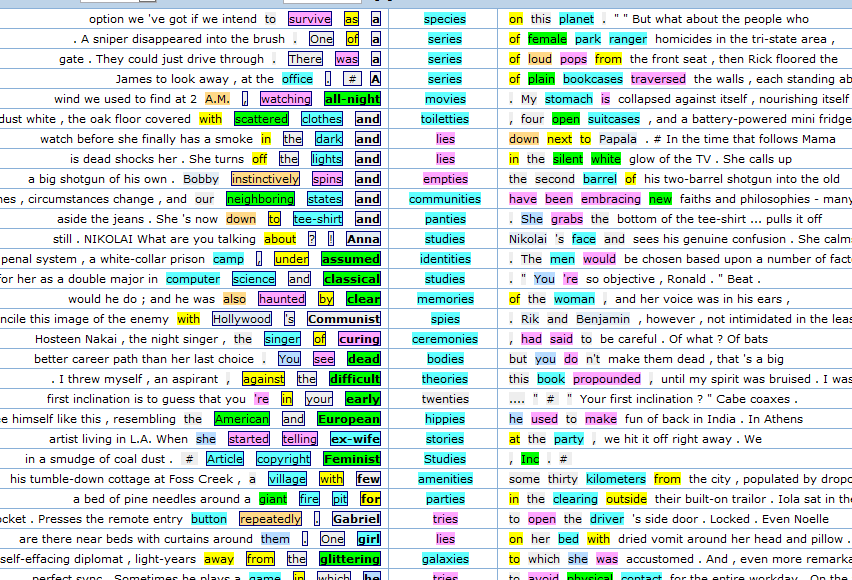
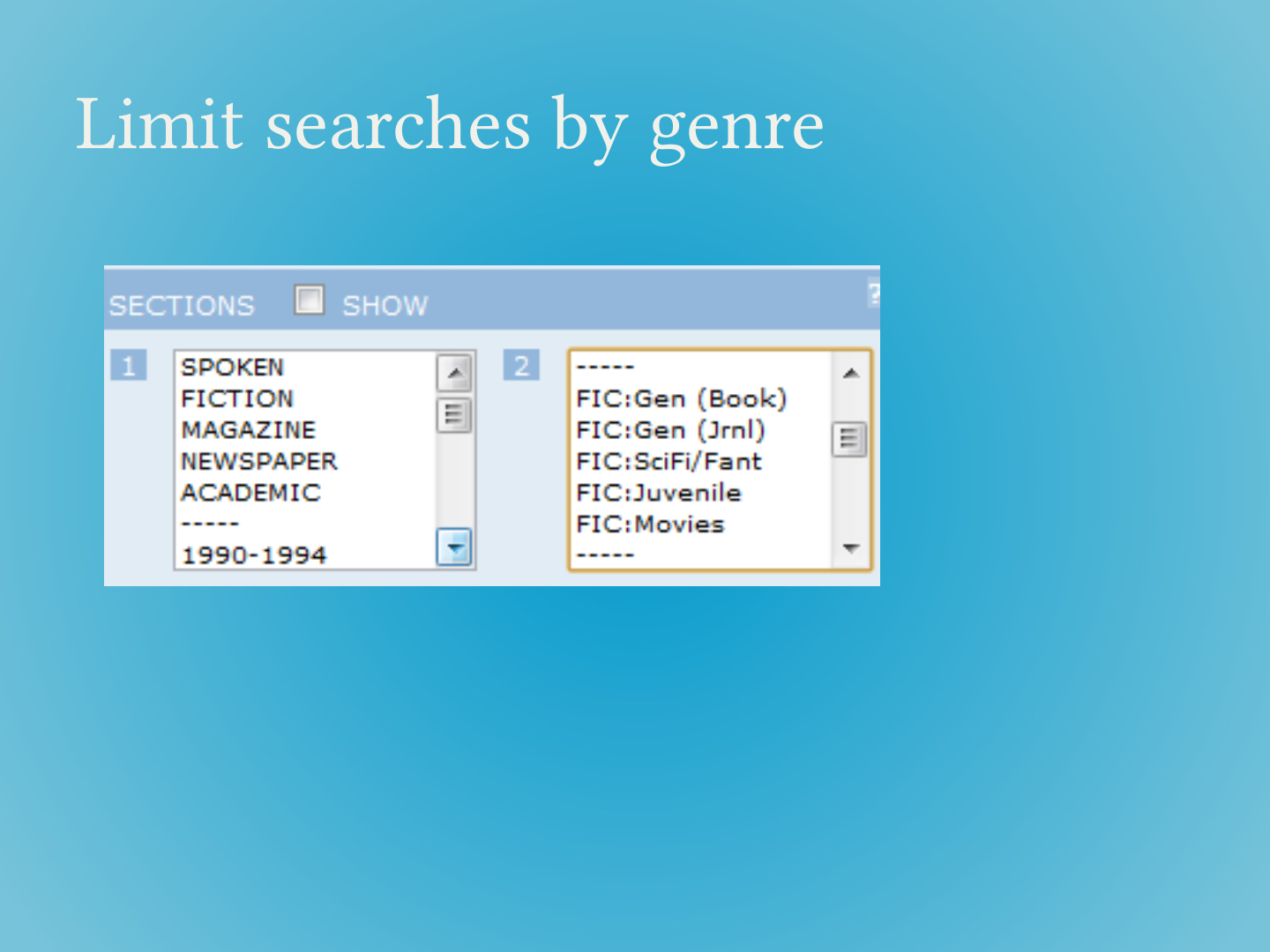
Slide 40: Limit searches by genre
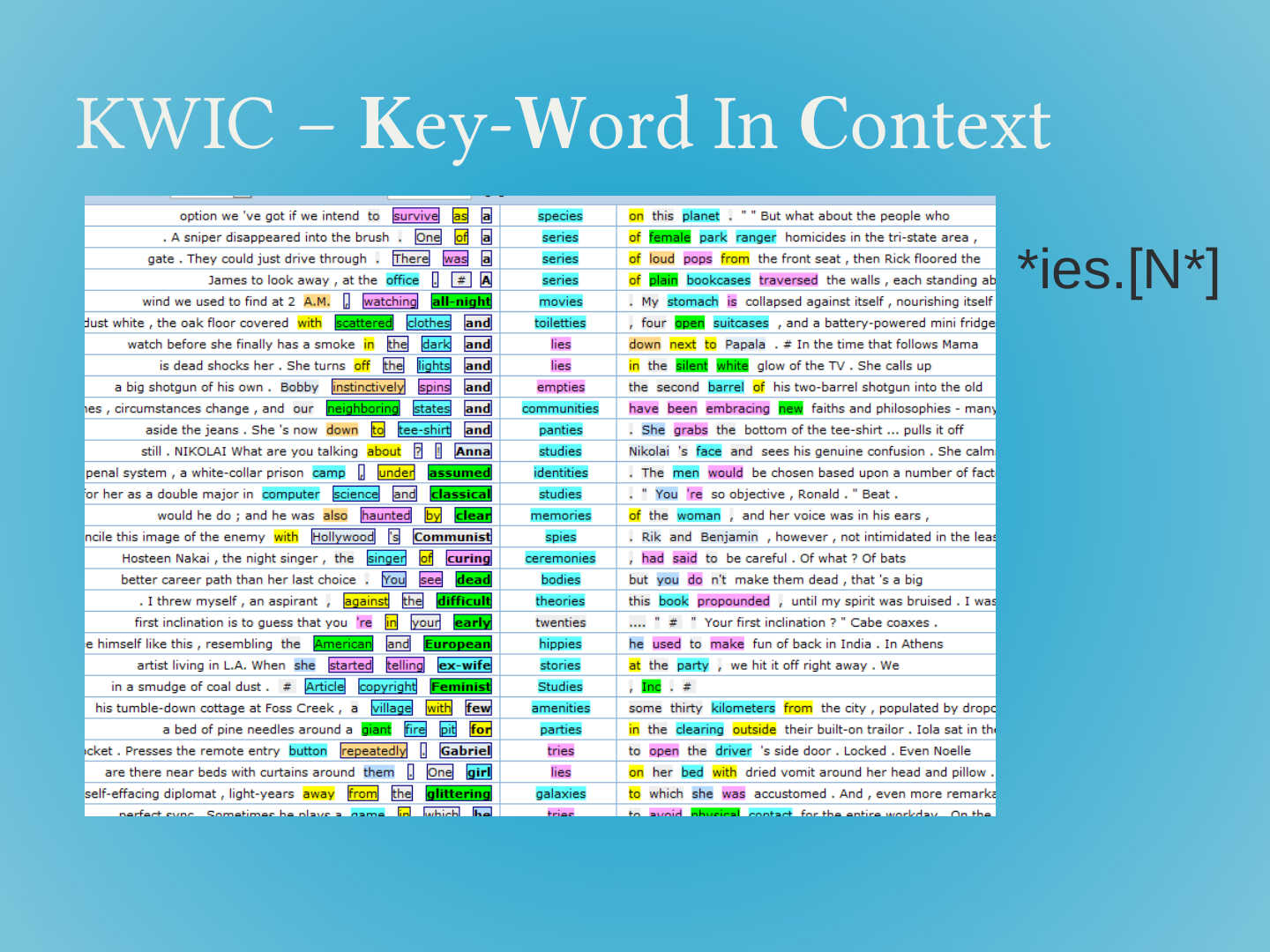
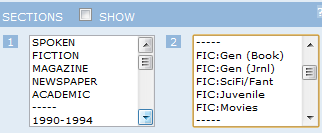
Limit searches by genre
Slide 41: Other questions corpus can answer
Other questions corpus can answer
- Are there more nouns or verbs ending in -ies?
*ies.[V*] vs. *ies.[N*]- Are there four-letter verbs ending in -ed in the present tense?
??ed.[VVB]- What are the most common adjectives describing students vs. pupils.
[j*] [student] vs. [j*] [pupil]- What do we say teachers do most often?
[teacher] [vvb]
Slide 42: Corpus, rules, and regularity
Corpus, rules, and regularity
pre*
*ed
*ies.[V*]
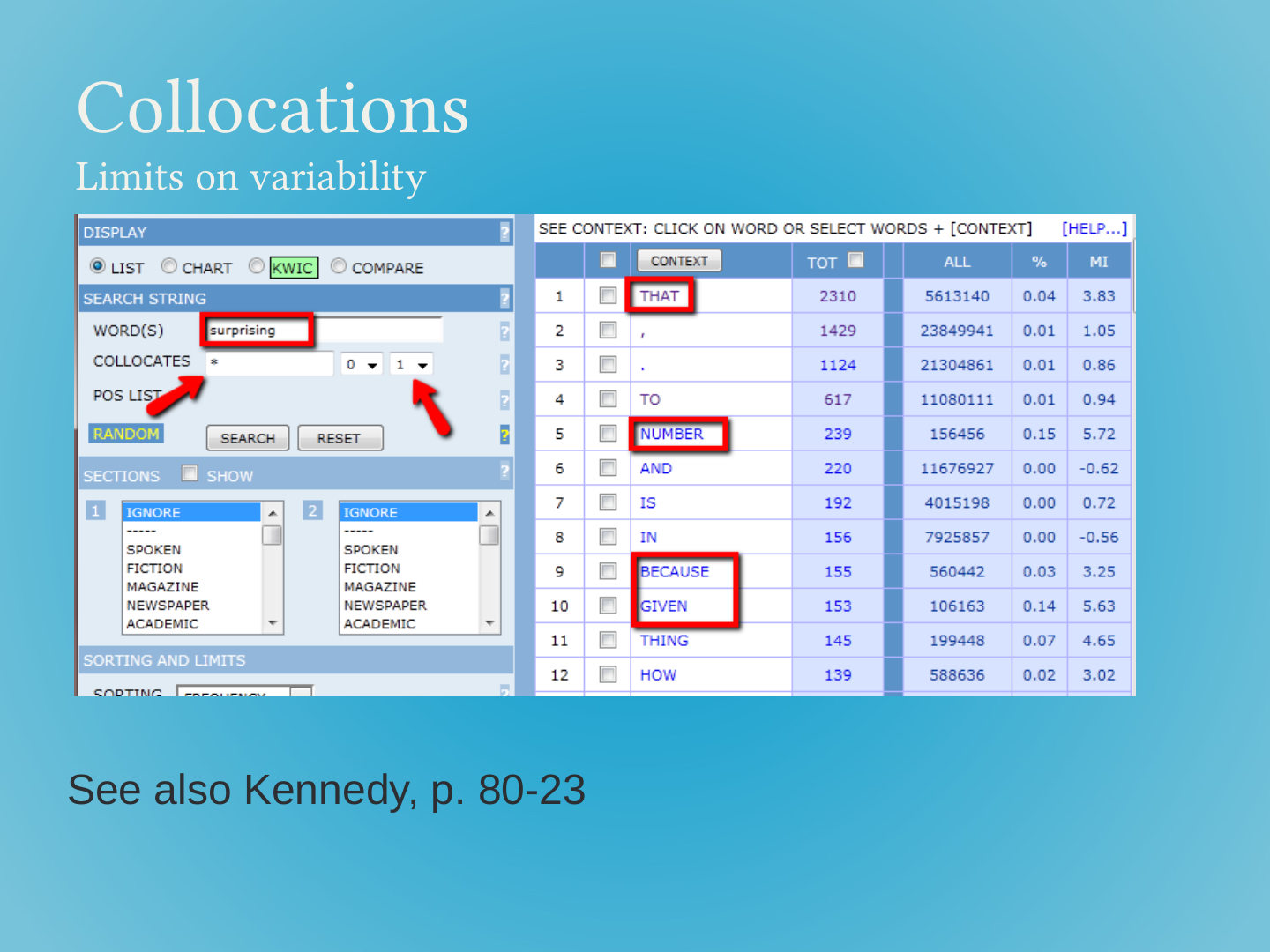
Slide 43: Collocations
Collocations
Limits on variability
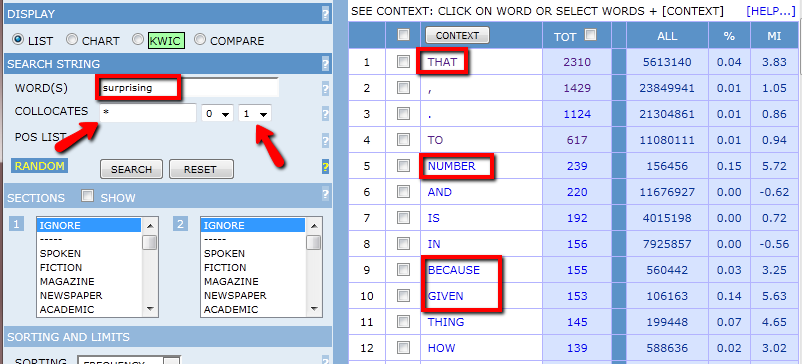
See also Kennedy, p. 80-23
Slide 44: Collocations
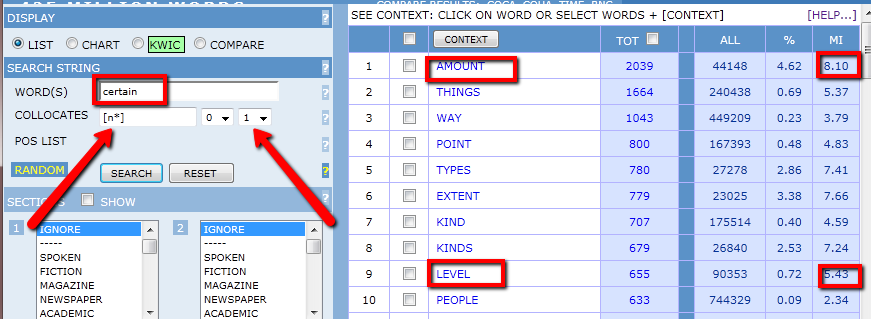
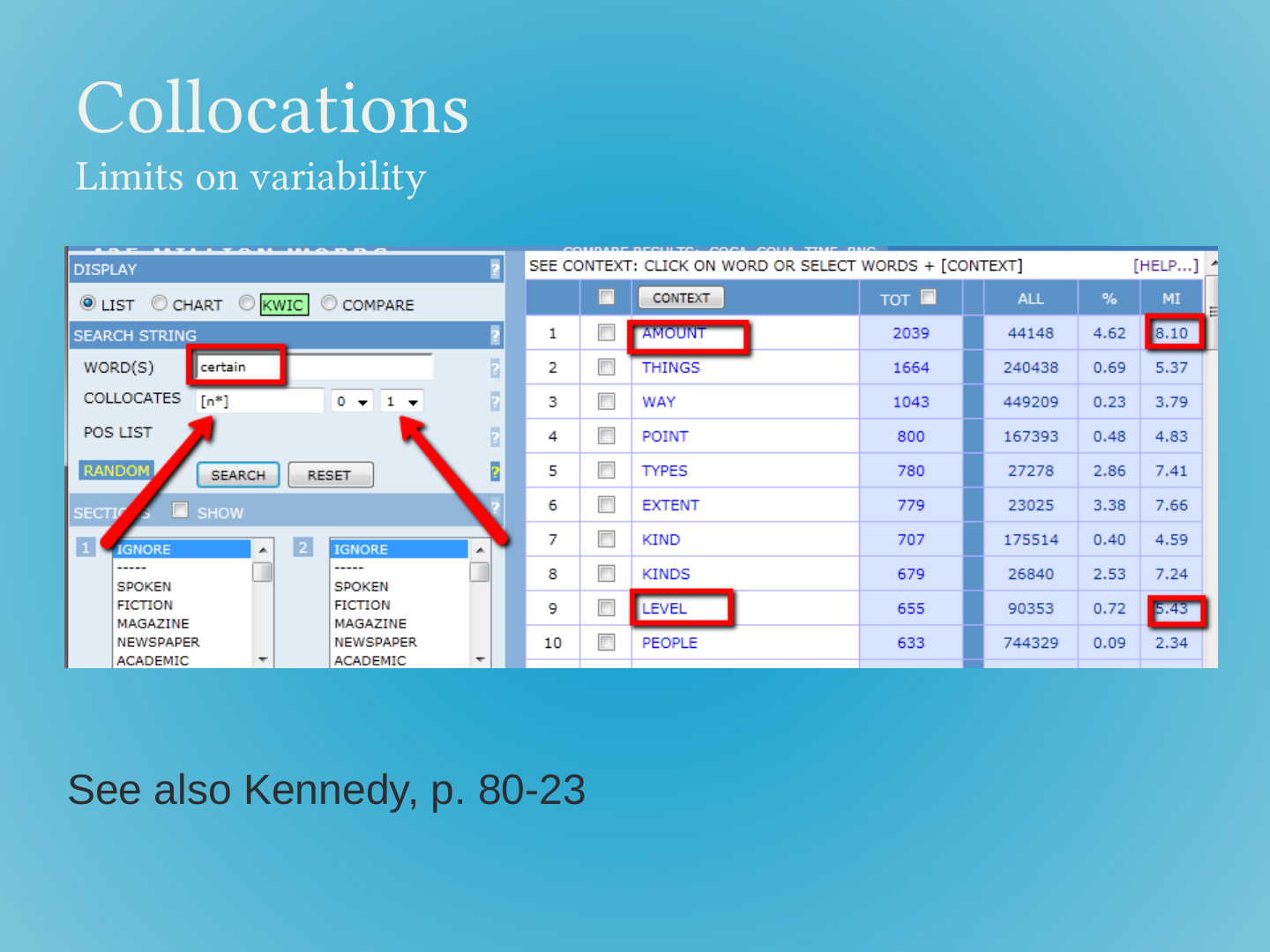
Collocations
Limits on variability
See also Kennedy, p. 80-23
Collocates box: [n*]
Slide 45: Collocations (cont)
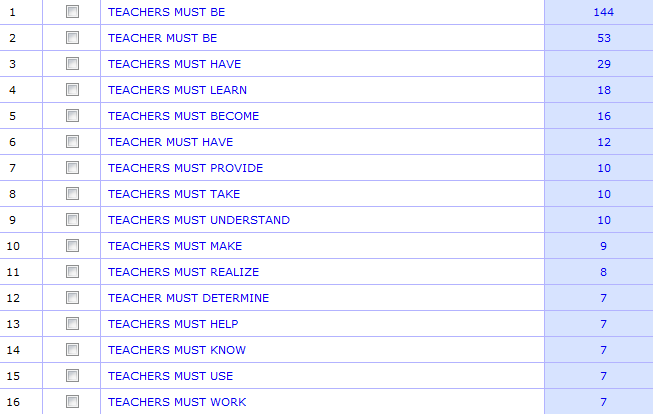
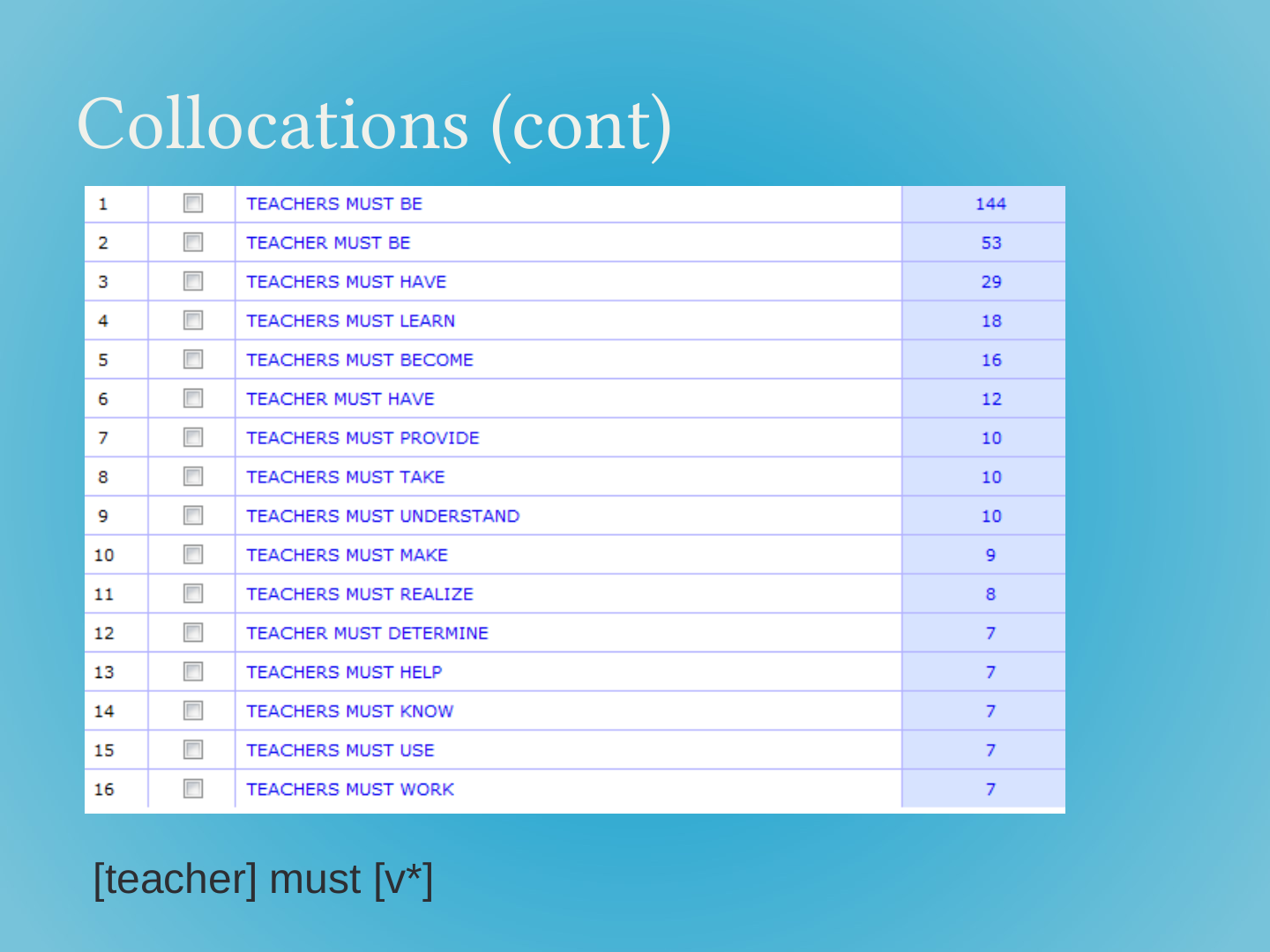
Collocations (cont)
[teacher] must [v*]
Slide 46: Idioms and set phrases
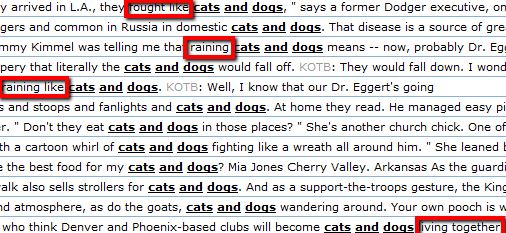
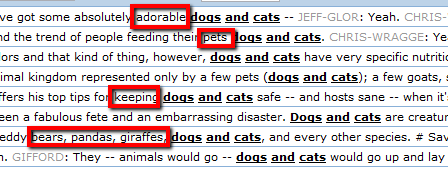
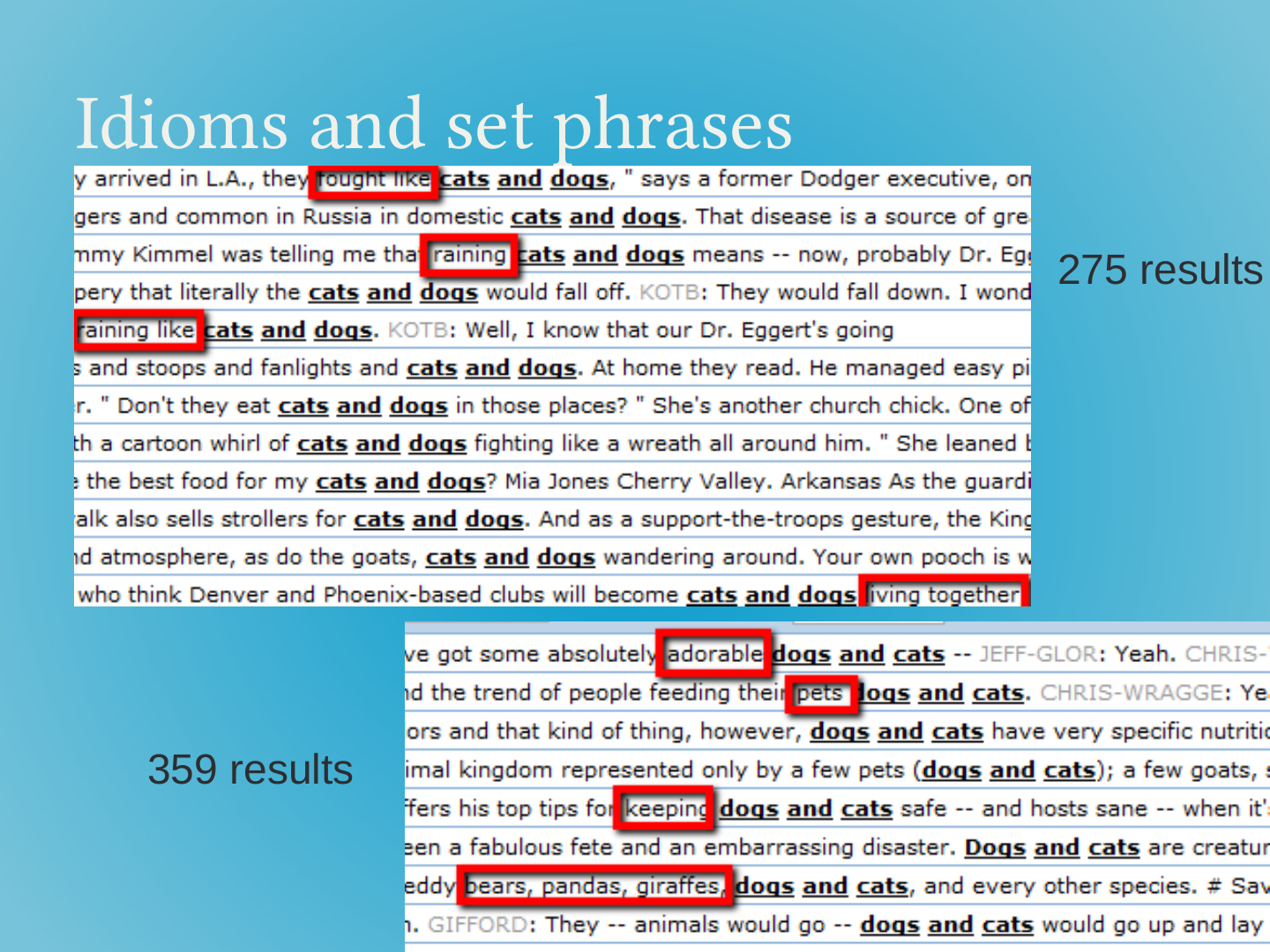
Idioms and set phrases
275 results
359 results
Slide 47: Google as a Corpus
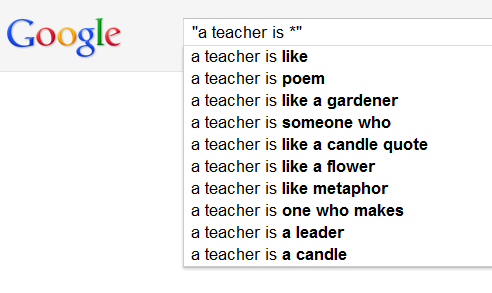
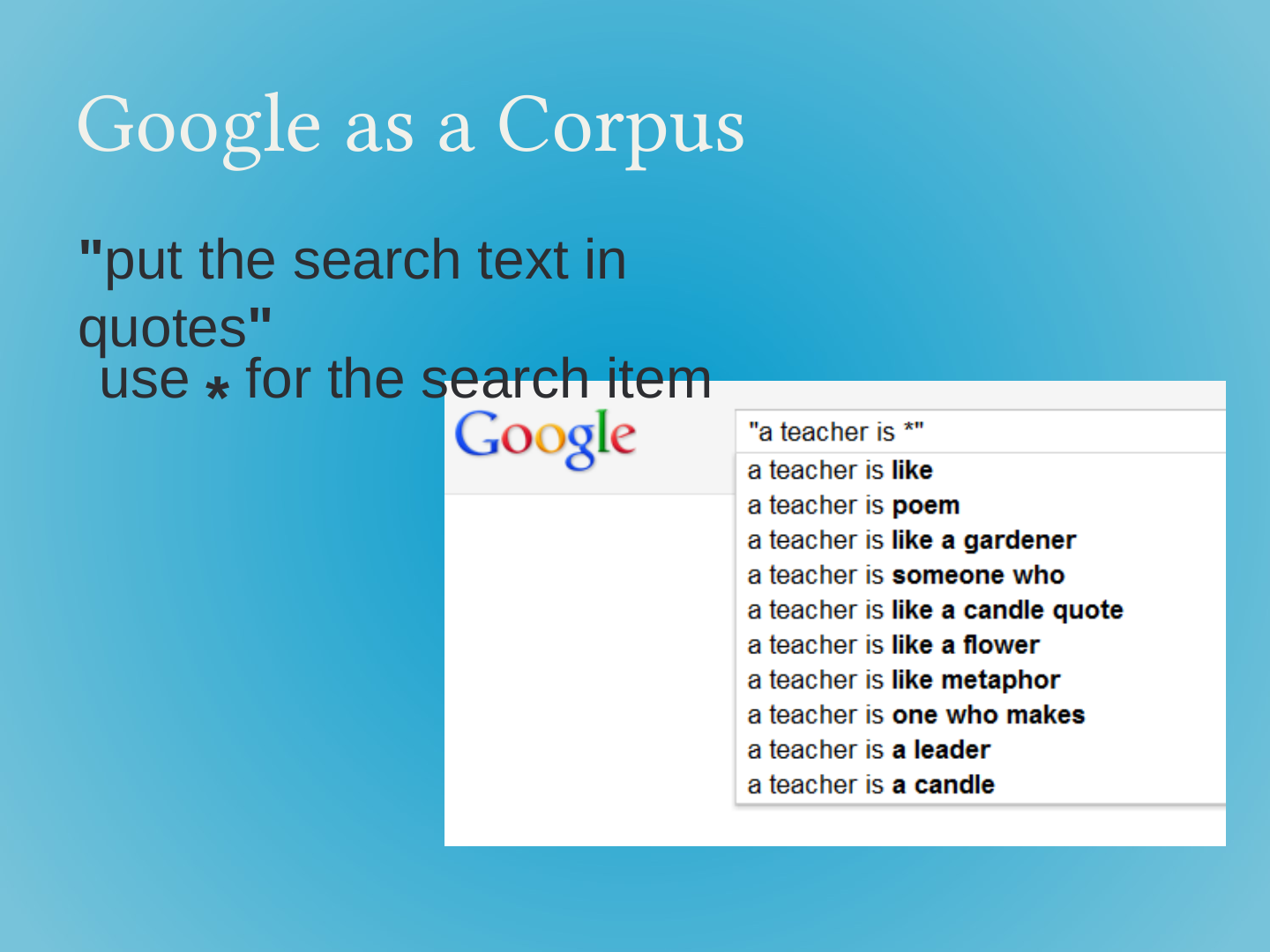
Google as a Corpus
"put the search text in quotes"
use * for the search item
Slide 48: Slide 48
Slide 49: Google as a Corpus
Google as a Corpus
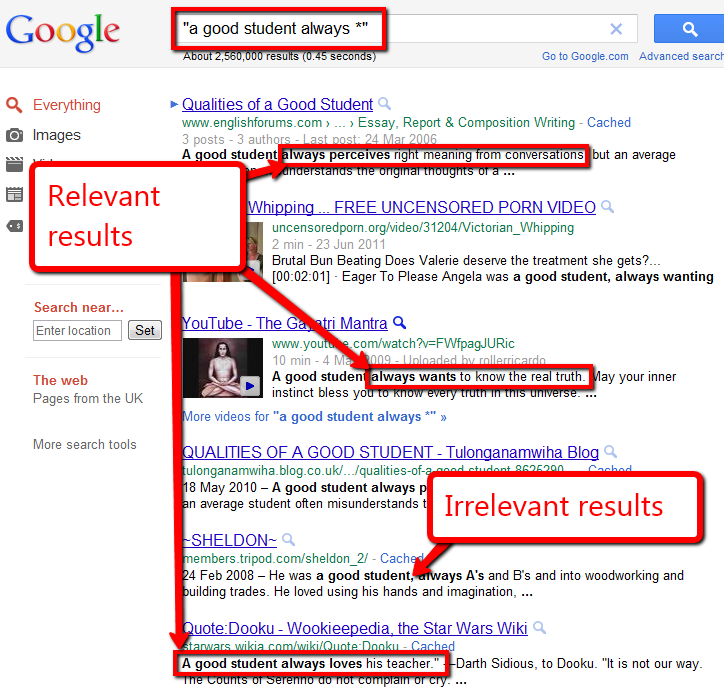
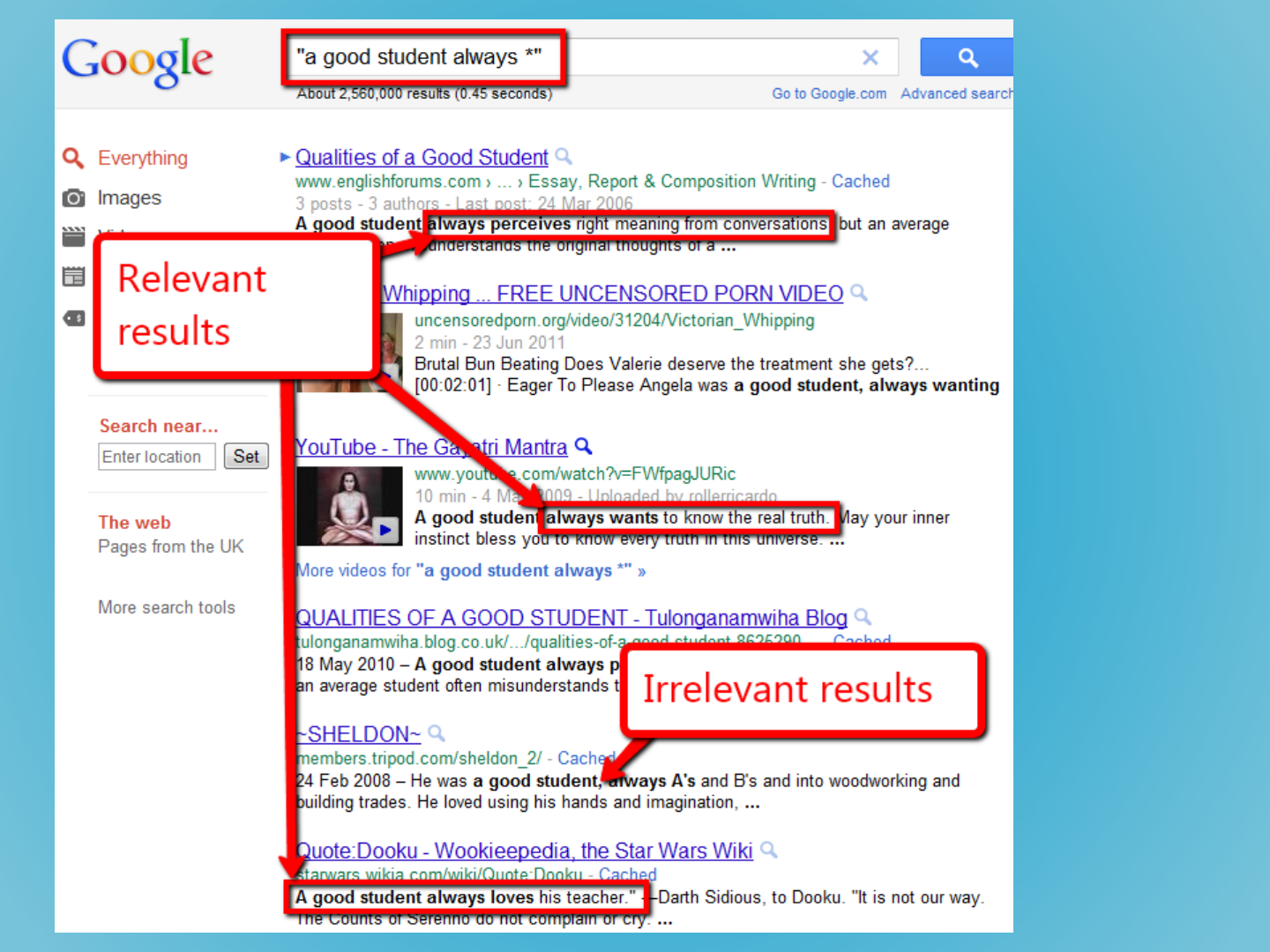
- PRO: rare, low frequency usage, up-to-date usage
- CON: no sampling, no frequency sort, no genre limit, no part of speech tags
Slide 50: Google results counts are only rough estimates…
Google results counts are only rough estimates…
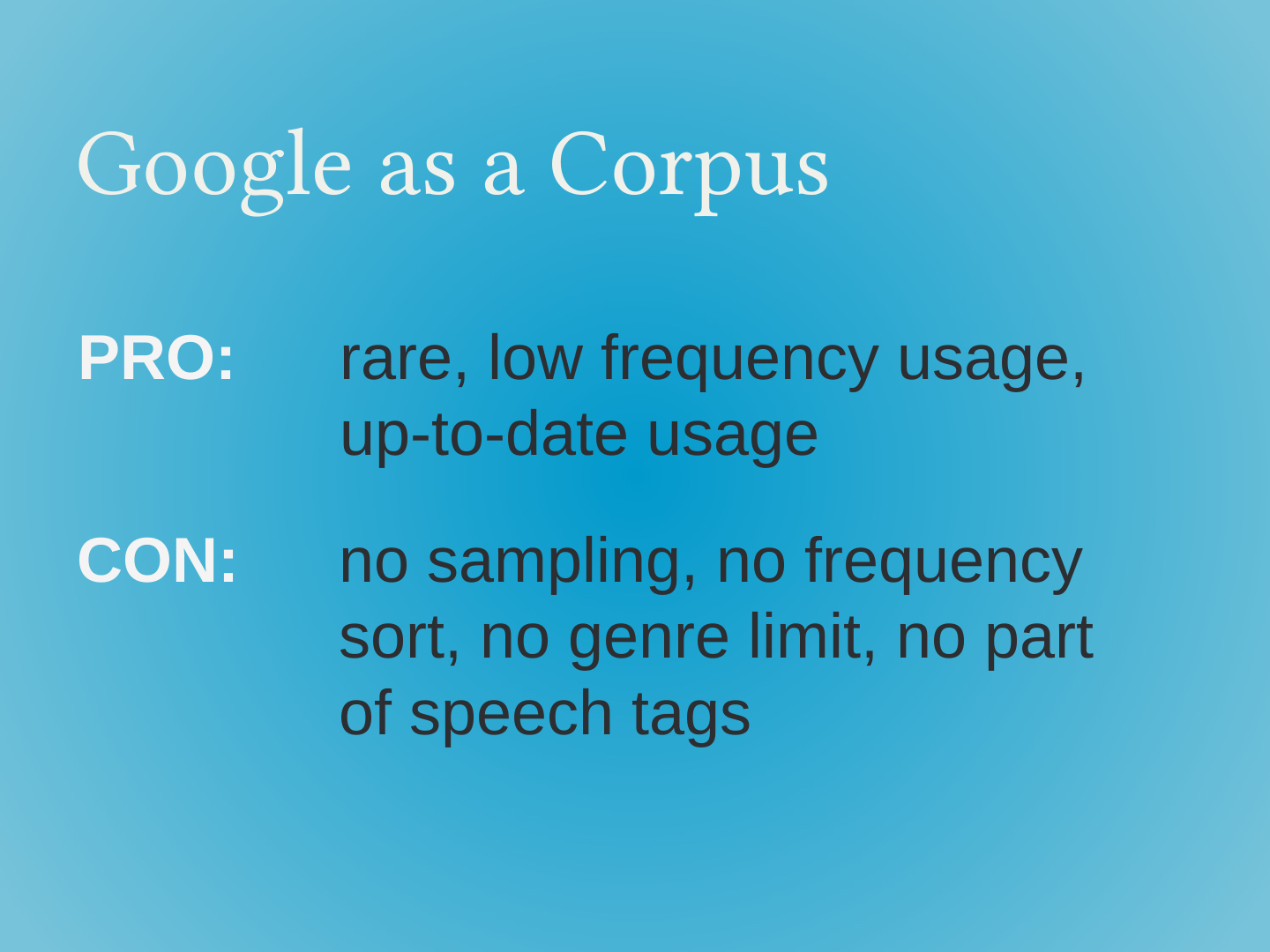
Different people searching in different geographic locations can get different numbers
Sometimes searching for A gives fewer results than searching for A without B


http://searchengineland.com/why-google-cant-count-results-properly-53559
Slide 51: …but Google fights can be fun
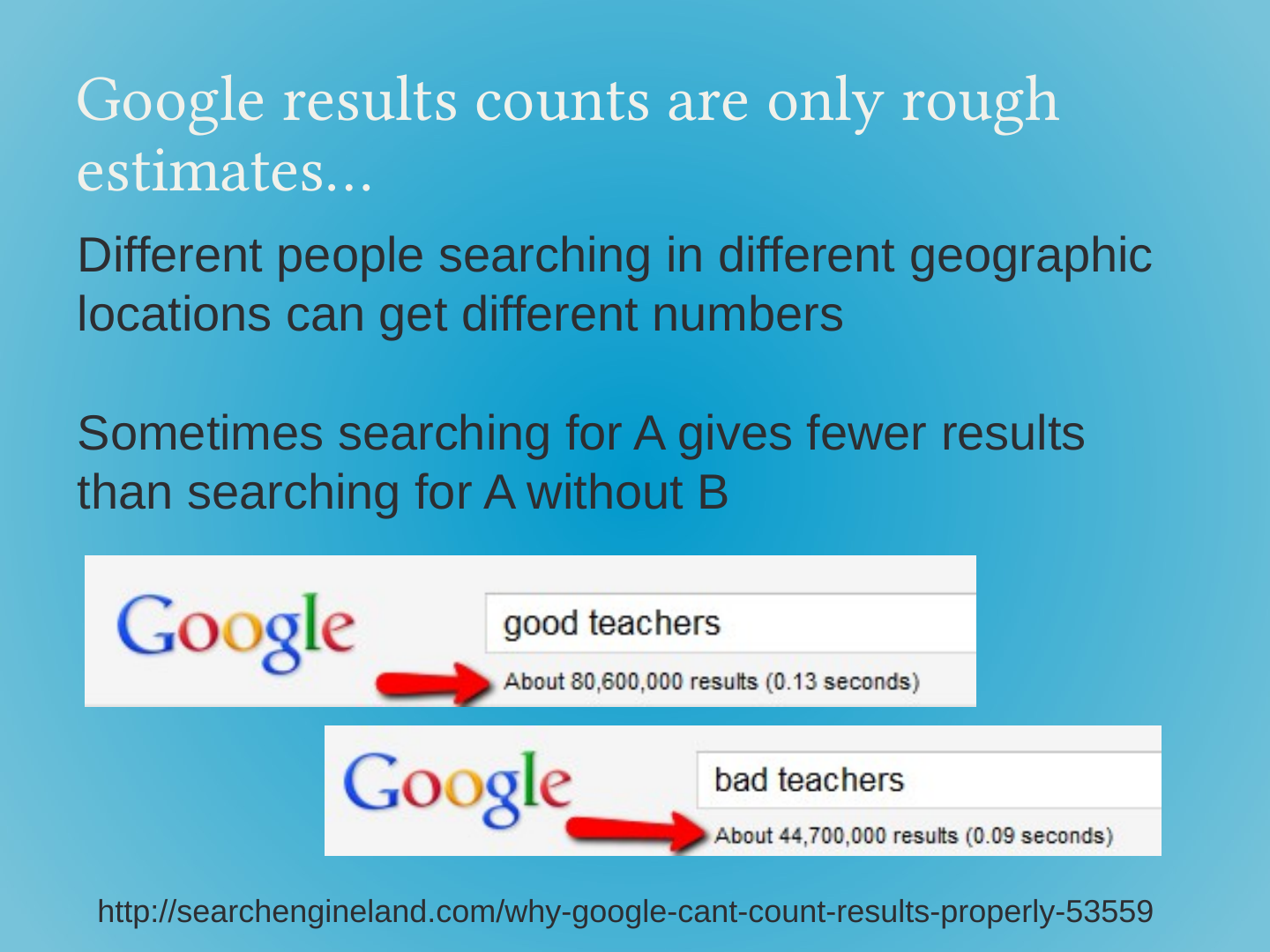
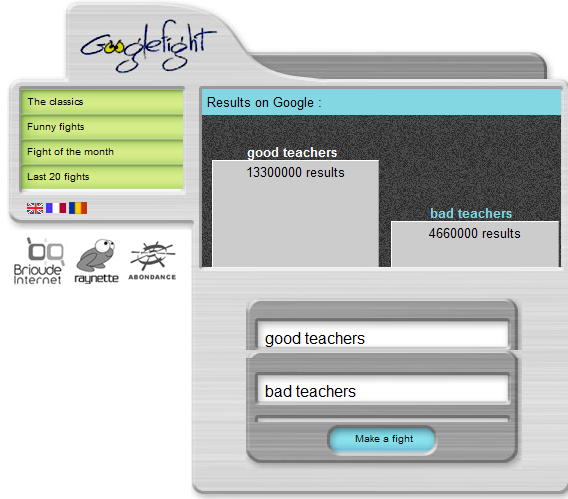
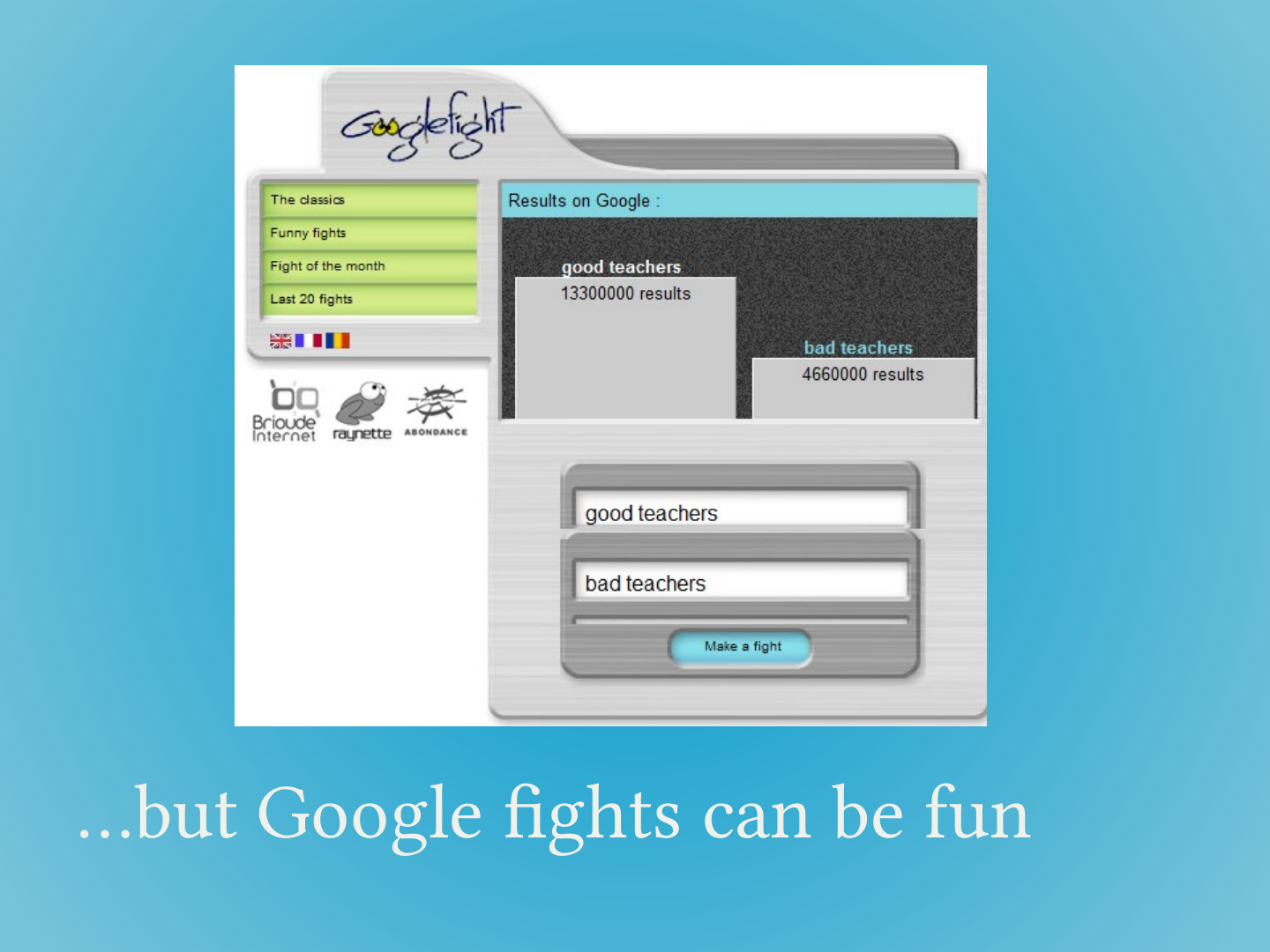
…but Google fights can be fun
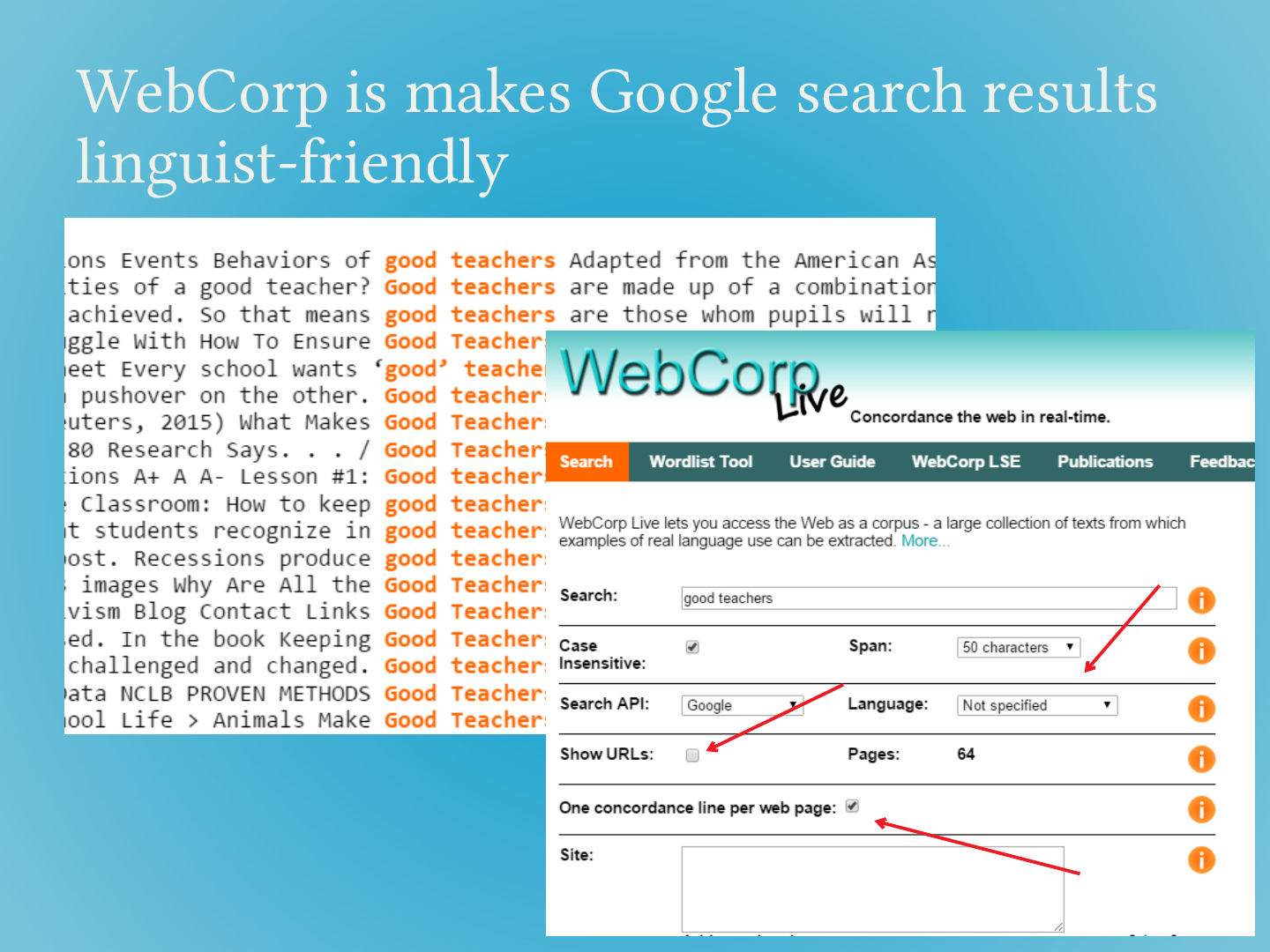
Slide 52: WebCorp is makes Google search results linguist-friendly
WebCorp is makes Google search results linguist-friendly
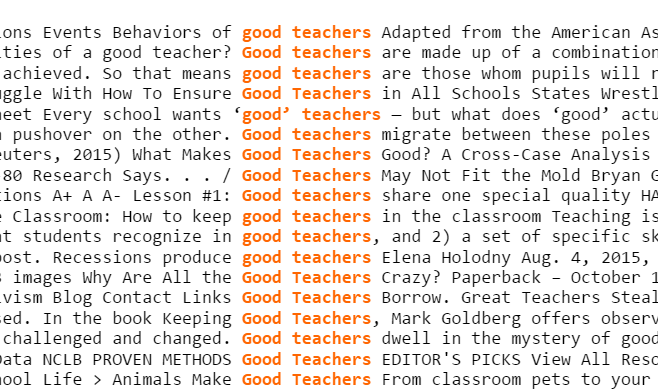
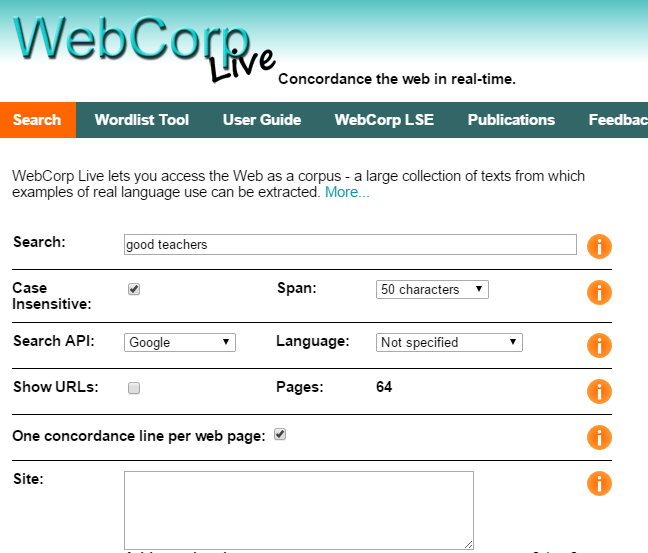
On the slide, three red arrows are drawn over the WebCorp form: one pointing at the Span box, one at the Show URLs checkbox and one at the “One concordance line per web page” checkbox.
Slide 53: Avoid Common Corpus Errors
Avoid Common Corpus Errors

Slide 54: Slide 54
- Be aware of limitations: sampling, coverage, size, presence of typos and errors, bad part of speech tagging
- Beware of low frequency results
- Beware of homographs
Slide 55: Slide 55
- Check results come from multiple sources
- Check KWIC to confirm relevance
- Limit search by genre

Slide 56: Check examples and sources
Check examples and sources
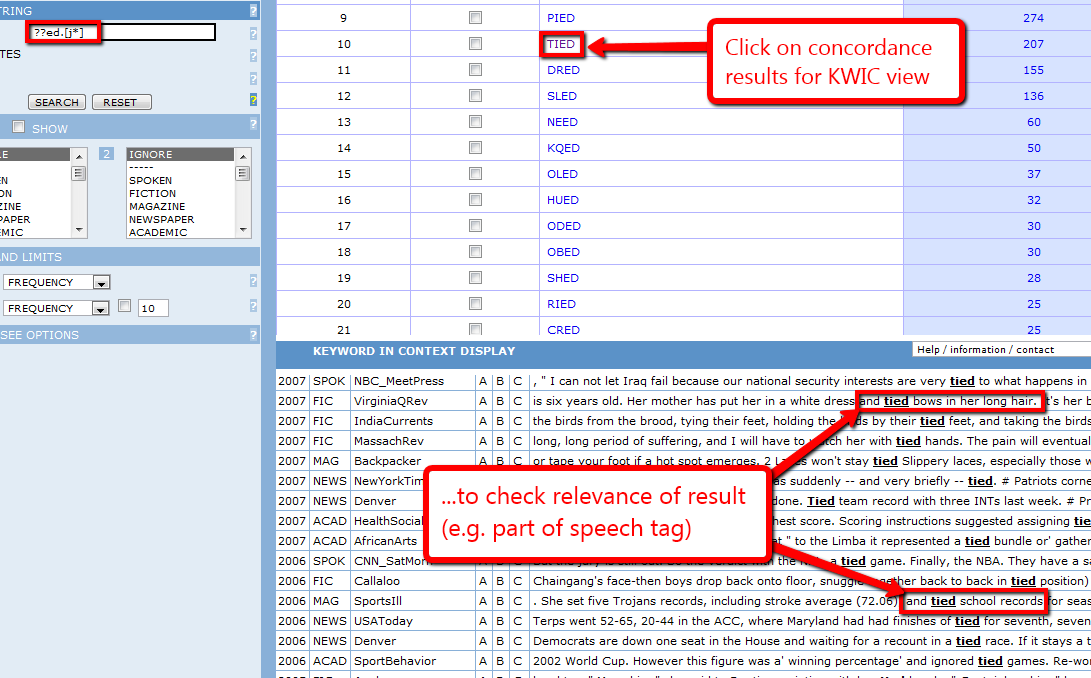
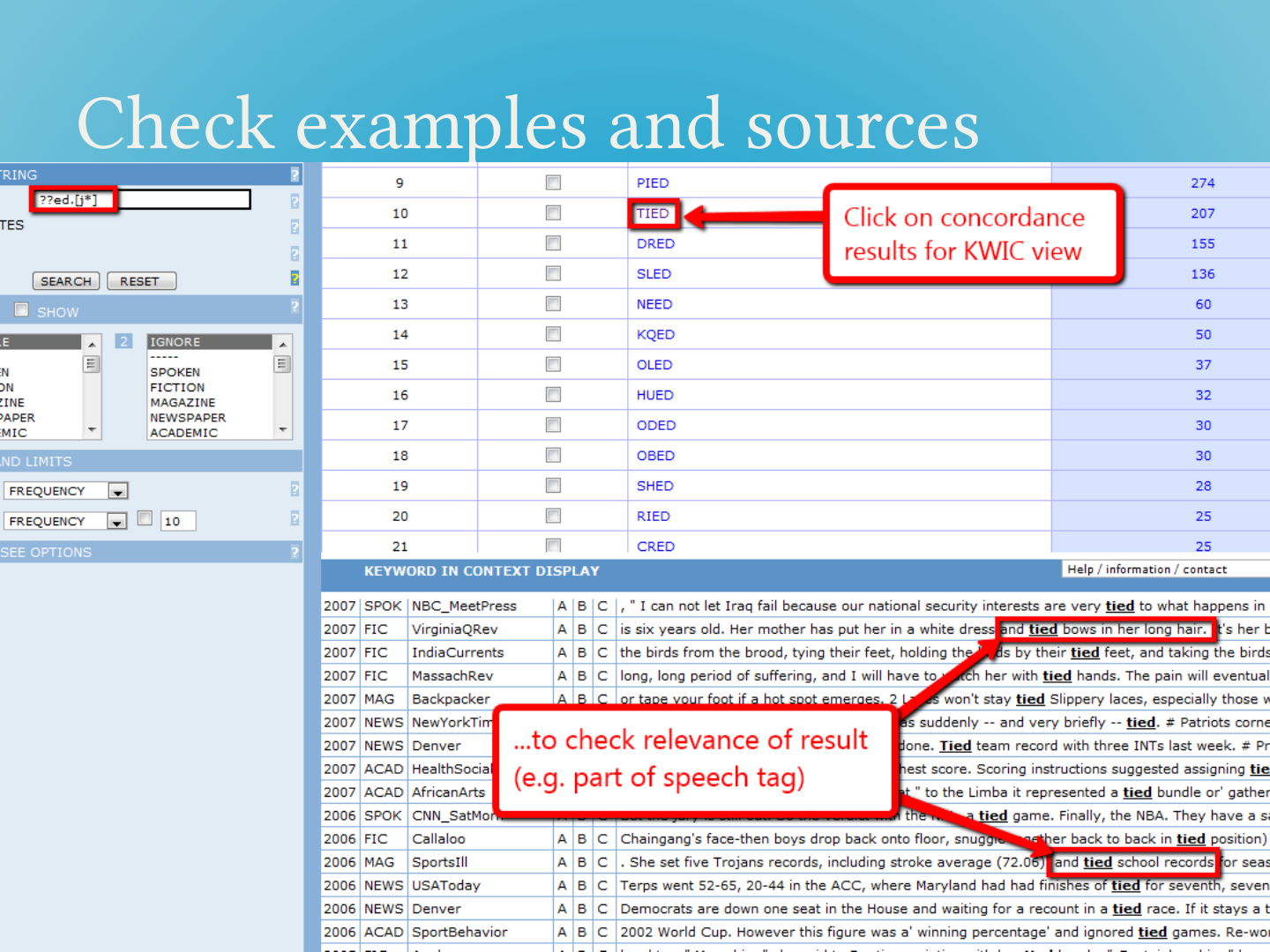
- Click on concordance results for KWIC view
- …to check relevance of result (e.g. part of speech tag)
Slide 57: Always check low frequency results
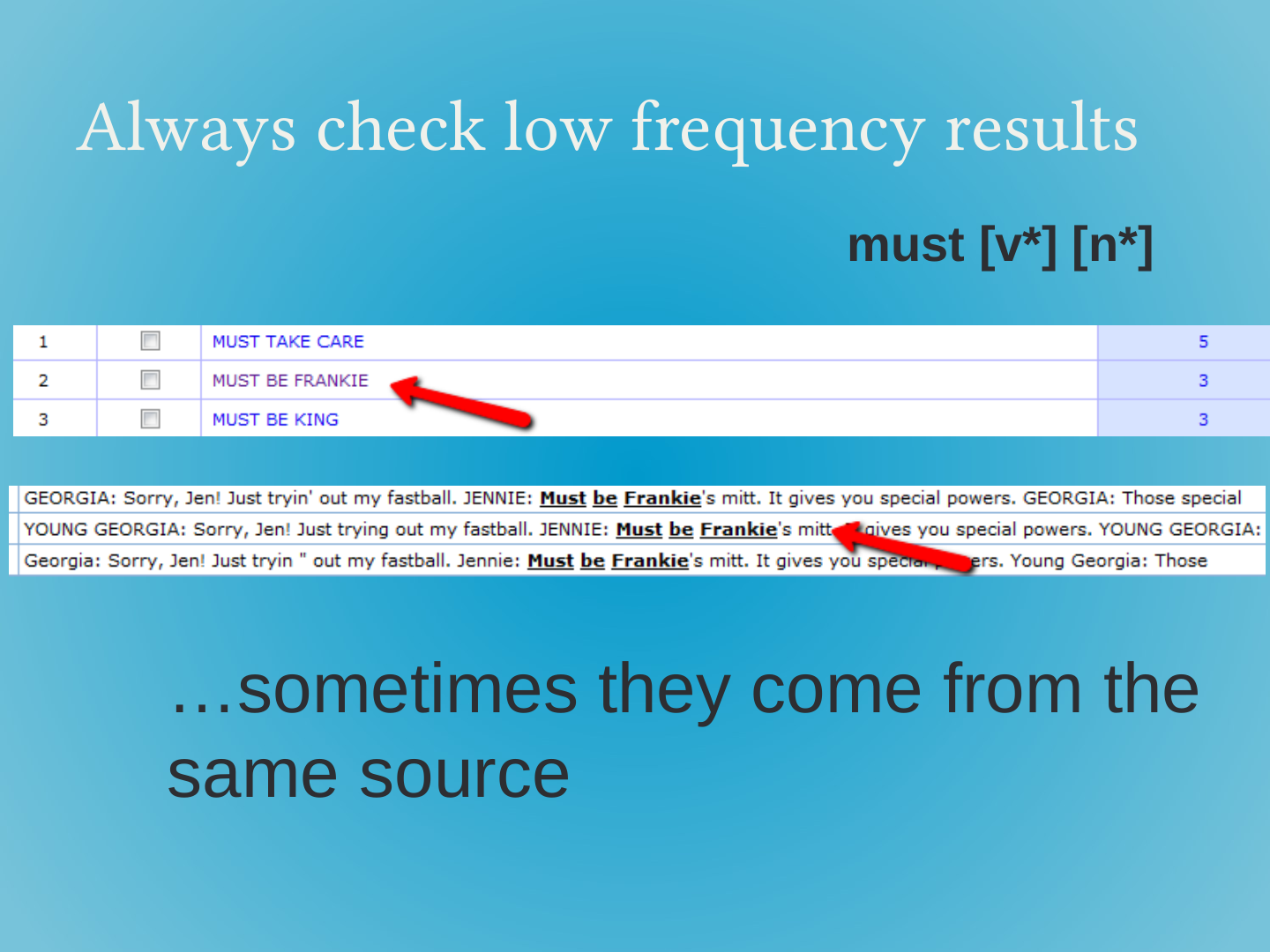
Always check low frequency results
must [v*] [n*]

…sometimes they come from the same source
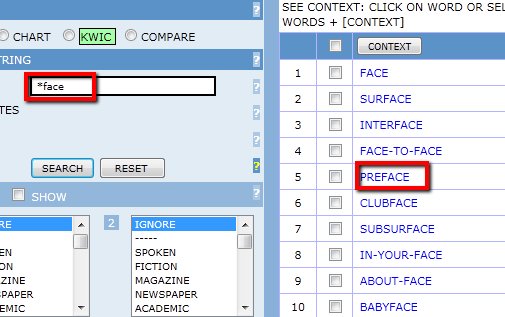
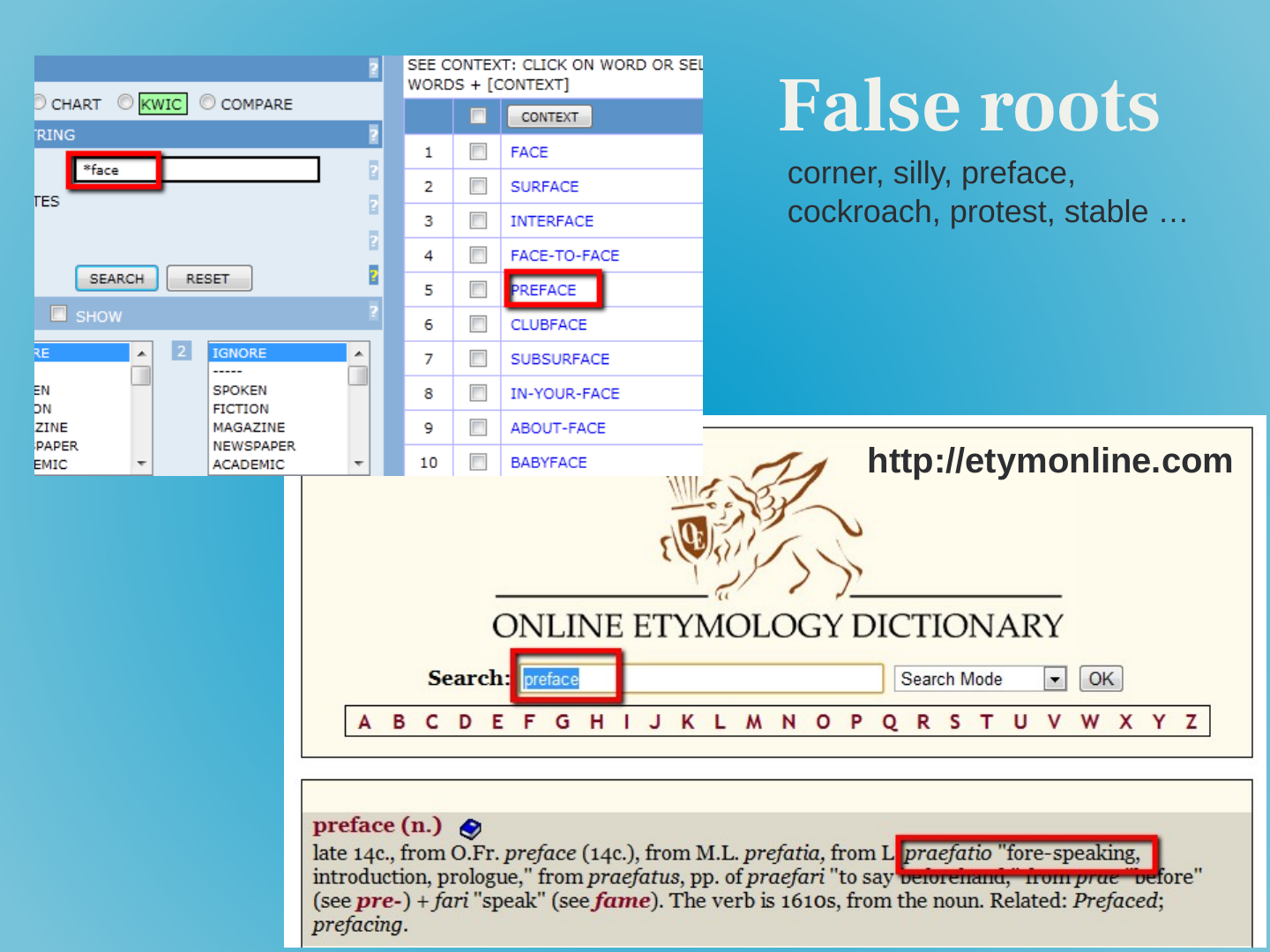
Slide 58: False roots
False roots
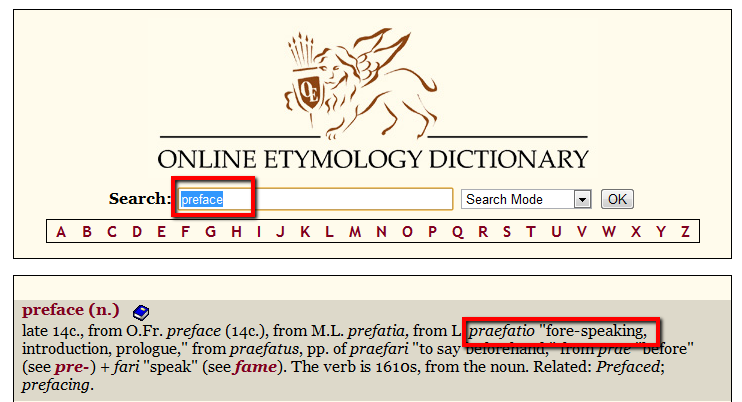
http://etymonline.com
corner, silly, preface, cockroach, protest, stable …
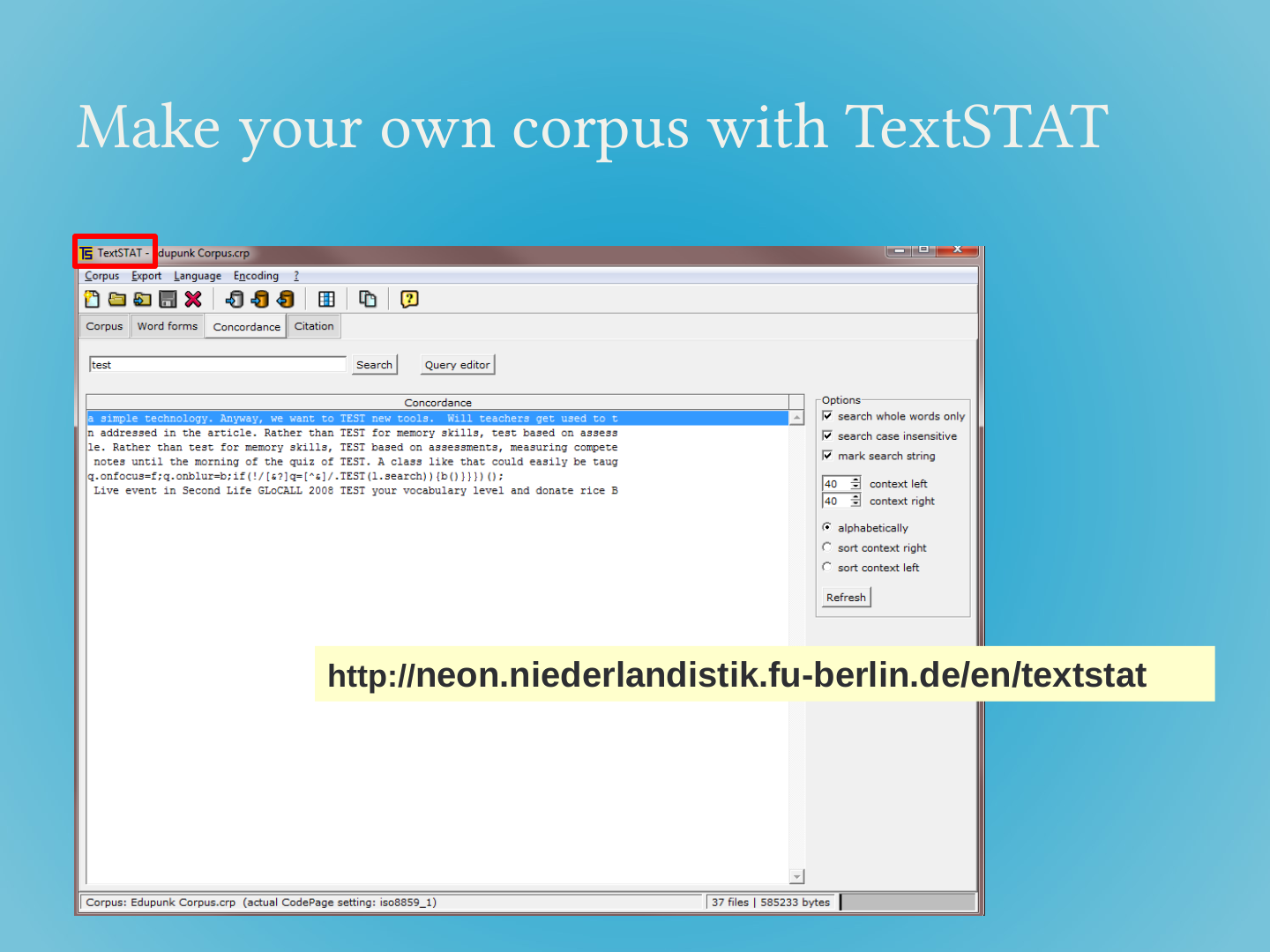
Slide 59: Make your own corpus with TextSTAT
Make your own corpus with TextSTAT
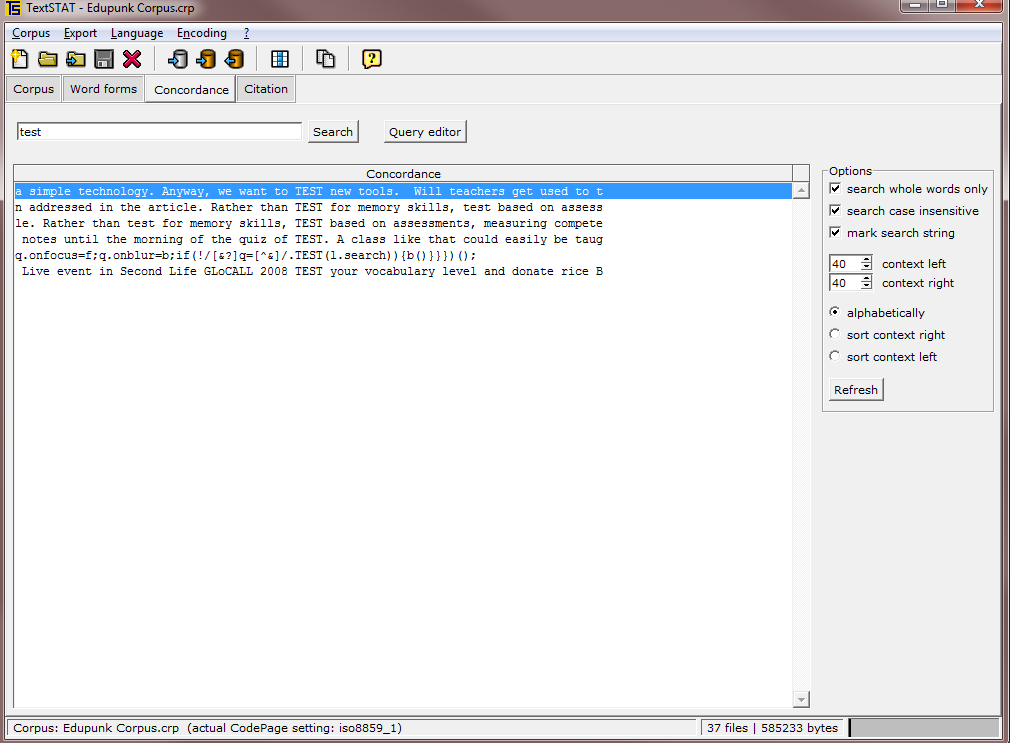
http://neon.niederlandistik.fu-berlin.de/en/textstat
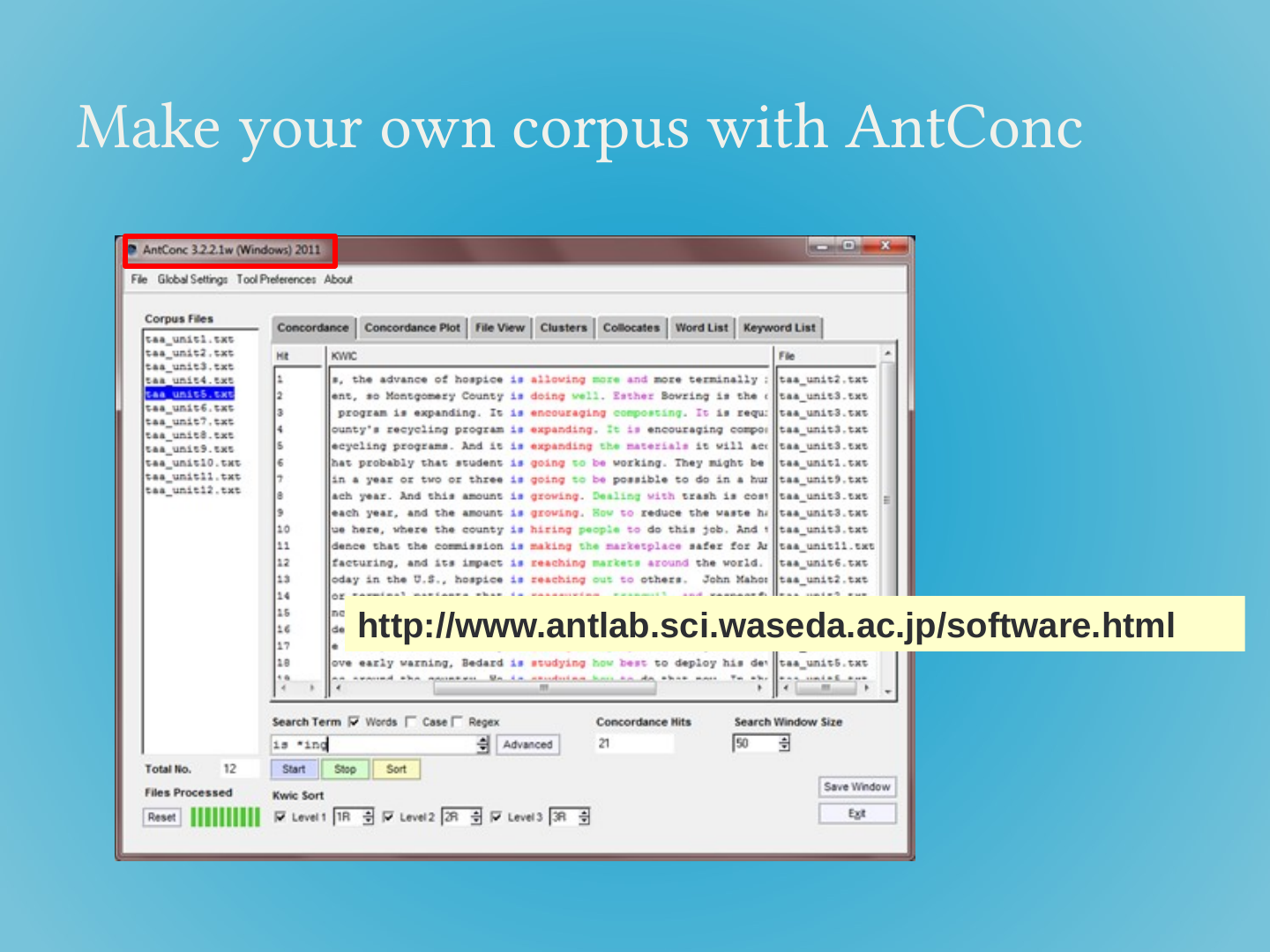
Slide 60: Make your own corpus with AntConc
Make your own corpus with AntConc
http://www.antlab.sci.waseda.ac.jp/software.html
Slide 61: Corpus in the classroom
Corpus in the classroom
- teacher preparation
- student discovery
Slide 62: Teacher preparation
Teacher preparation
- find relevant, common examples
- prepare worksheets
- check for exceptions
- find out answers to student questions about rules and usage
Slide 63: Student discovery
Student discovery
- show search results to students to work out rules or word meanings
- teach students how to search for questions
- ask students to give each other puzzles for searching
Slide 64: For heavy classroom use…
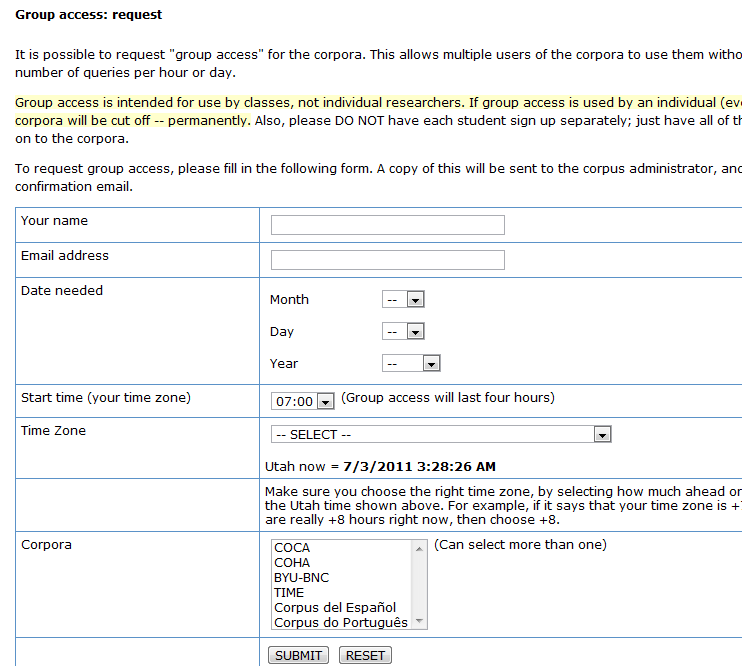
For heavy classroom use…
register for group access to prevent spam lock out

Slide 65: Corpus v dictionary
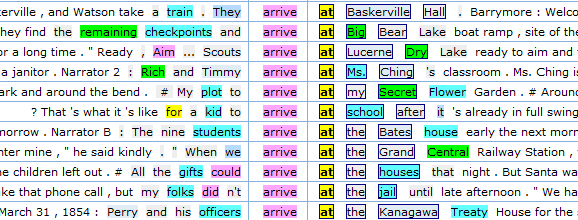
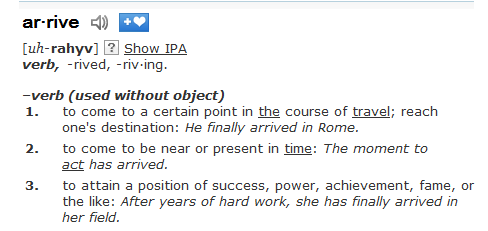
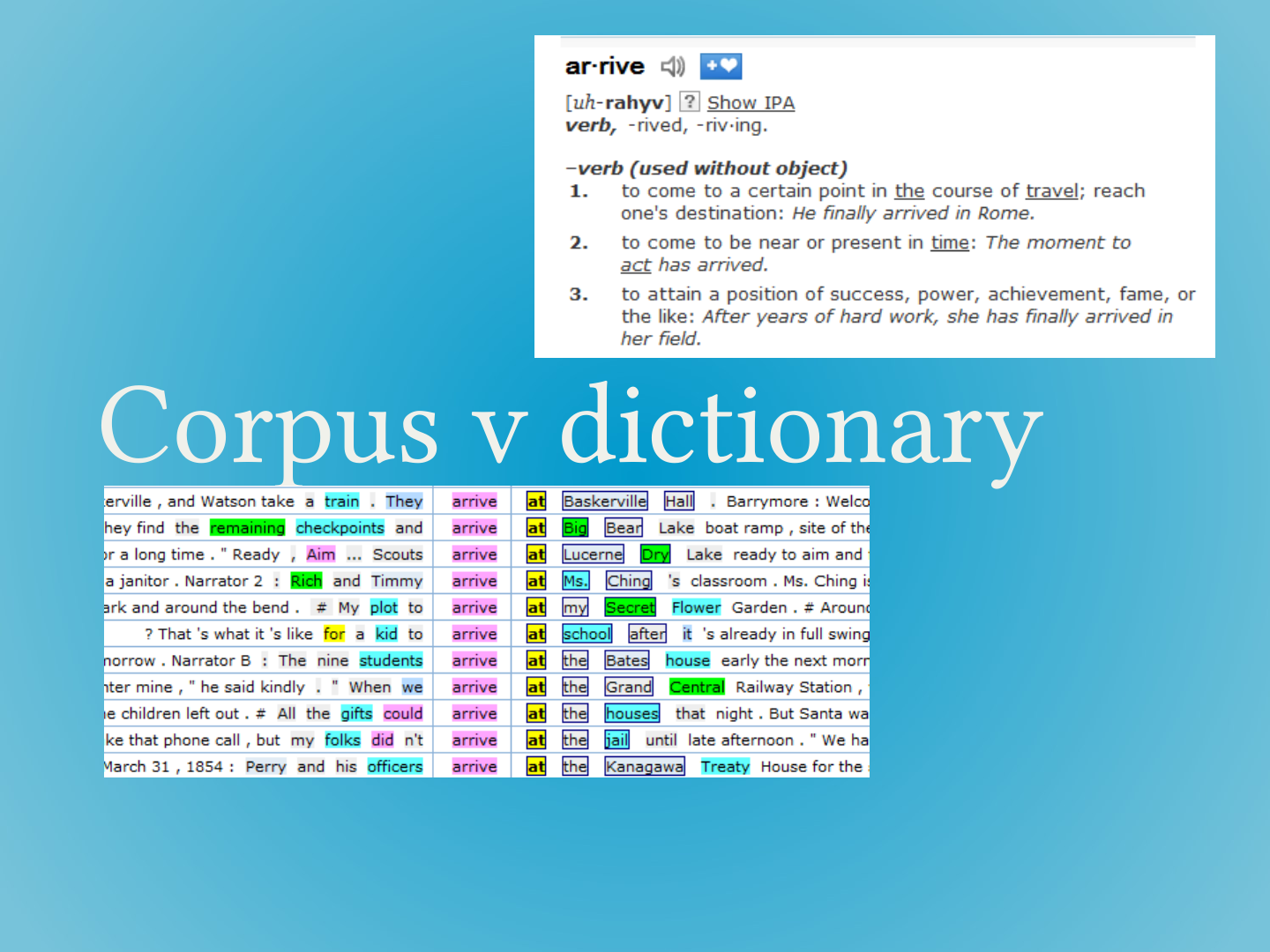
Corpus v dictionary
Slide 66: Non-classroom corpus use
Non-classroom corpus use
- supplement dictionary
- cross-word puzzles
- check typical usage when writing
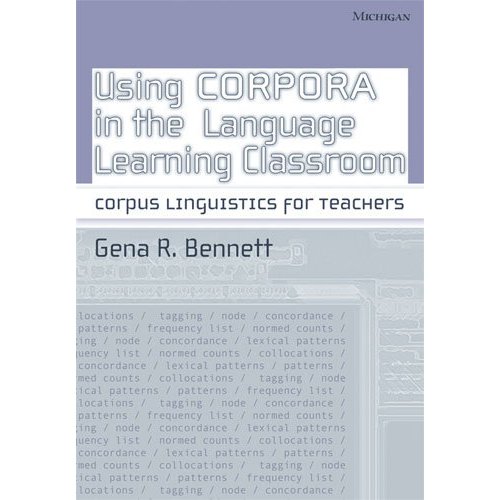
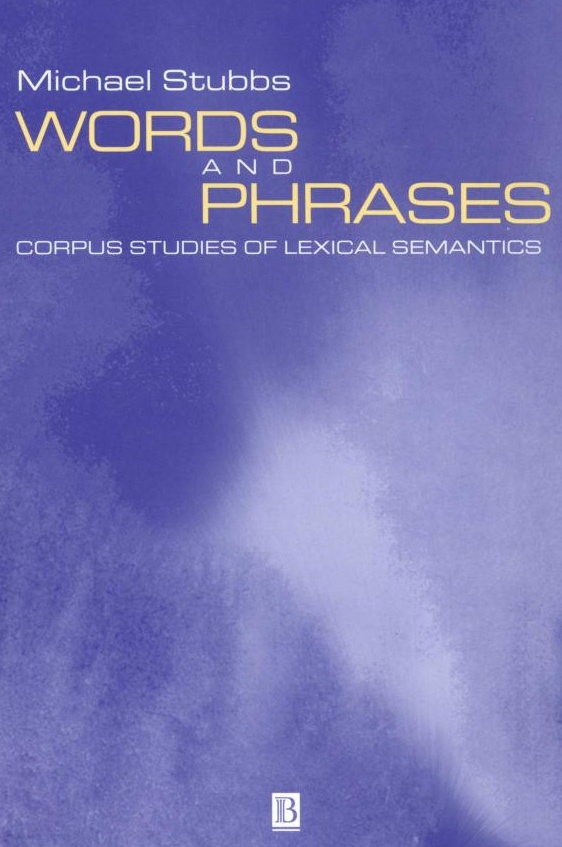
Slide 67: Where to go next?
Where to go next?

Slide 68: Thank you
Thank you
Contact [email protected]