Čeština bez vidu: A angličtina bez časů
- SlideShare title: Čeština bez vidu
- Talk date: Not established
- SlideShare upload: 2007-08-18 (upload date, not the delivery date)
- Event: Not established
- Place: Not established
- Topics: Language & meaning
- Language: cs
- Slides in the original listing: 19
- Coverage: Full text of all 19 slides, each paired with its original slide image (slide N is section N).
- Original listing: https://www.slideshare.net/slideshow/etina-bez-vidu/93686
- Cover image: https://slides.dominiklukes.net/readers/etina-bez-vidu/pages/page-01.png
- Reader data (JSON): https://slides.dominiklukes.net/readers/etina-bez-vidu/presentation.json
- TalkWeaver package (outline and images, ZIP): https://slides.dominiklukes.net/etina-bez-vidu/etina-bez-vidu-talkweaver.zip
- TalkWeaver outline: https://slides.dominiklukes.net/etina-bez-vidu/talkweaver/etina-bez-vidu-outline.md
- Markdown copy: https://slides.dominiklukes.net/etina-bez-vidu/index.md

Slide 1: Čeština bez vidu: A angličtina bez časů
Čeština bez vidu: A angličtina bez časů
Dominik Lukeš
www.bohemica.com
www.czechupdate.com
www.strcprstskrzkrk.com

Slide 2: Otázky a odpovědi
Otázky a odpovědi
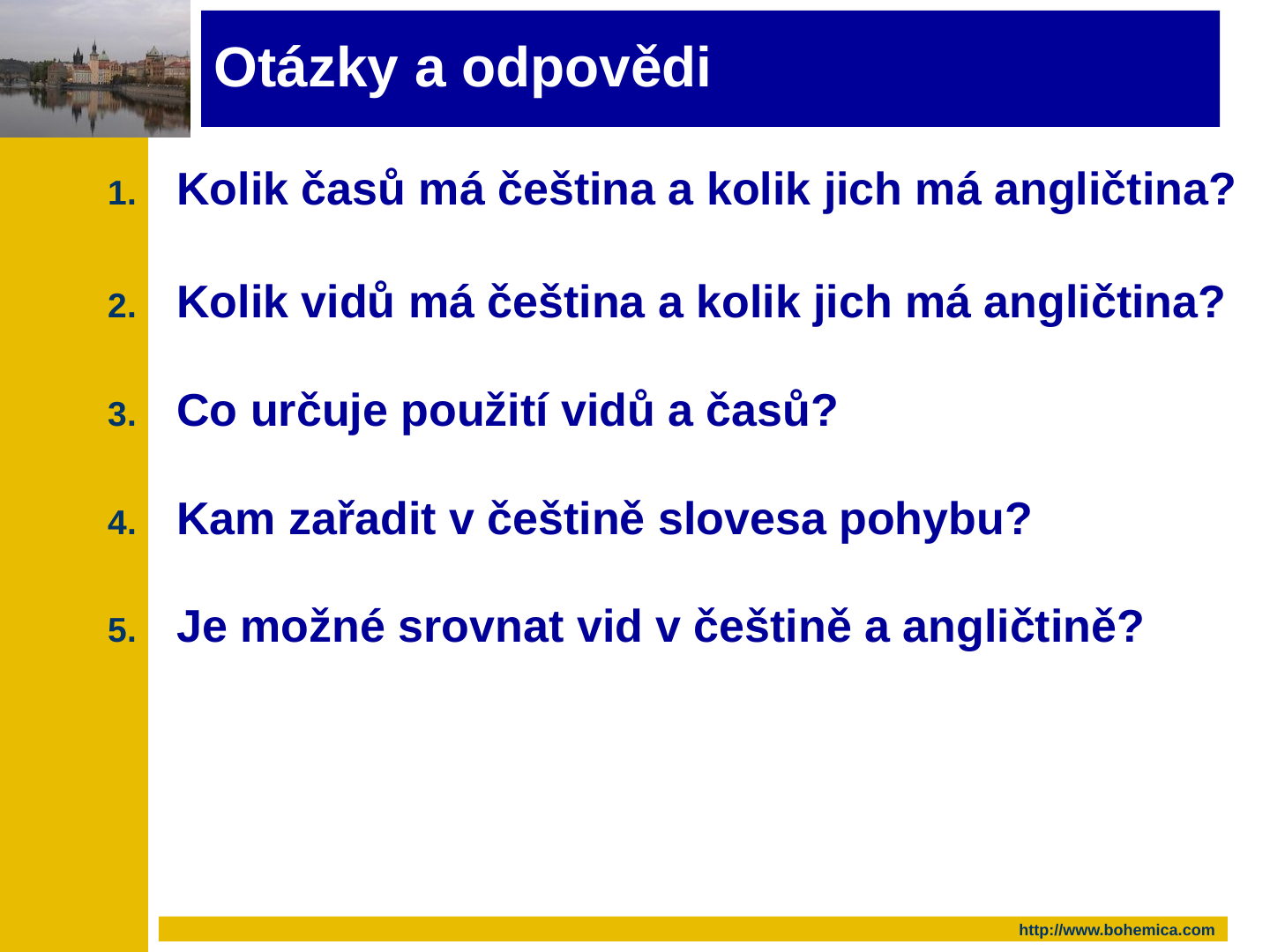
- Kolik časů má čeština a kolik jich má angličtina?
- Kolik vidů má čeština a kolik jich má angličtina?
- Co určuje použití vidů a časů?
- Kam zařadit v češtině slovesa pohybu?
- Je možné srovnat vid v češtině a angličtině?
Slide 3: Prostor času a vidu
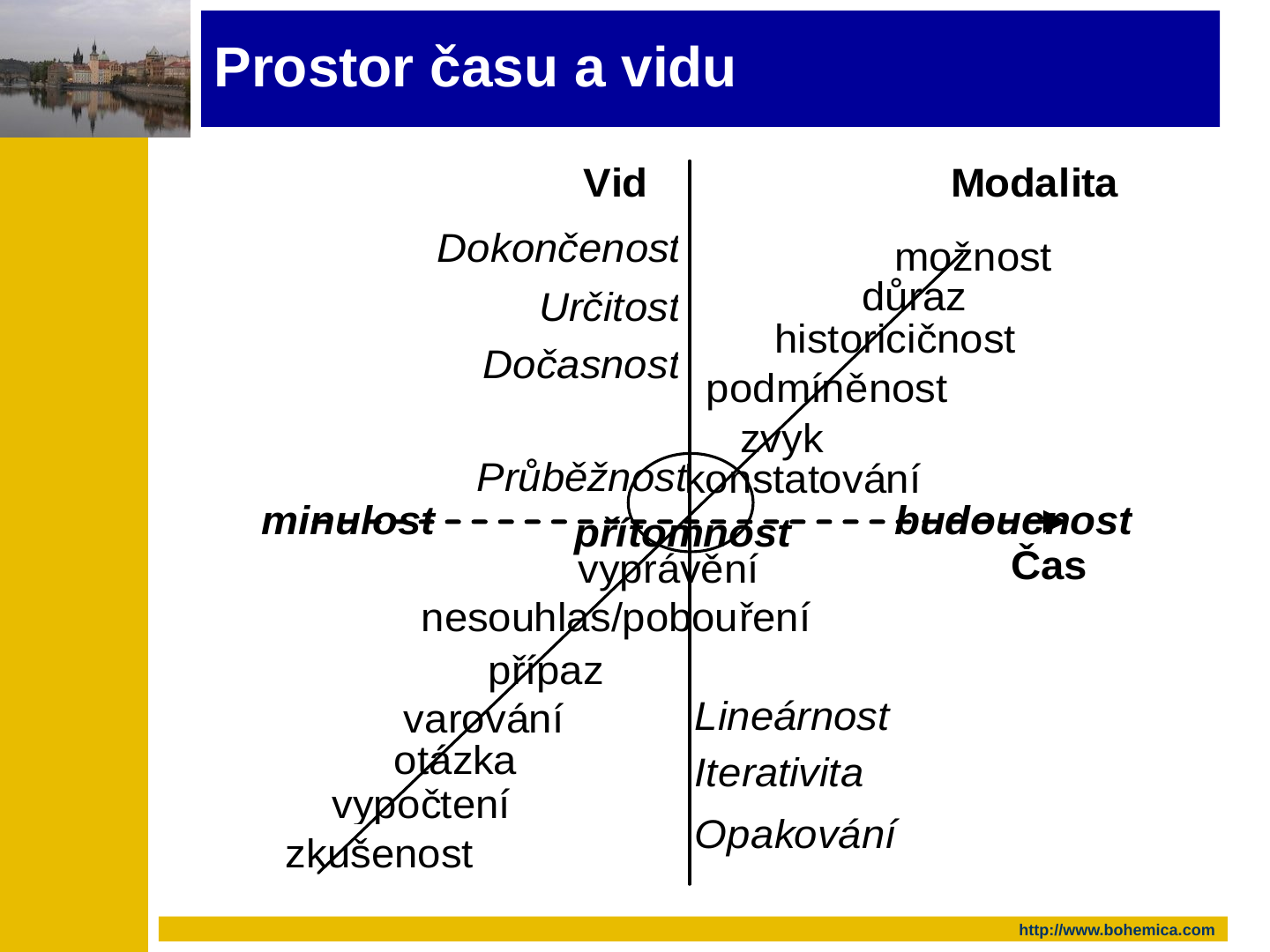
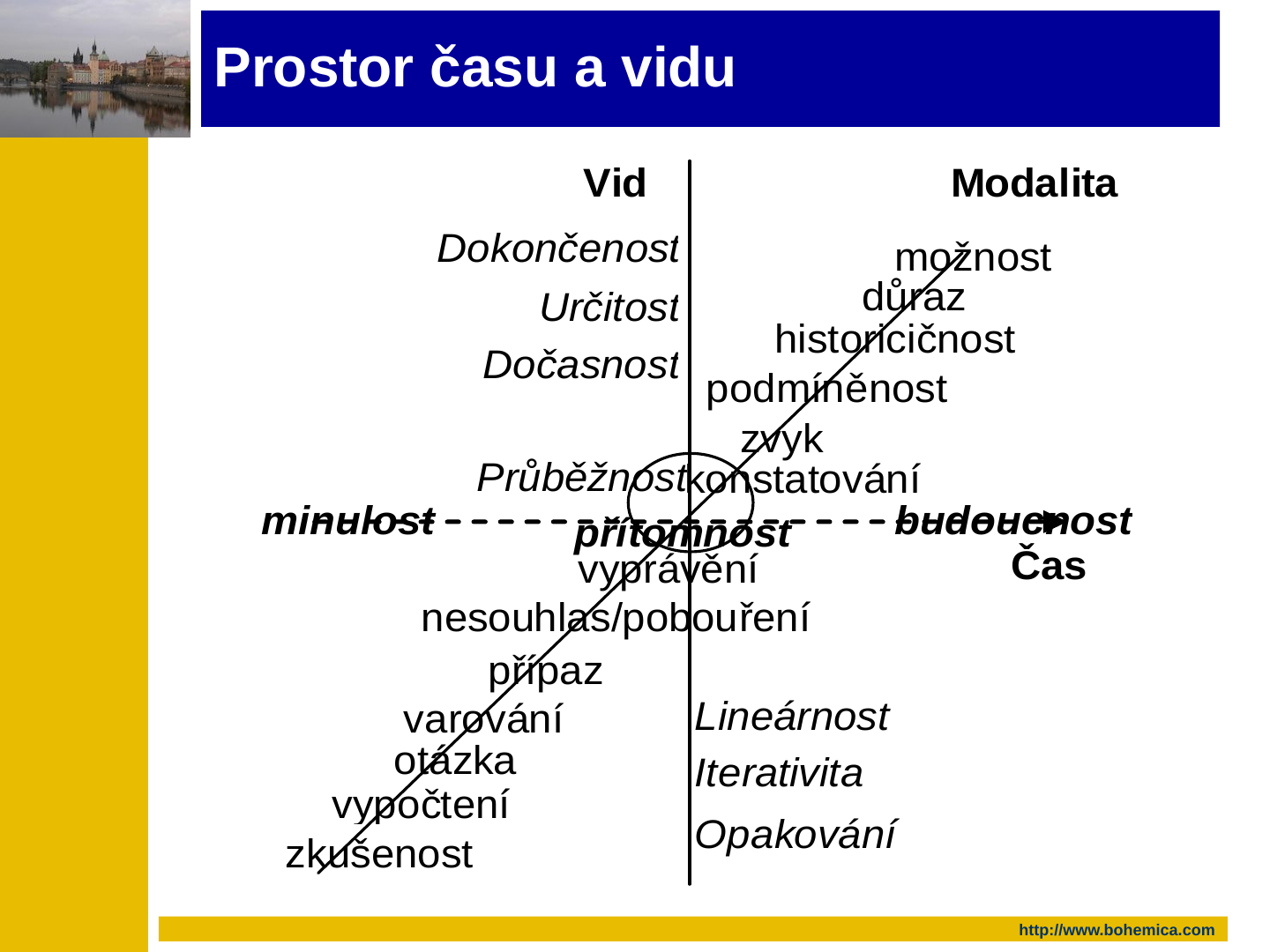
Prostor času a vidu
Slide 4: Časy a vidy v angličtině
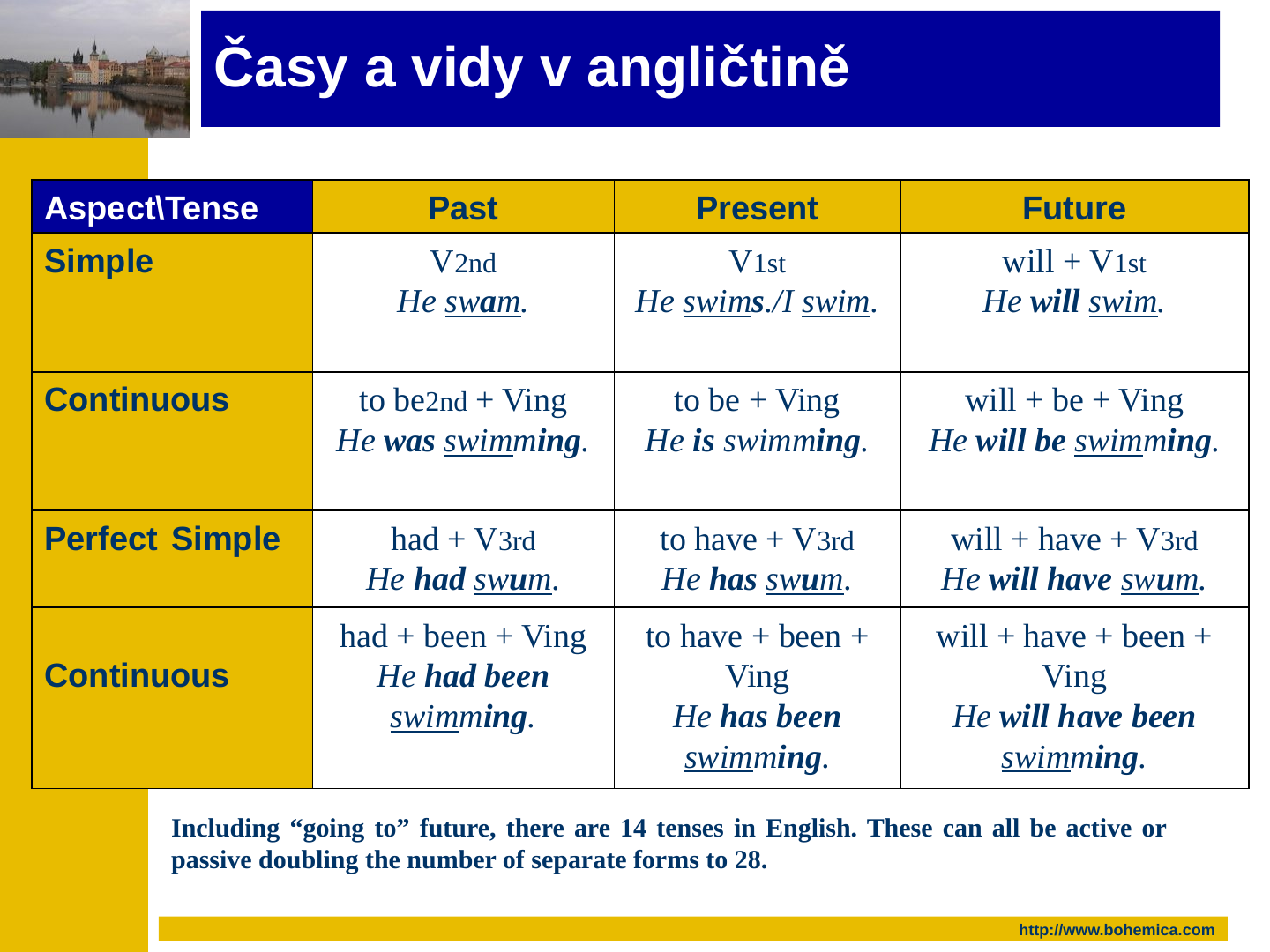
Časy a vidy v angličtině
| Aspect\Tense | Past | Present | Future |
|---|---|---|---|
| Simple | V2nd / He swam. | V1st / He swims./I swim. | will + V1st / He will swim. |
| Continuous | to be2nd + Ving / He was swimming. | to be + Ving / He is swimming. | will + be + Ving / He will be swimming. |
| Perfect Simple | had + V3rd / He had swum. | to have + V3rd / He has swum. | will + have + V3rd / He will have swum. |
| Continuous | had + been + Ving / He had been swimming. | to have + been + Ving / He has been swimming. | will + have + been + Ving / He will have been swimming. |
Including “going to” future, there are 14 tenses in English. These can all be active or passive doubling the number of separate forms to 28.
Slide 5: Vid a slovesa pohybu
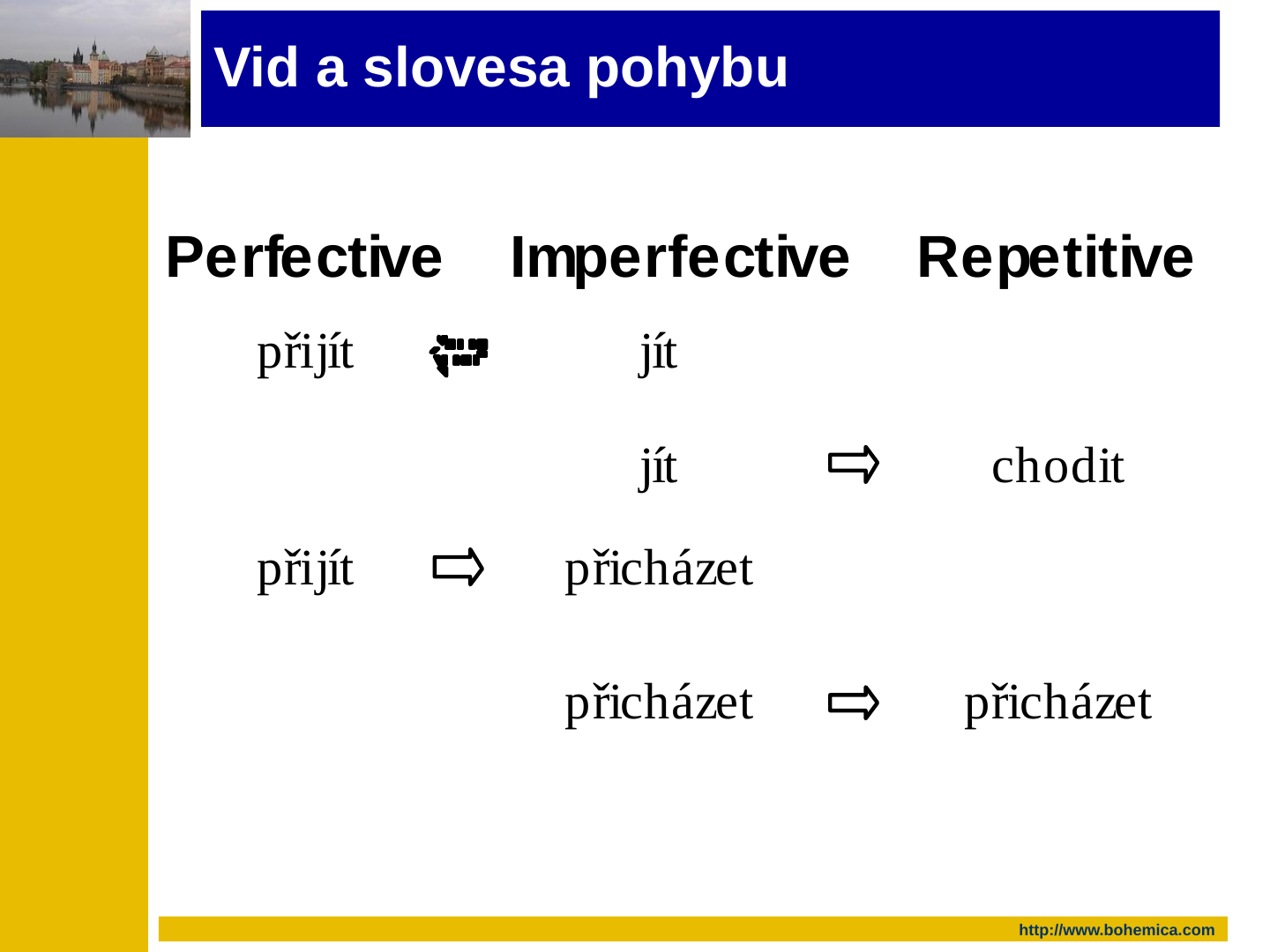
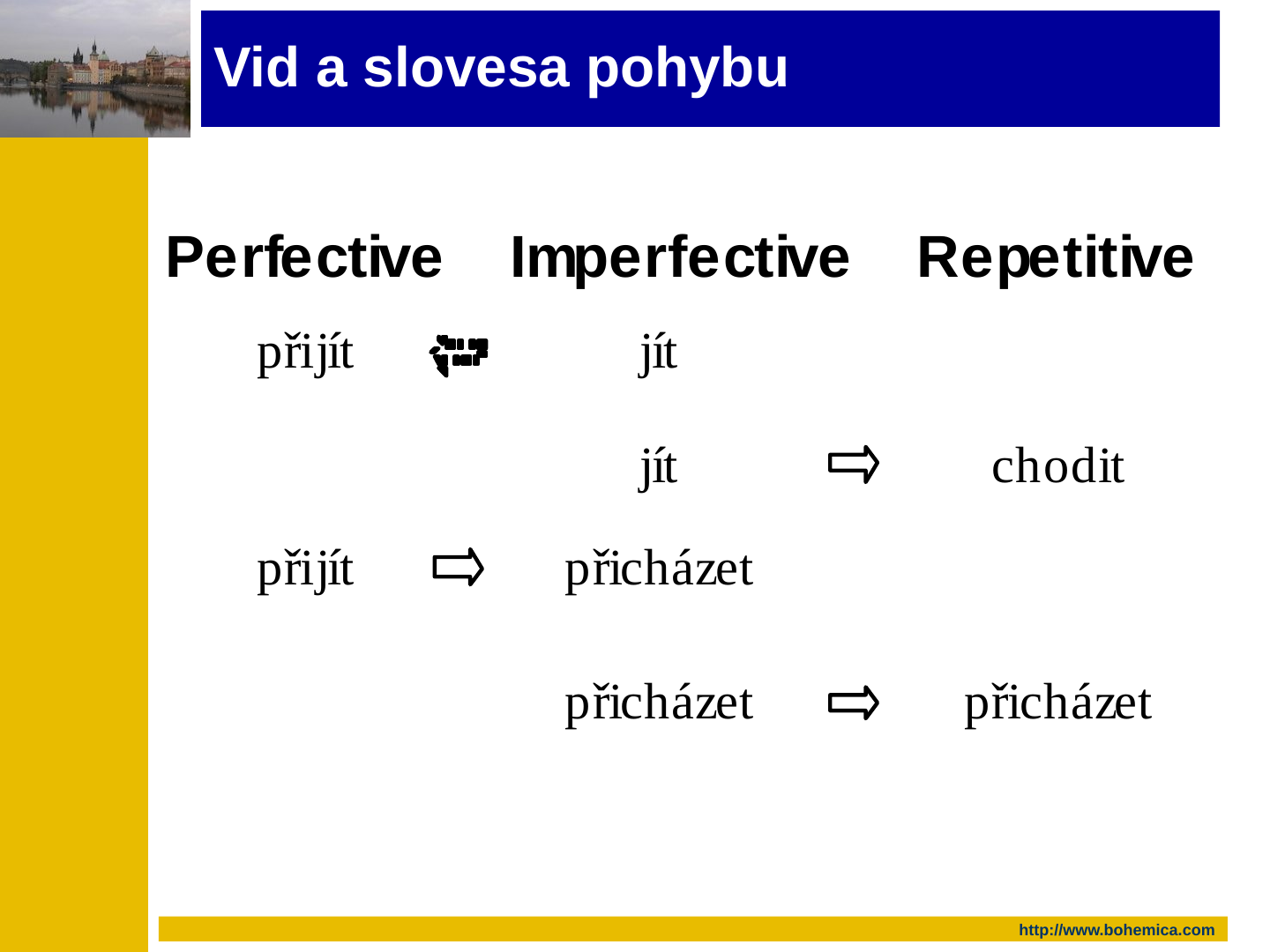
Vid a slovesa pohybu
Slide 6: Nový vidočas v češtině
Nový vidočas v češtině
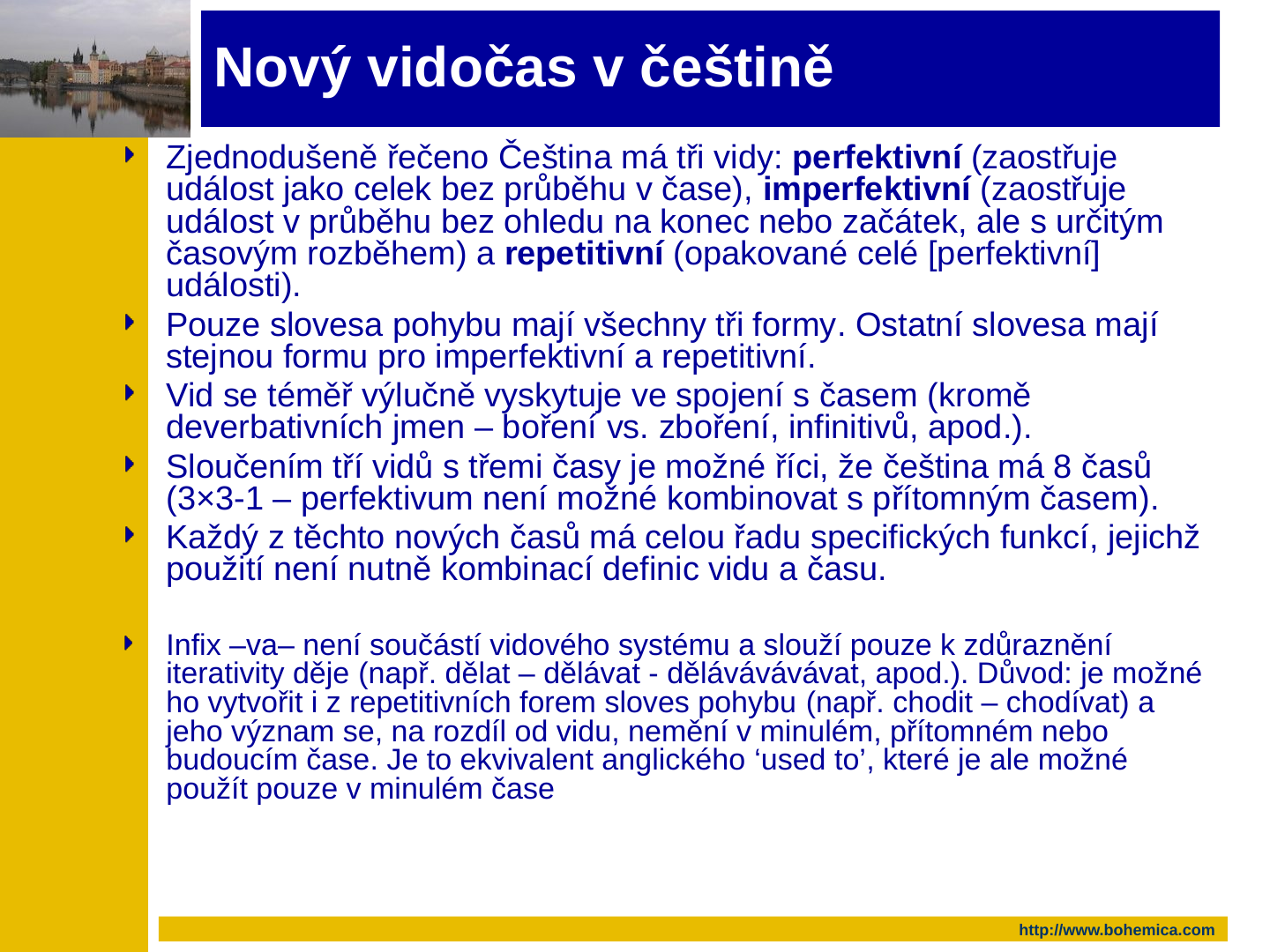
Zjednodušeně řečeno Čeština má tři vidy: perfektivní (zaostřuje událost jako celek bez průběhu v čase), imperfektivní (zaostřuje událost v průběhu bez ohledu na konec nebo začátek, ale s určitým časovým rozběhem) a repetitivní (opakované celé [perfektivní] události).
Pouze slovesa pohybu mají všechny tři formy. Ostatní slovesa mají stejnou formu pro imperfektivní a repetitivní.
Vid se téměř výlučně vyskytuje ve spojení s časem (kromě deverbativních jmen – boření vs. zboření, infinitivů, apod.).
Sloučením tří vidů s třemi časy je možné říci, že čeština má 8 časů (3×3‑1 – perfektivum není možné kombinovat s přítomným časem).
Každý z těchto nových časů má celou řadu specifických funkcí, jejichž použití není nutně kombinací definic vidu a času.
Infix –va– není součástí vidového systému a slouží pouze k zdůraznění iterativity děje (např. dělat – dělávat - dělávávávávat, apod.). Důvod: je možné ho vytvořit i z repetitivních forem sloves pohybu (např. chodit – chodívat) a jeho význam se, na rozdíl od vidu, nemění v minulém, přítomném nebo budoucím čase. Je to ekvivalent anglického ‘used to’, které je ale možné použít pouze v minulém čase
Slide 7: Tabulka českých vido časů
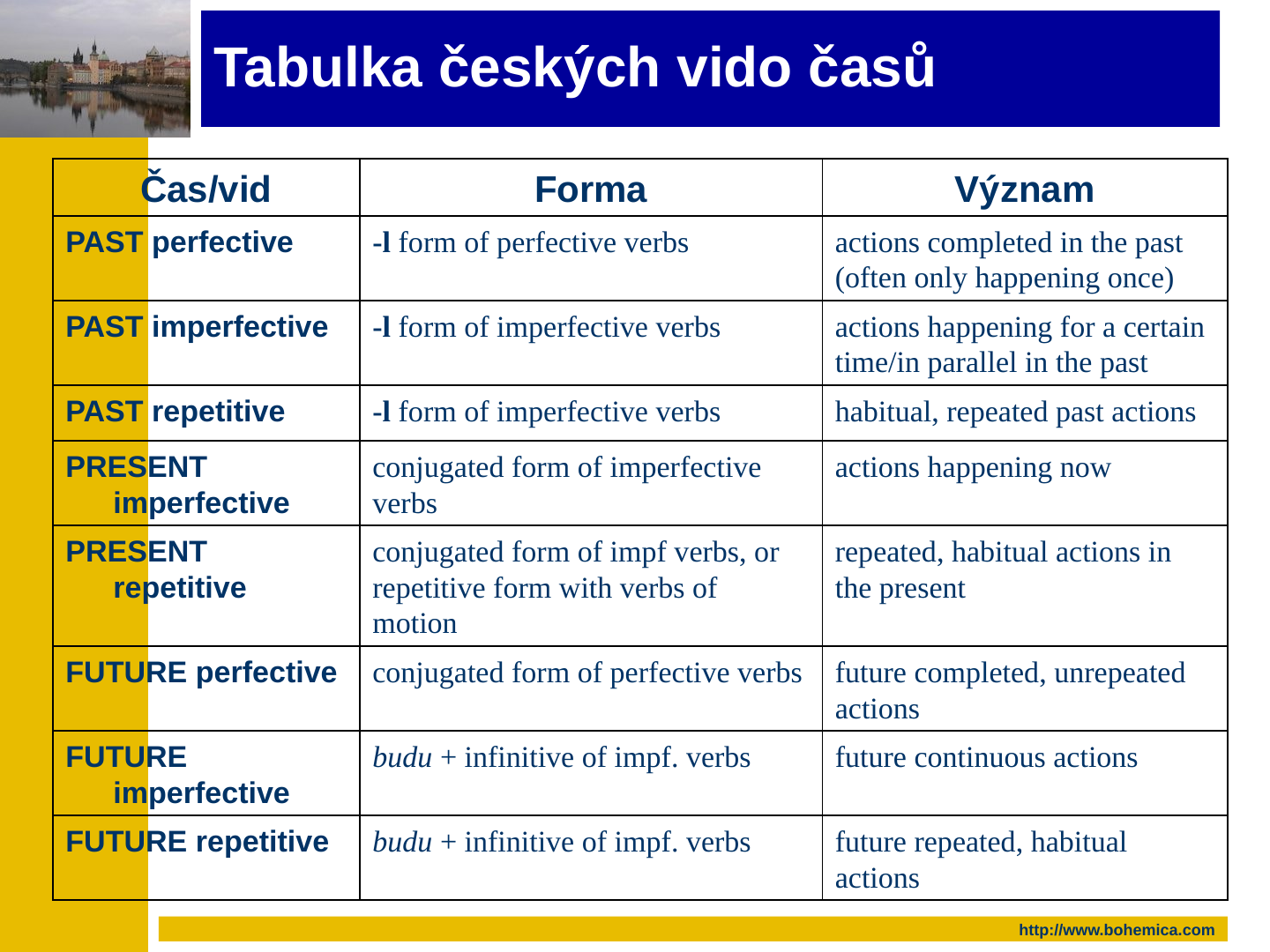
Tabulka českých vido časů
| Čas/vid | Forma | Význam |
|---|---|---|
| PAST perfective | -l form of perfective verbs | actions completed in the past (often only happening once) |
| PAST imperfective | -l form of imperfective verbs | actions happening for a certain time/in parallel in the past |
| PAST repetitive | -l form of imperfective verbs | habitual, repeated past actions |
| PRESENT imperfective | conjugated form of imperfective verbs | actions happening now |
| PRESENT repetitive | conjugated form of impf verbs, or repetitive form with verbs of motion | repeated, habitual actions in the present |
| FUTURE perfective | conjugated form of perfective verbs | future completed, unrepeated actions |
| FUTURE imperfective | budu + infinitive of impf. verbs | future continuous actions |
| FUTURE repetitive | budu + infinitive of impf. verbs | future repeated, habitual actions |
Slide 8: Výhody a nevýhody
Výhody a nevýhody
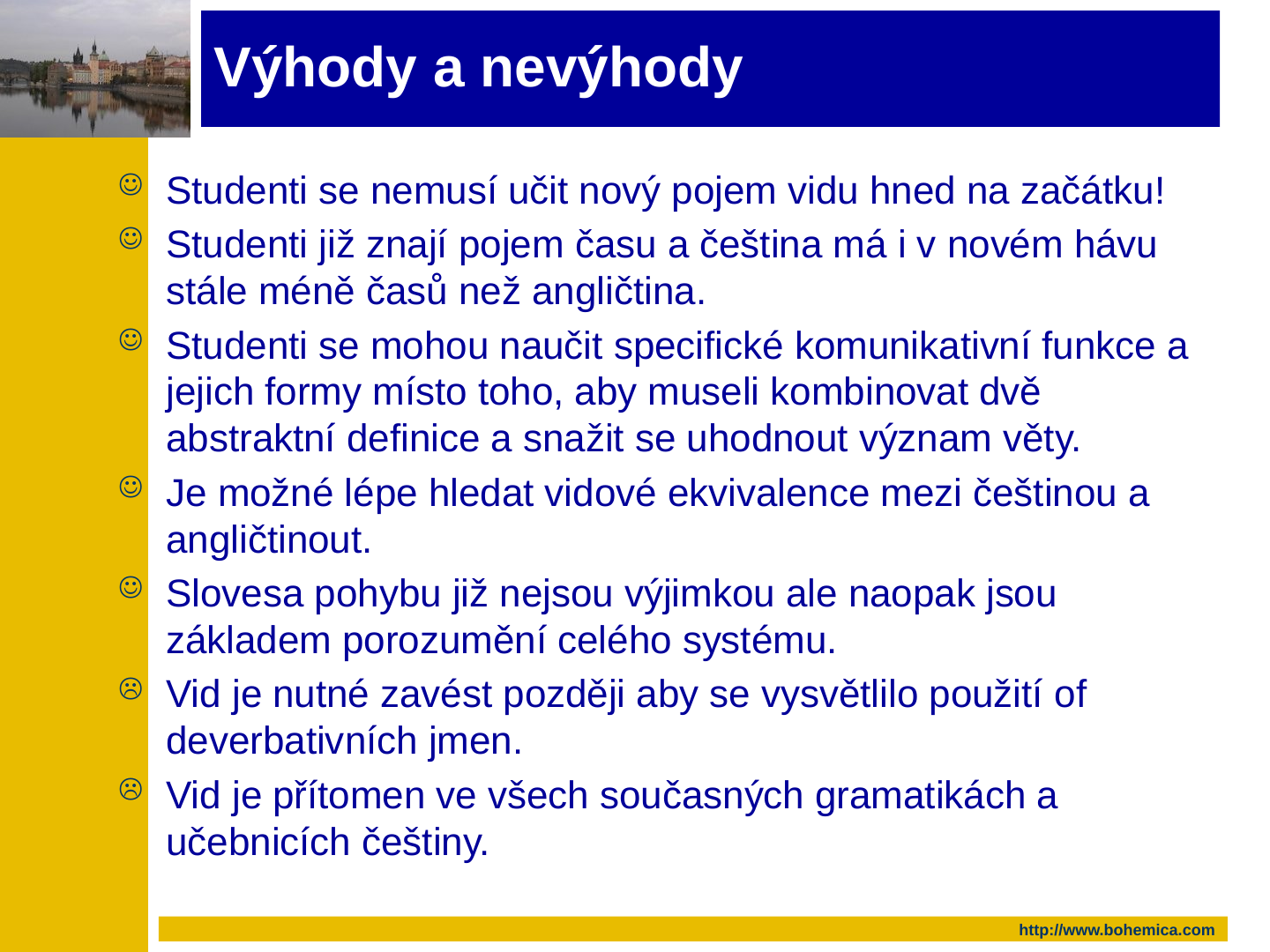
- ☺ Studenti se nemusí učit nový pojem vidu hned na začátku!
- ☺ Studenti již znají pojem času a čeština má i v novém hávu stále méně časů než angličtina.
- ☺ Studenti se mohou naučit specifické komunikativní funkce a jejich formy místo toho, aby museli kombinovat dvě abstraktní definice a snažit se uhodnout význam věty.
- ☺ Je možné lépe hledat vidové ekvivalence mezi češtinou a angličtinout.
- ☺ Slovesa pohybu již nejsou výjimkou ale naopak jsou základem porozumění celého systému.
- ☹ Vid je nutné zavést později aby se vysvětlilo použití of deverbativních jmen.
- ☹ Vid je přítomen ve všech současných gramatikách a učebnicích češtiny.
Slide 9: Časovid na časové ose
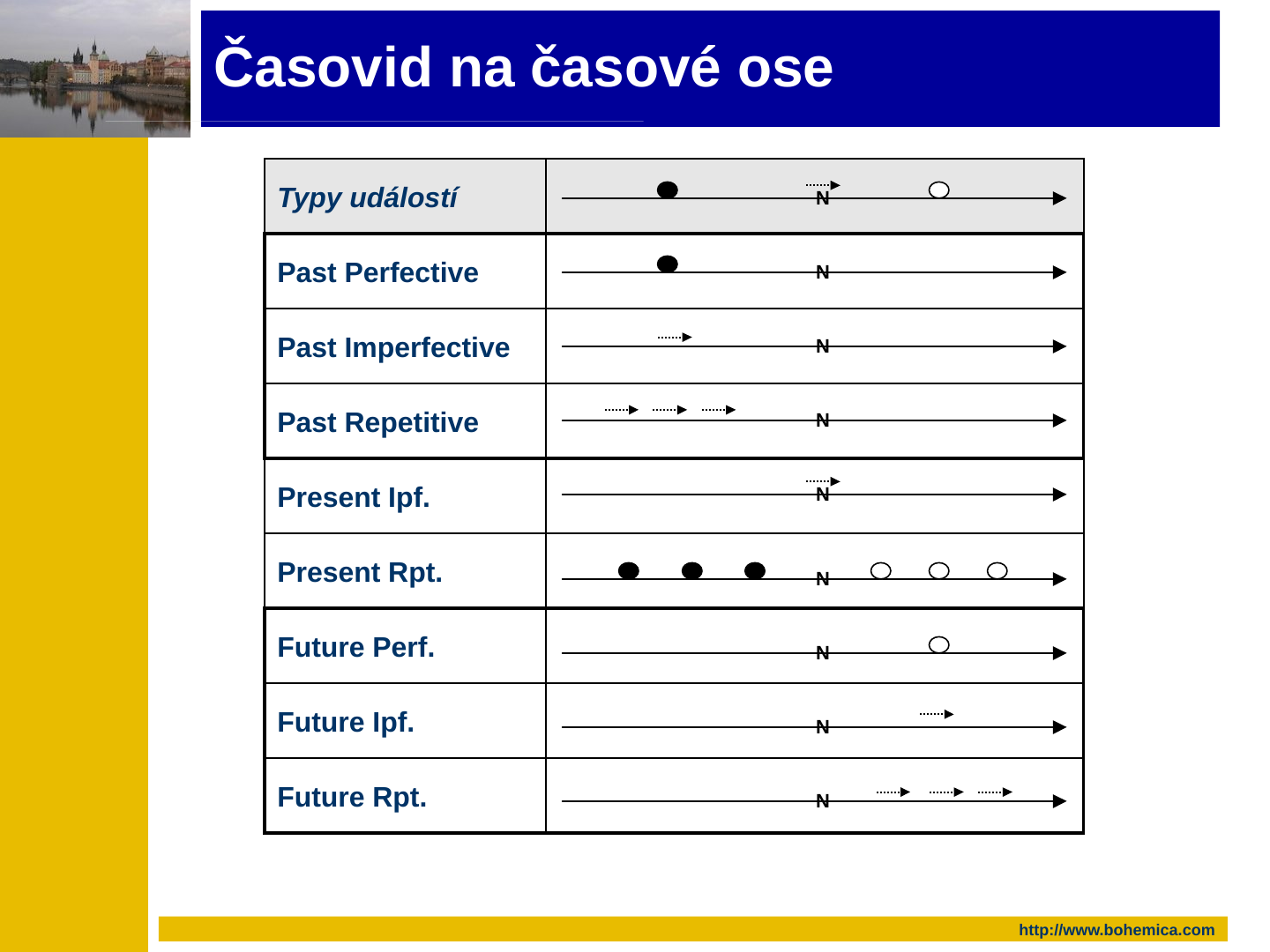
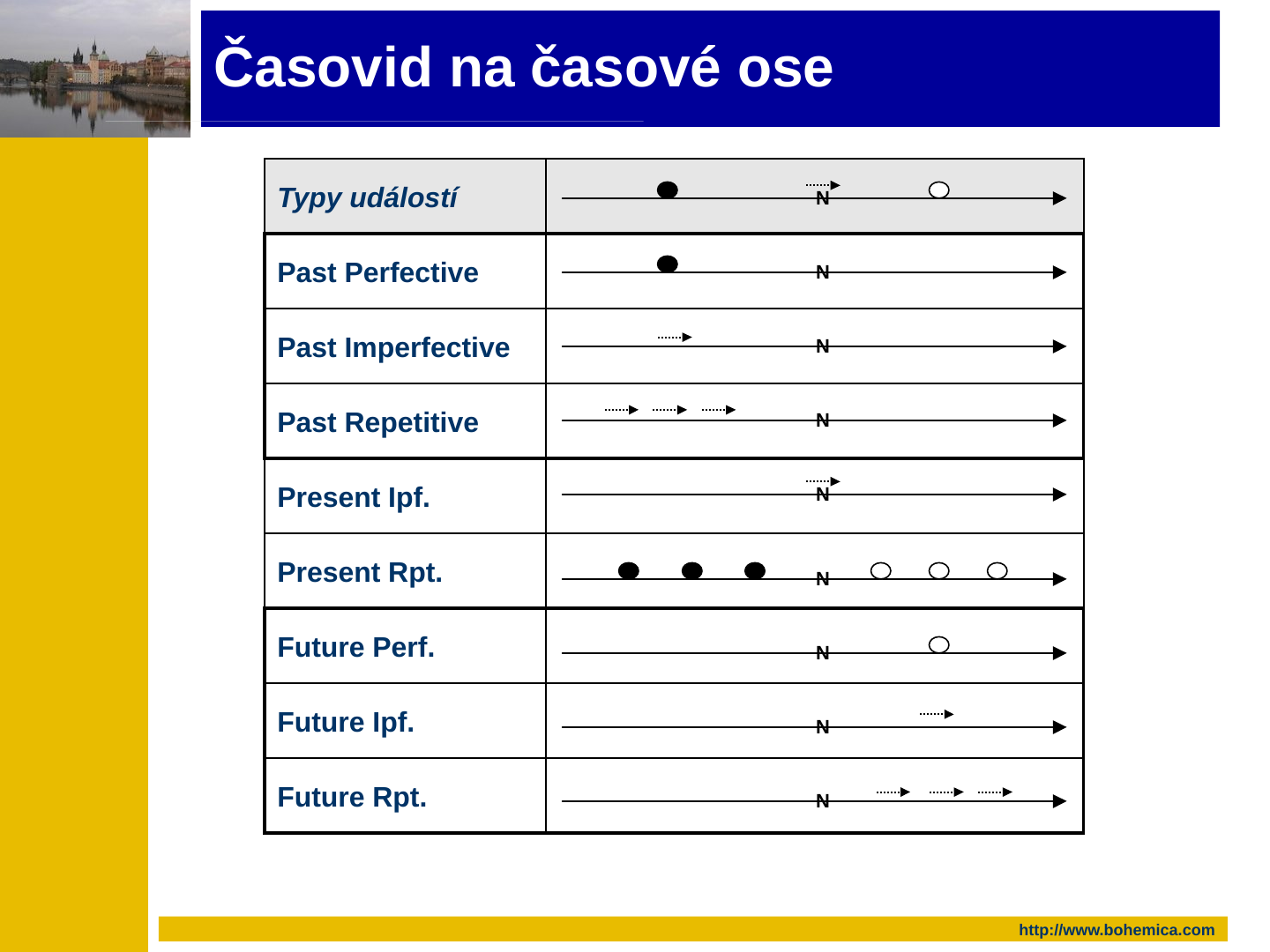
Časovid na časové ose
| Typy událostí | Before N | At N | After N |
|---|---|---|---|
| Past Perfective | filled dot | ||
| Past Imperfective | dotted arrow | ||
| Past Repetitive | three dotted arrows | ||
| Present Ipf. | dotted arrow | ||
| Present Rpt. | three filled dots | three open circles | |
| Future Perf. | open circle | ||
| Future Ipf. | dotted arrow | ||
| Future Rpt. | three dotted arrows |
The header row of the timeline, “Typy událostí”, shows the three marker kinds once: a filled dot before N, a dotted arrow at N and an open circle after N.
Slide 10: PAST Perfective
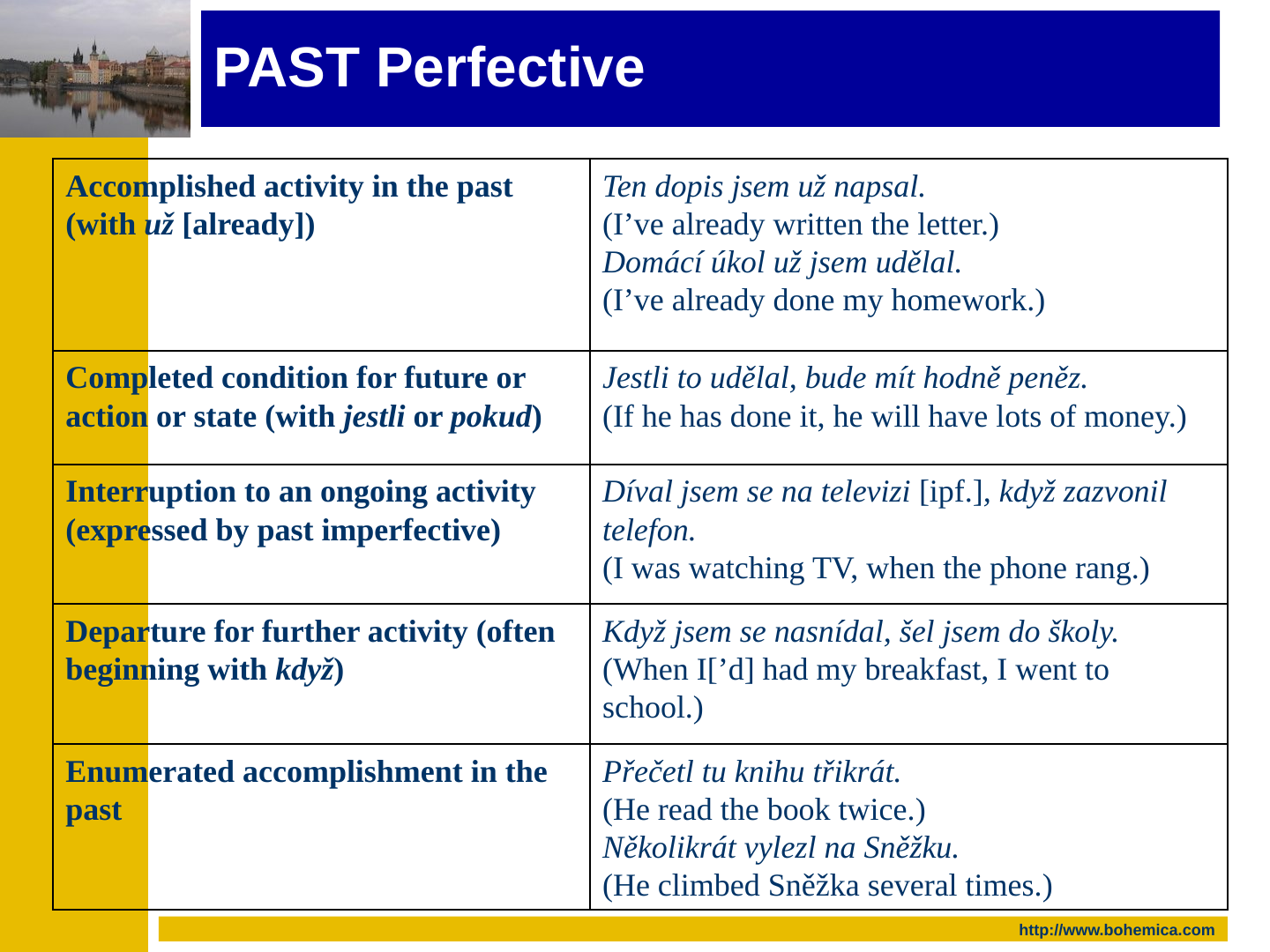
PAST Perfective
| Accomplished activity in the past (with už [already]) | Ten dopis jsem už napsal. / (I’ve already written the letter.) / Domácí úkol už jsem udělal. / (I’ve already done my homework.) |
| Completed condition for future or action or state (with jestli or pokud) | Jestli to udělal, bude mít hodně peněz. / (If he has done it, he will have lots of money.) |
| Interruption to an ongoing activity (expressed by past imperfective) | Díval jsem se na televizi [ipf.], když zazvonil telefon. / (I was watching TV, when the phone rang.) |
| Departure for further activity (often beginning with když) | Když jsem se nasnídal, šel jsem do školy. / (When I[’d] had my breakfast, I went to school.) |
| Enumerated accomplishment in the past | Přečetl tu knihu třikrát. / (He read the book twice.) / Několikrát vylezl na Sněžku. / (He climbed Sněžka several times.) |
Slide 11: PAST Imperfective
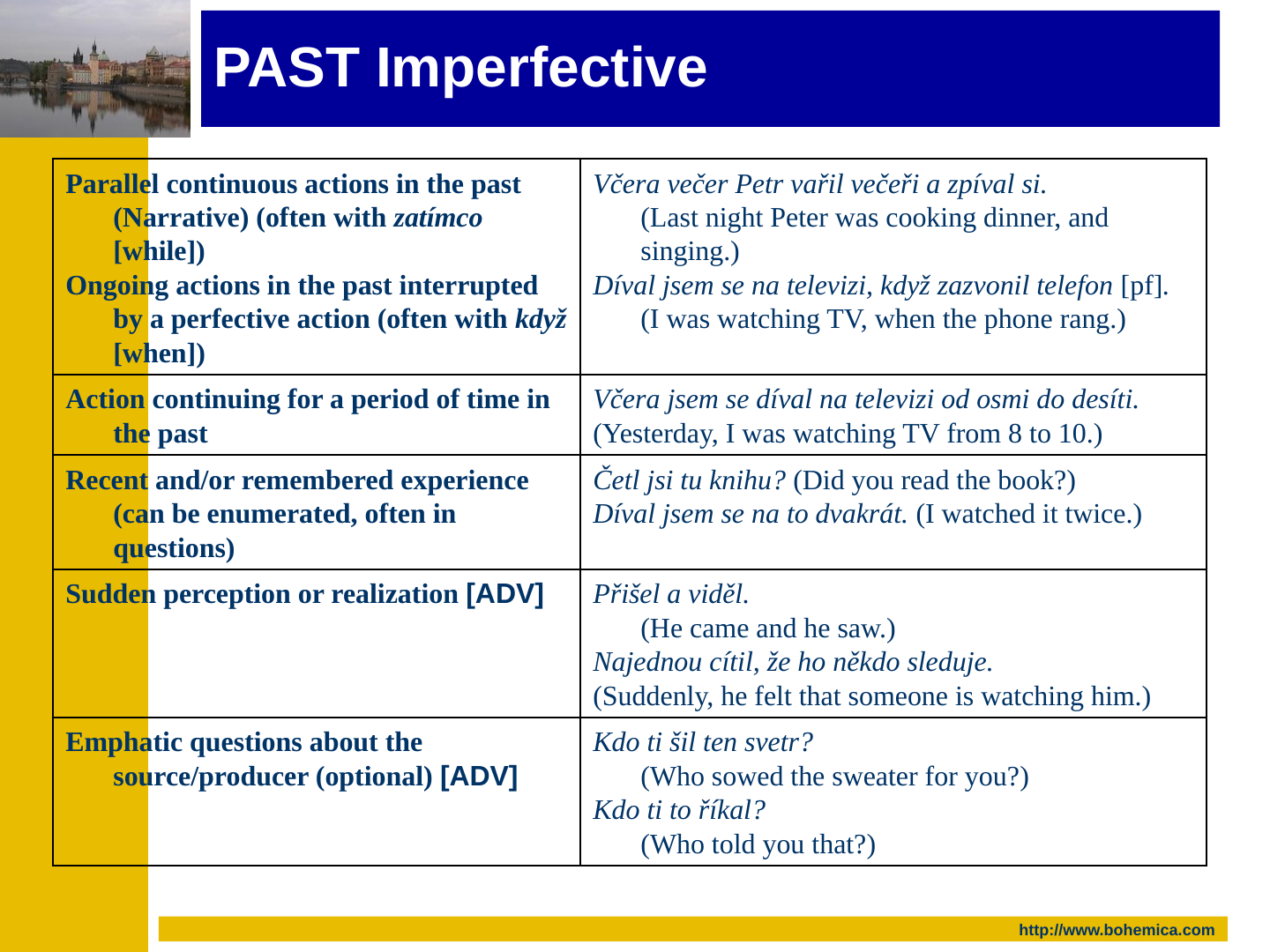
PAST Imperfective
| Parallel continuous actions in the past (Narrative) (often with zatímco [while]) / Ongoing actions in the past interrupted by a perfective action (often with když [when]) | Včera večer Petr vařil večeři a zpíval si. / (Last night Peter was cooking dinner, and singing.) / Díval jsem se na televizi, když zazvonil telefon [pf]. / (I was watching TV, when the phone rang.) |
| Action continuing for a period of time in the past | Včera jsem se díval na televizi od osmi do desíti. / (Yesterday, I was watching TV from 8 to 10.) |
| Recent and/or remembered experience (can be enumerated, often in questions) | Četl jsi tu knihu? (Did you read the book?) / Díval jsem se na to dvakrát. (I watched it twice.) |
| Sudden perception or realization [ADV] | Přišel a viděl. / (He came and he saw.) / Najednou cítil, že ho někdo sleduje. / (Suddenly, he felt that someone is watching him.) |
| Emphatic questions about the source/producer (optional) [ADV] | Kdo ti šil ten svetr? / (Who sowed the sweater for you?) / Kdo ti to říkal? / (Who told you that?) |
Slide 12: PAST Repetitive
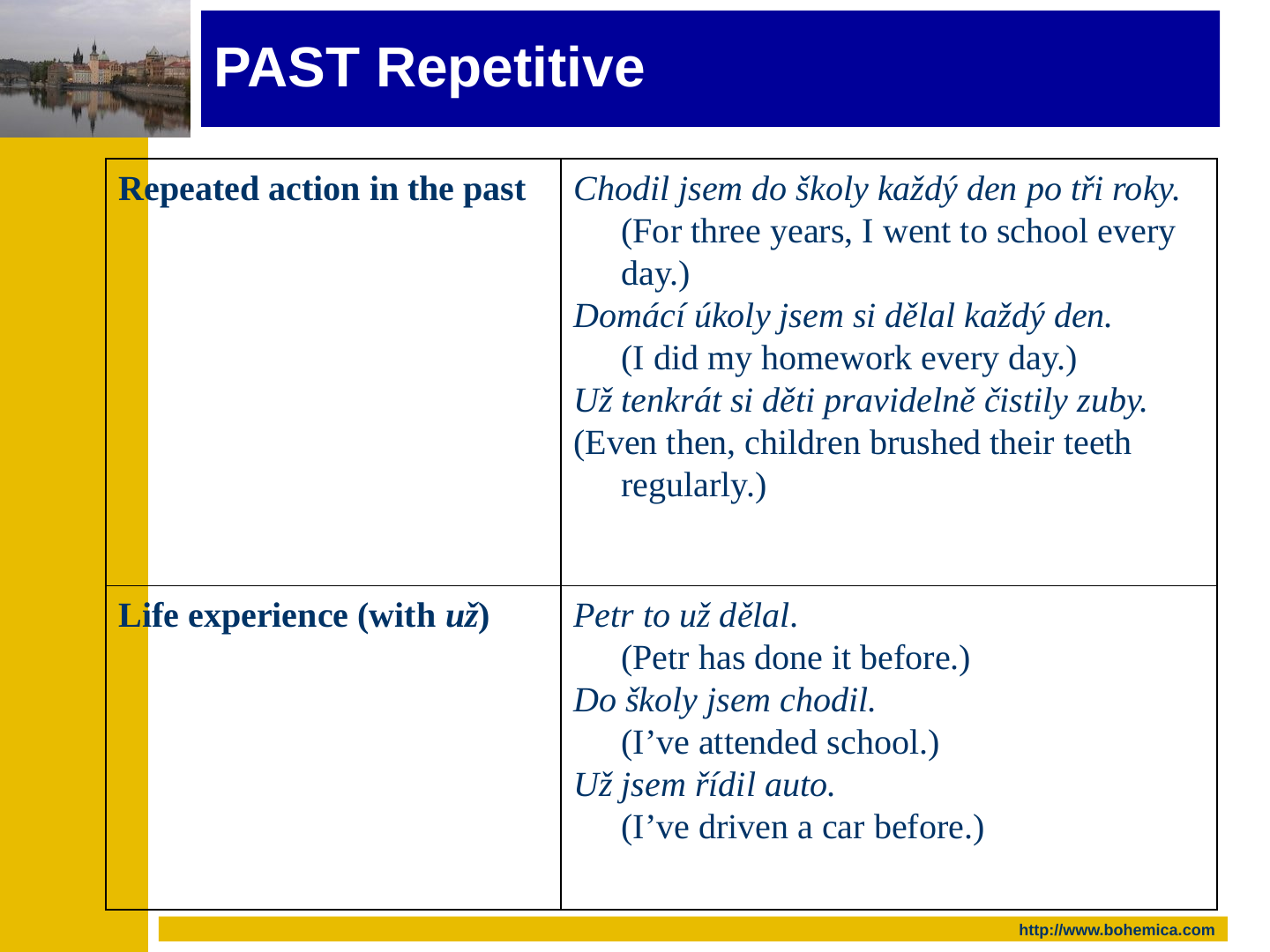
PAST Repetitive
| Repeated action in the past | Chodil jsem do školy každý den po tři roky. / (For three years, I went to school every day.) / Domácí úkoly jsem si dělal každý den. / (I did my homework every day.) / Už tenkrát si děti pravidelně čistily zuby. / (Even then, children brushed their teeth regularly.) |
| Life experience (with už) | Petr to už dělal. / (Petr has done it before.) / Do školy jsem chodil. / (I’ve attended school.) / Už jsem řídil auto. / (I’ve driven a car before.) |
Slide 13: PRESENT Imperfective
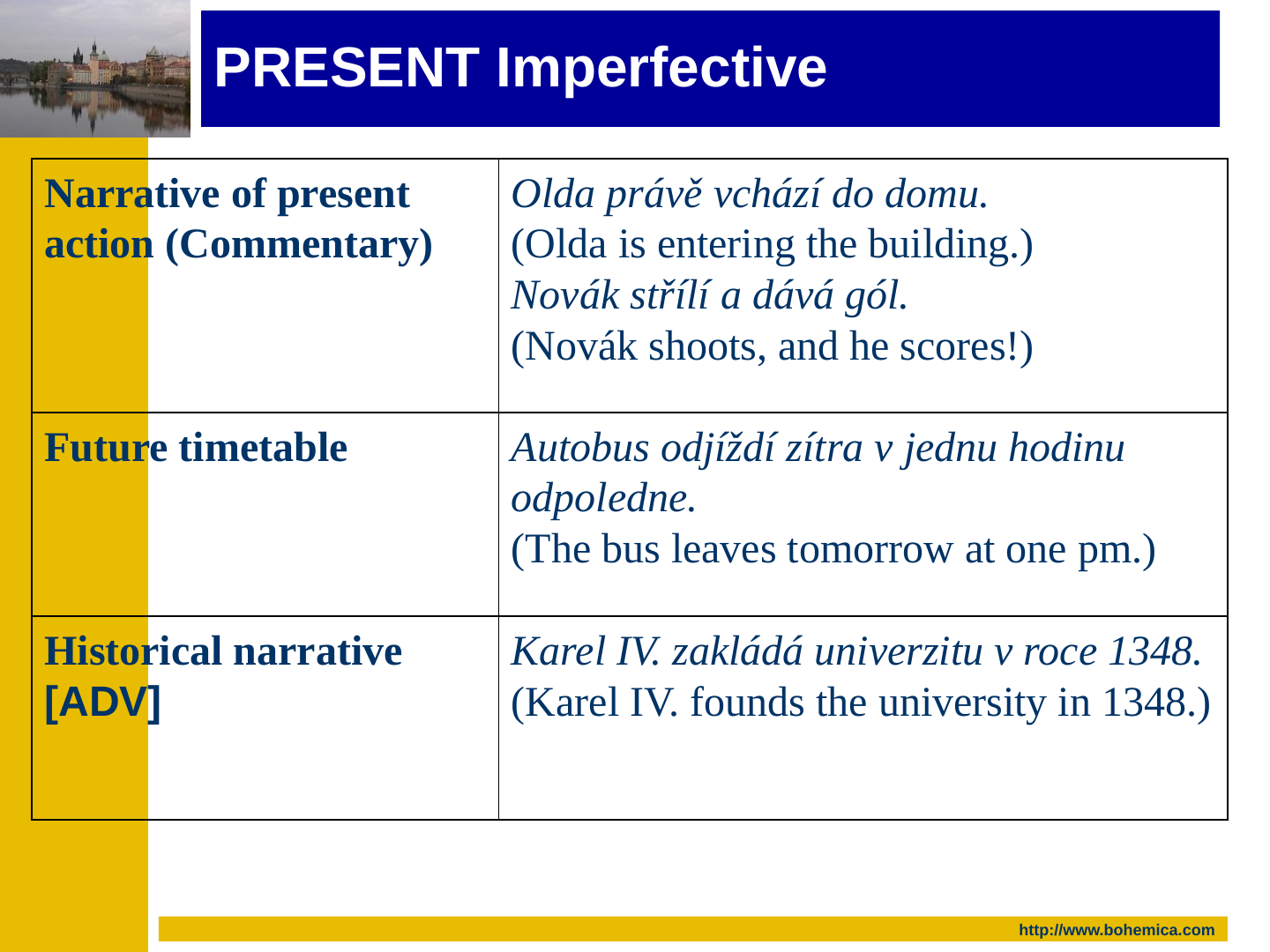
PRESENT Imperfective
| Narrative of present action (Commentary) | Olda právě vchází do domu. / (Olda is entering the building.) / Novák střílí a dává gól. / (Novák shoots, and he scores!) |
| Future timetable | Autobus odjíždí zítra v jednu hodinu odpoledne. / (The bus leaves tomorrow at one pm.) |
| Historical narrative [ADV] | Karel IV. zakládá univerzitu v roce 1348. / (Karel IV. founds the university in 1348.) |
Slide 14: PRESENT Repetitive
PRESENT Repetitive
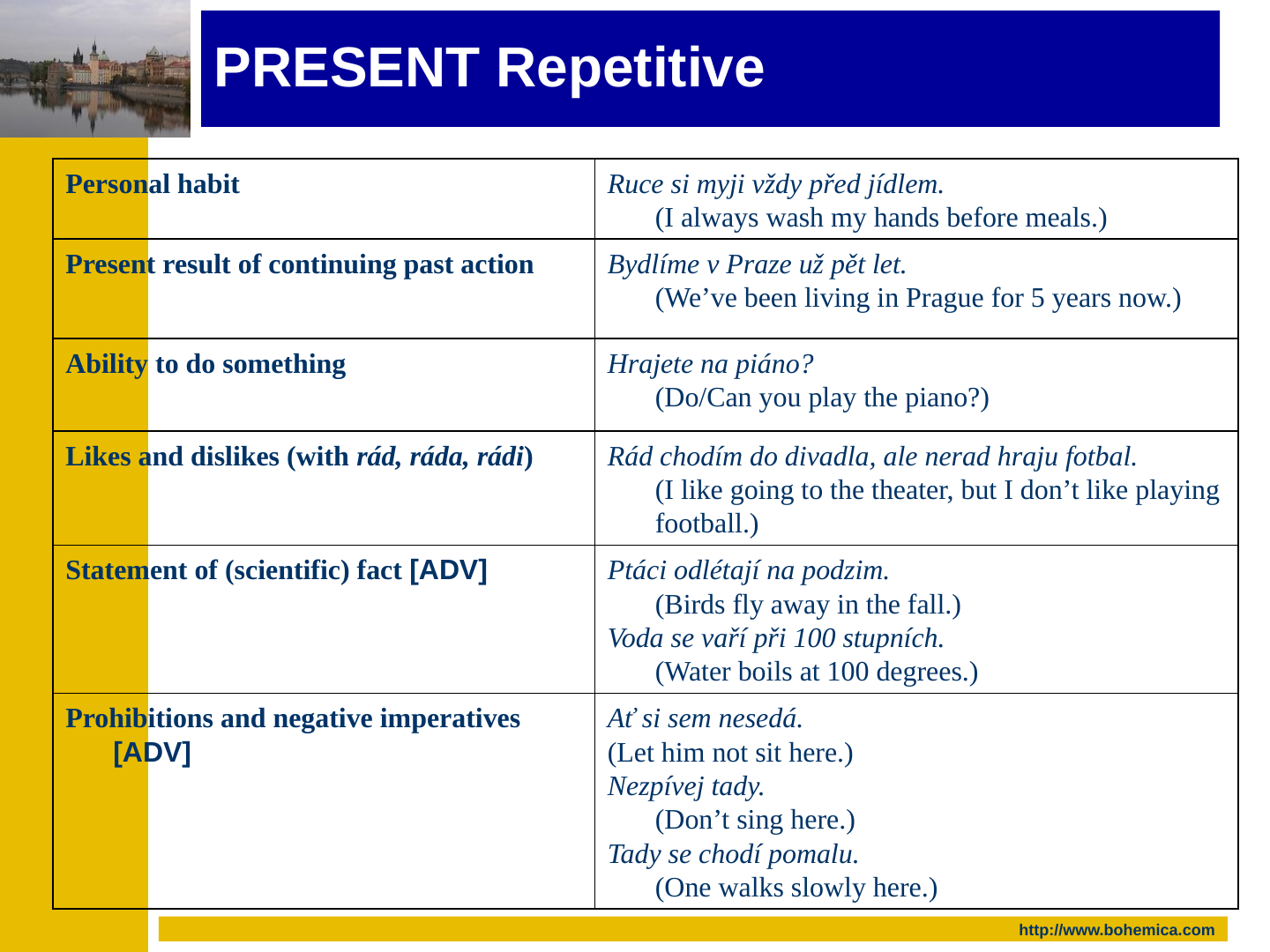
| Personal habit | Ruce si myji vždy před jídlem. / (I always wash my hands before meals.) |
| Present result of continuing past action | Bydlíme v Praze už pět let. / (We’ve been living in Prague for 5 years now.) |
| Ability to do something | Hrajete na piáno? / (Do/Can you play the piano?) |
| Likes and dislikes (with rád, ráda, rádi) | Rád chodím do divadla, ale nerad hraju fotbal. / (I like going to the theater, but I don’t like playing football.) |
| Statement of (scientific) fact [ADV] | Ptáci odlétají na podzim. / (Birds fly away in the fall.) / Voda se vaří při 100 stupních. / (Water boils at 100 degrees.) |
| Prohibitions and negative imperatives [ADV] | Ať si sem nesedá. / (Let him not sit here.) / Nezpívej tady. / (Don’t sing here.) / Tady se chodí pomalu. / (One walks slowly here.) |
Slide 15: FUTURE Perfective
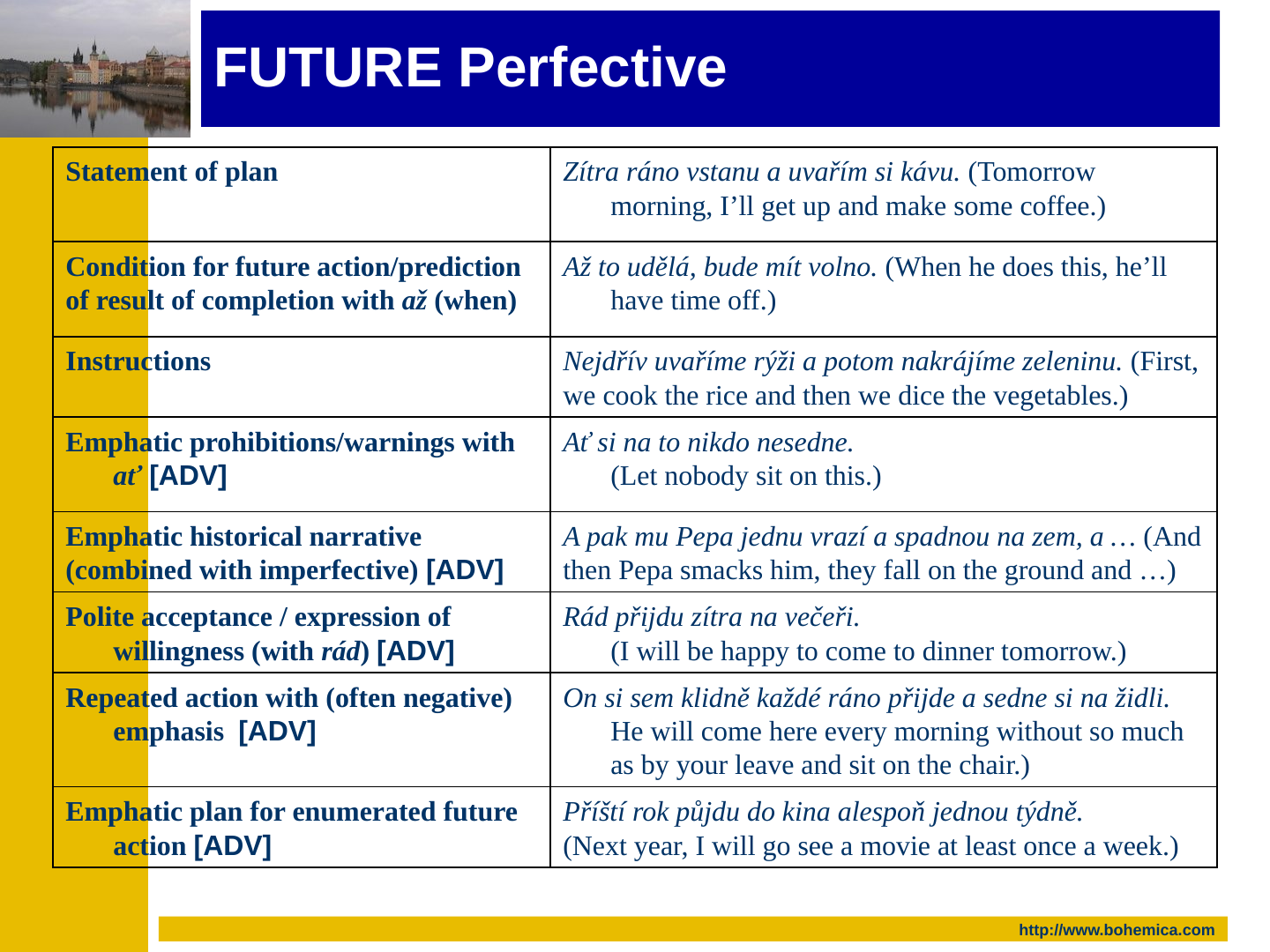
FUTURE Perfective
| Statement of plan | Zítra ráno vstanu a uvařím si kávu. (Tomorrow morning, I’ll get up and make some coffee.) |
| Condition for future action/prediction of result of completion with až (when) | Až to udělá, bude mít volno. (When he does this, he’ll have time off.) |
| Instructions | Nejdřív uvaříme rýži a potom nakrájíme zeleninu. (First, we cook the rice and then we dice the vegetables.) |
| Emphatic prohibitions/warnings with ať [ADV] | Ať si na to nikdo nesedne. / (Let nobody sit on this.) |
| Emphatic historical narrative (combined with imperfective) [ADV] | A pak mu Pepa jednu vrazí a spadnou na zem, a … (And then Pepa smacks him, they fall on the ground and …) |
| Polite acceptance / expression of willingness (with rád) [ADV] | Rád přijdu zítra na večeři. / (I will be happy to come to dinner tomorrow.) |
| Repeated action with (often negative) emphasis [ADV] | On si sem klidně každé ráno přijde a sedne si na židli. He will come here every morning without so much as by your leave and sit on the chair.) |
| Emphatic plan for enumerated future action [ADV] | Příští rok půjdu do kina alespoň jednou týdně. / (Next year, I will go see a movie at least once a week.) |
Slide 16: FUTURE Imperfective
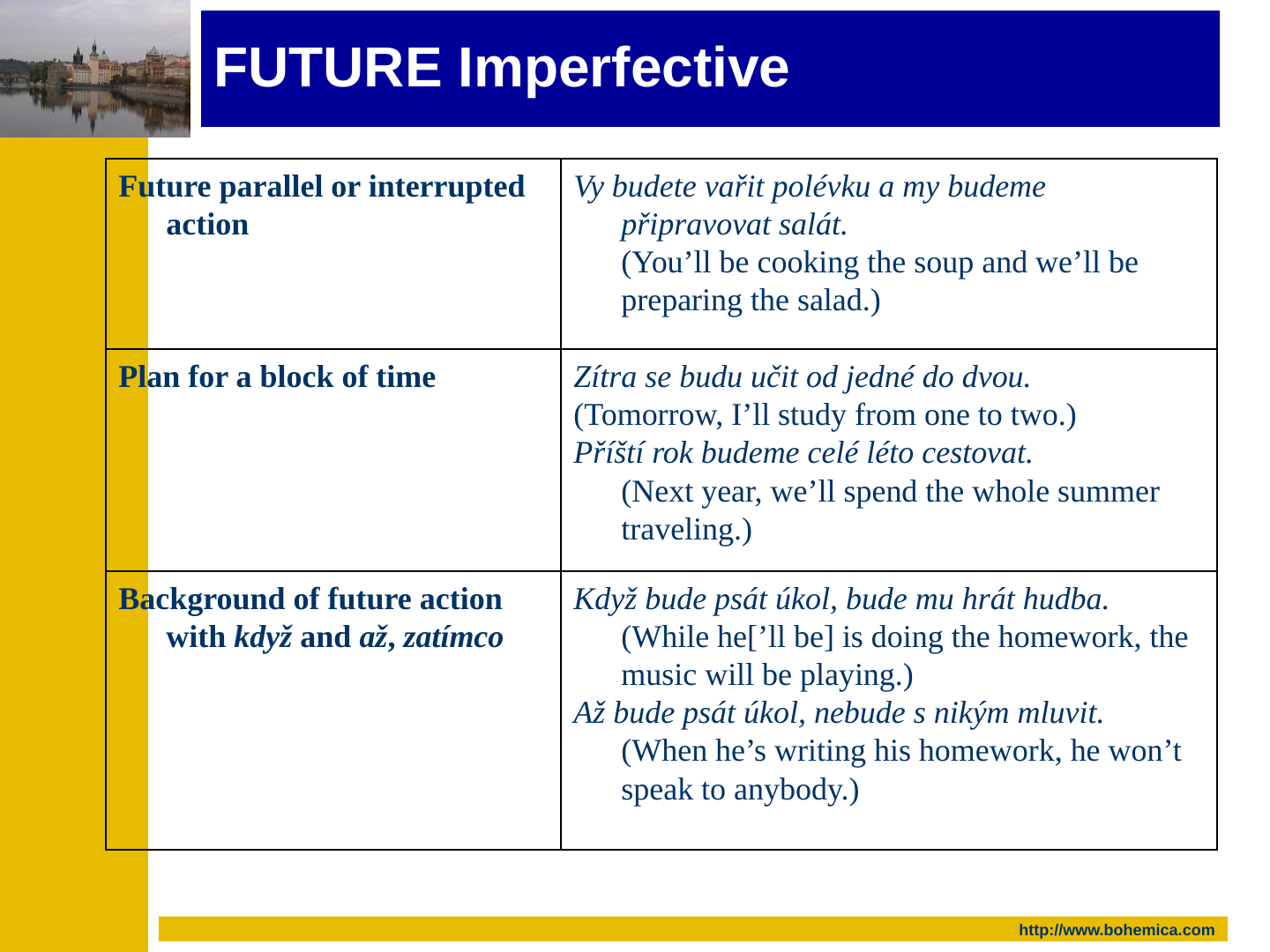
FUTURE Imperfective
| Future parallel or interrupted action | Vy budete vařit polévku a my budeme připravovat salát. / (You’ll be cooking the soup and we’ll be preparing the salad.) |
| Plan for a block of time | Zítra se budu učit od jedné do dvou. / (Tomorrow, I’ll study from one to two.) / Příští rok budeme celé léto cestovat. / (Next year, we’ll spend the whole summer traveling.) |
| Background of future action with když and až, zatímco | Když bude psát úkol, bude mu hrát hudba. / (While he[’ll be] is doing the homework, the music will be playing.) / Až bude psát úkol, nebude s nikým mluvit. / (When he’s writing his homework, he won’t speak to anybody.) |
Slide 17: FUTURE Repetitive
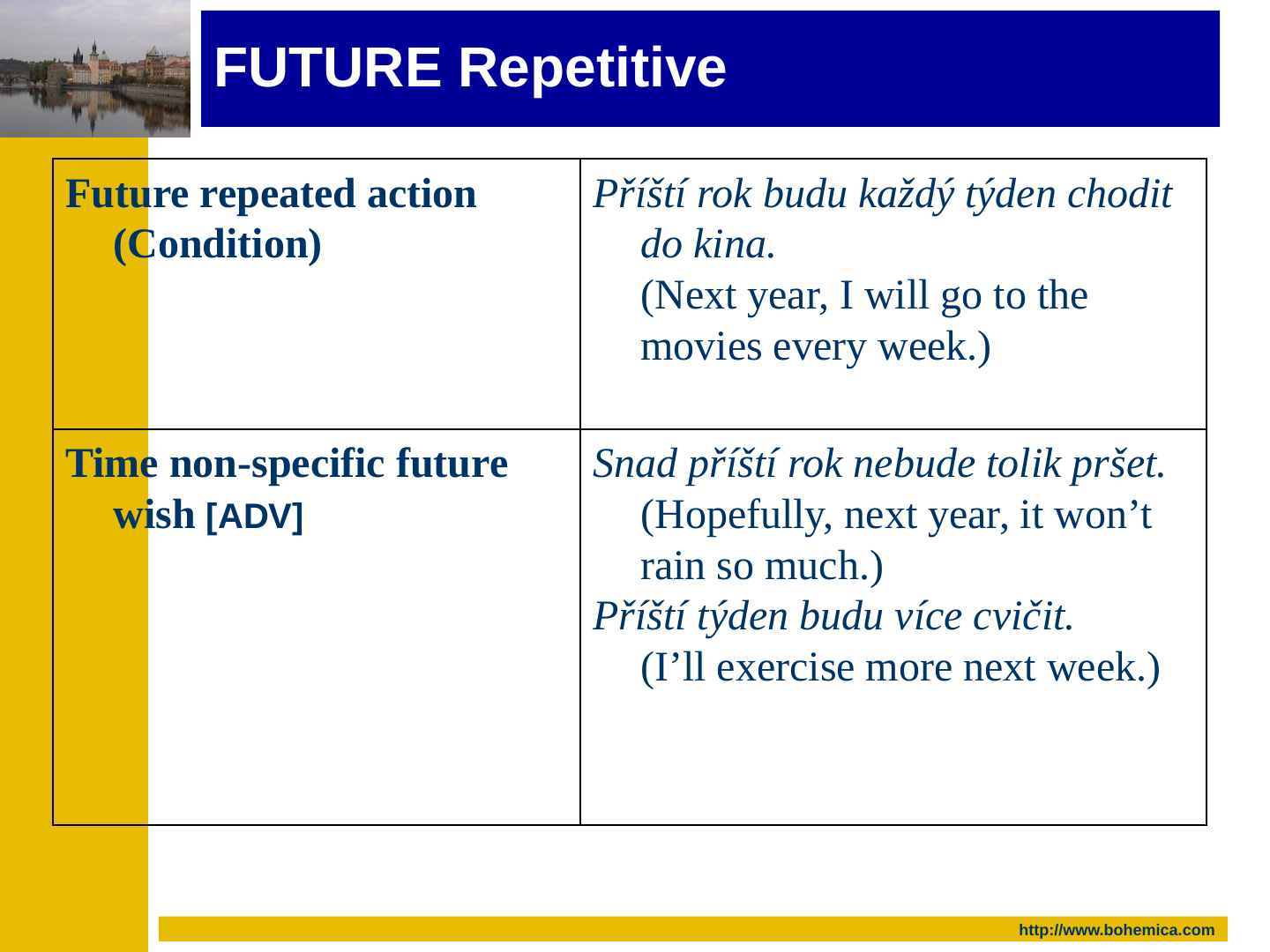
FUTURE Repetitive
| Future repeated action (Condition) | Příští rok budu každý týden chodit do kina. / (Next year, I will go to the movies every week.) |
| Time non-specific future wish [ADV] | Snad příští rok nebude tolik pršet. / (Hopefully, next year, it won’t rain so much.) / Příští týden budu více cvičit. / (I’ll exercise more next week.) |
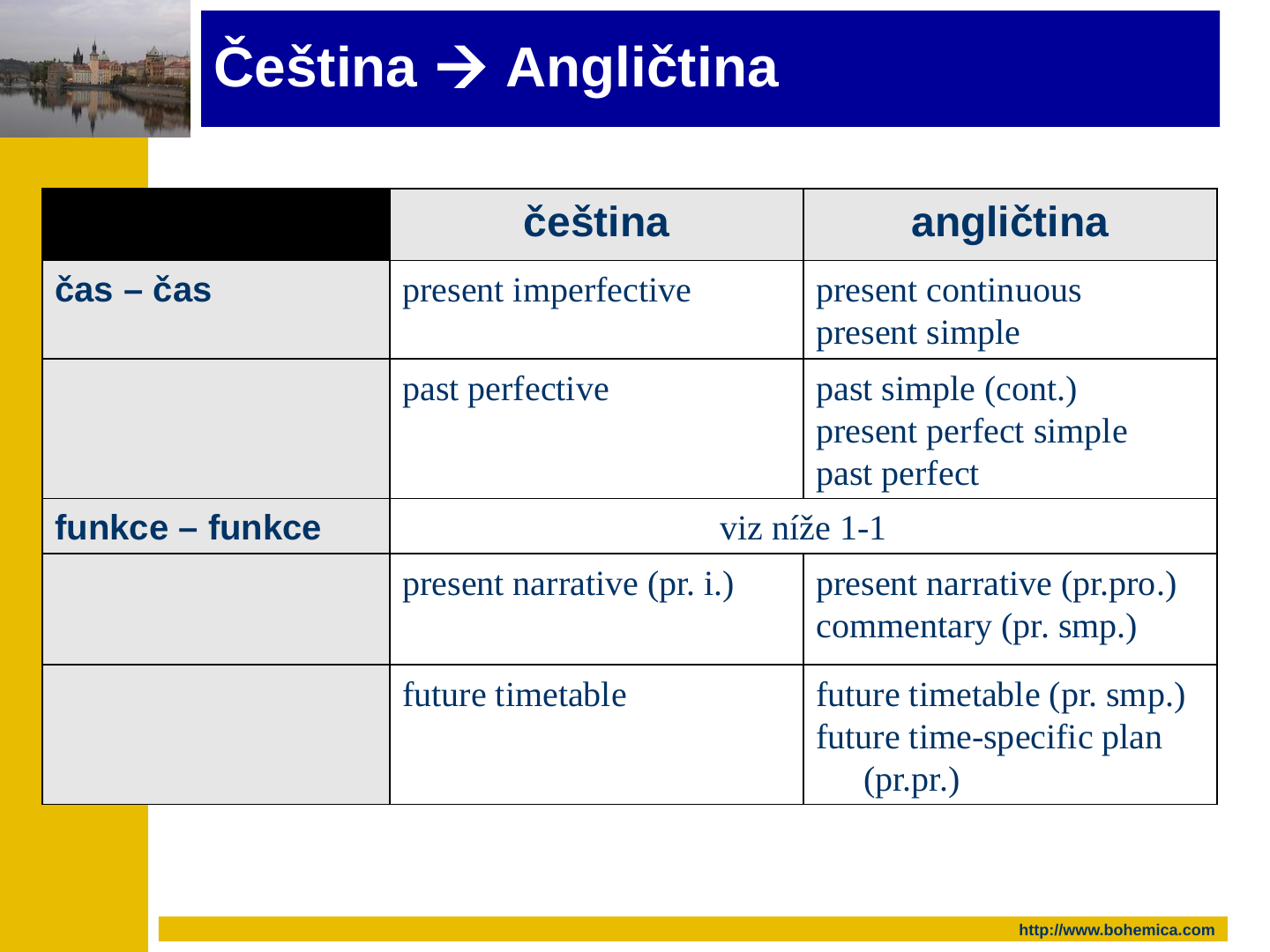
Slide 18: Čeština → Angličtina
Čeština → Angličtina
| čeština | angličtina | |
|---|---|---|
| čas – čas | present imperfective | present continuous / present simple |
| past perfective | past simple (cont.) / present perfect simple / past perfect | |
| funkce – funkce | viz níže 1-1 | |
| present narrative (pr. i.) | present narrative (pr.pro.) / commentary (pr. smp.) | |
| future timetable | future timetable (pr. smp.) / future time-specific plan (pr.pr.) |
Slide 19: Angličtina → Čeština
Angličtina → Čeština
| angličtina | čeština | |
|---|---|---|
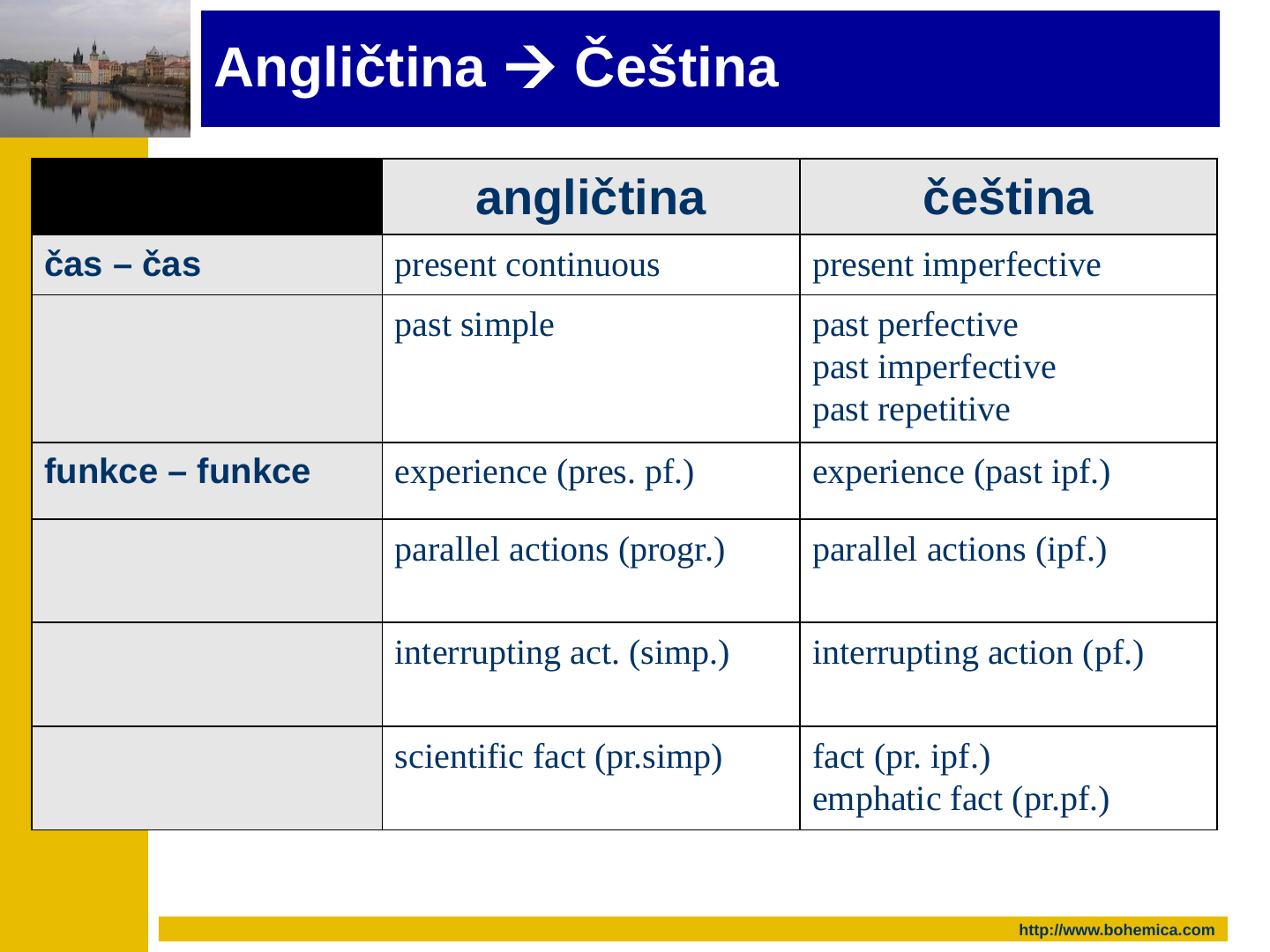
| čas – čas | present continuous | present imperfective |
| past simple | past perfective / past imperfective / past repetitive | |
| funkce – funkce | experience (pres. pf.) | experience (past ipf.) |
| parallel actions (progr.) | parallel actions (ipf.) | |
| interrupting act. (simp.) | interrupting action (pf.) | |
| scientific fact (pr.simp) | fact (pr. ipf.) / emphatic fact (pr.pf.) |